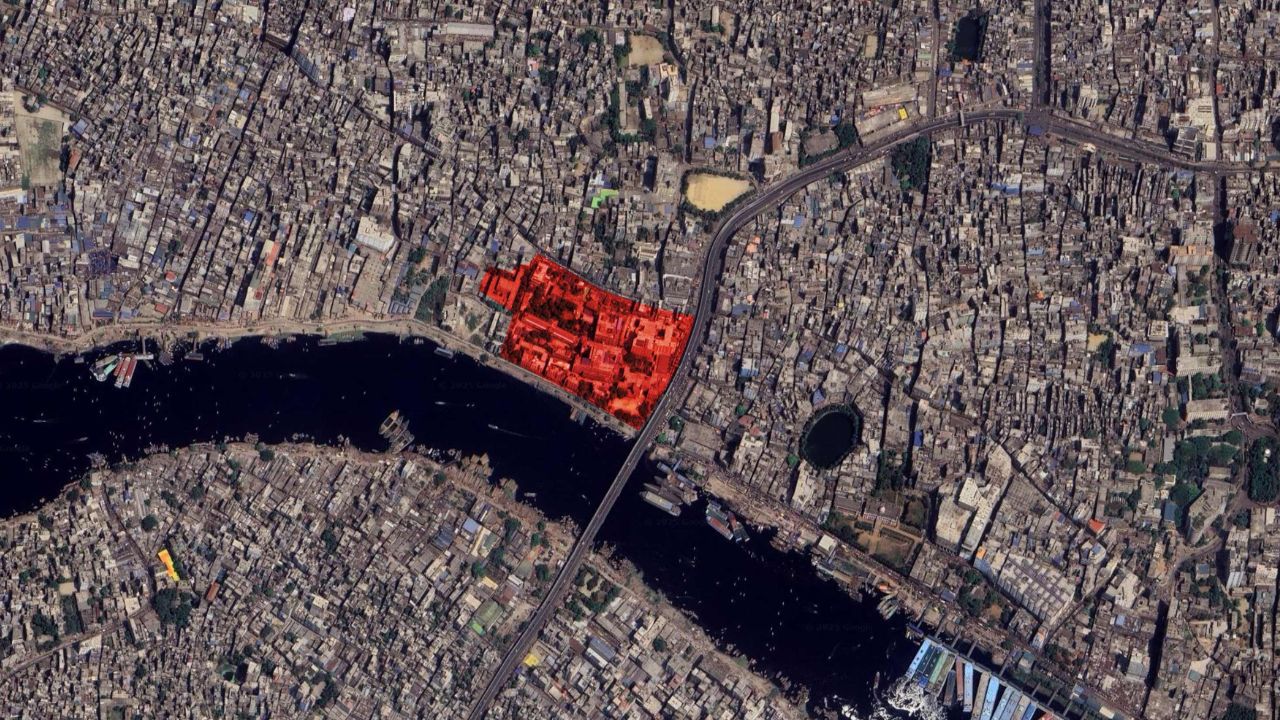



In the heart of Old Dhaka, life moves too fast. Narrow lanes, packed shops and endless people. In the middle of it all sits the Mitford Chemical Market.
At first glance, it looks like just another wholesale hub. Drums stacked high. Sacks piled on footpaths. Labels faded or missing. But inside those containers are industrial chemicals like acids, solvents and powders. Materials that demand caution, space and strict control and none of that exists here.
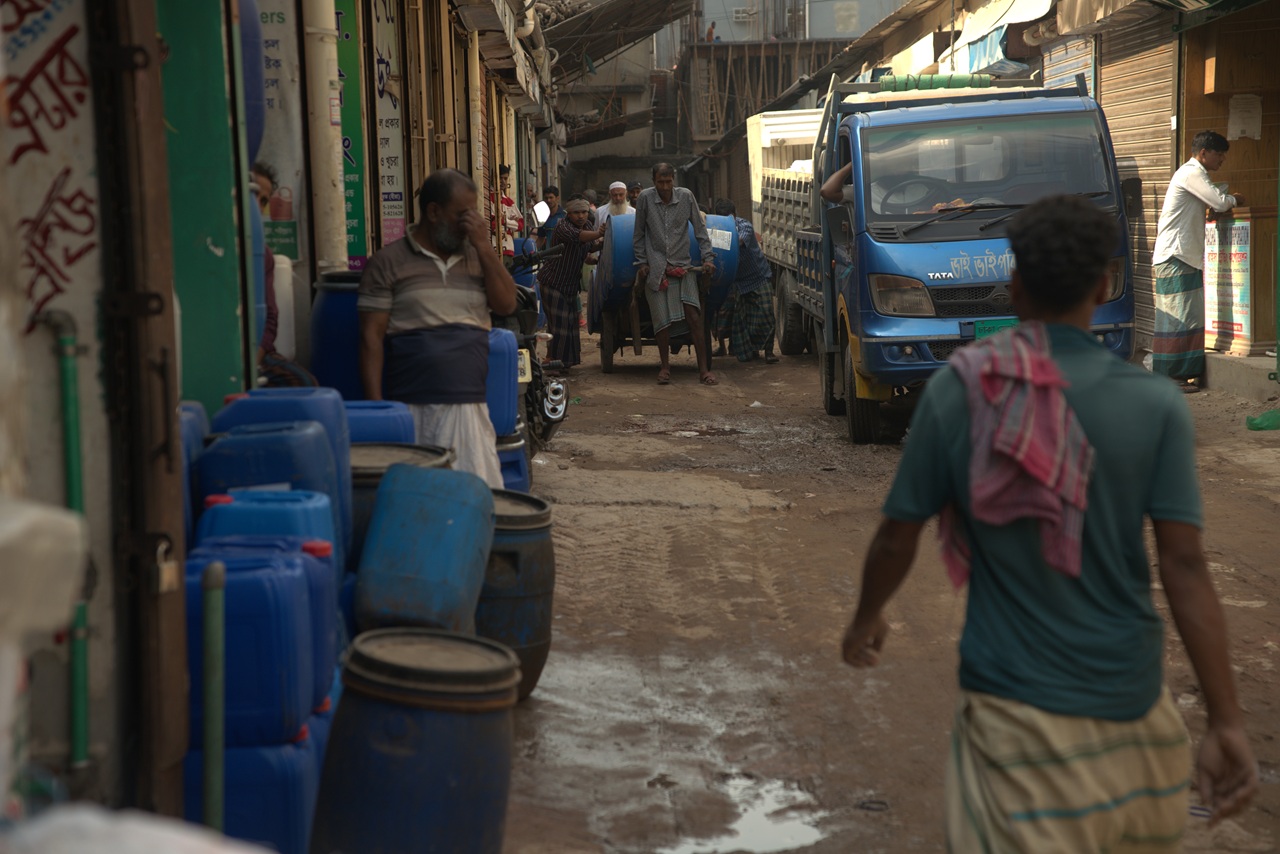
Chemical-filled drums are stored in cramped godowns. Many are kept beside grocery shops and tea stalls. Some are placed directly on the roadside. Trucks, vans, sometimes even rickshaws unload them in the middle of the day, blocking streets already bursting with people.

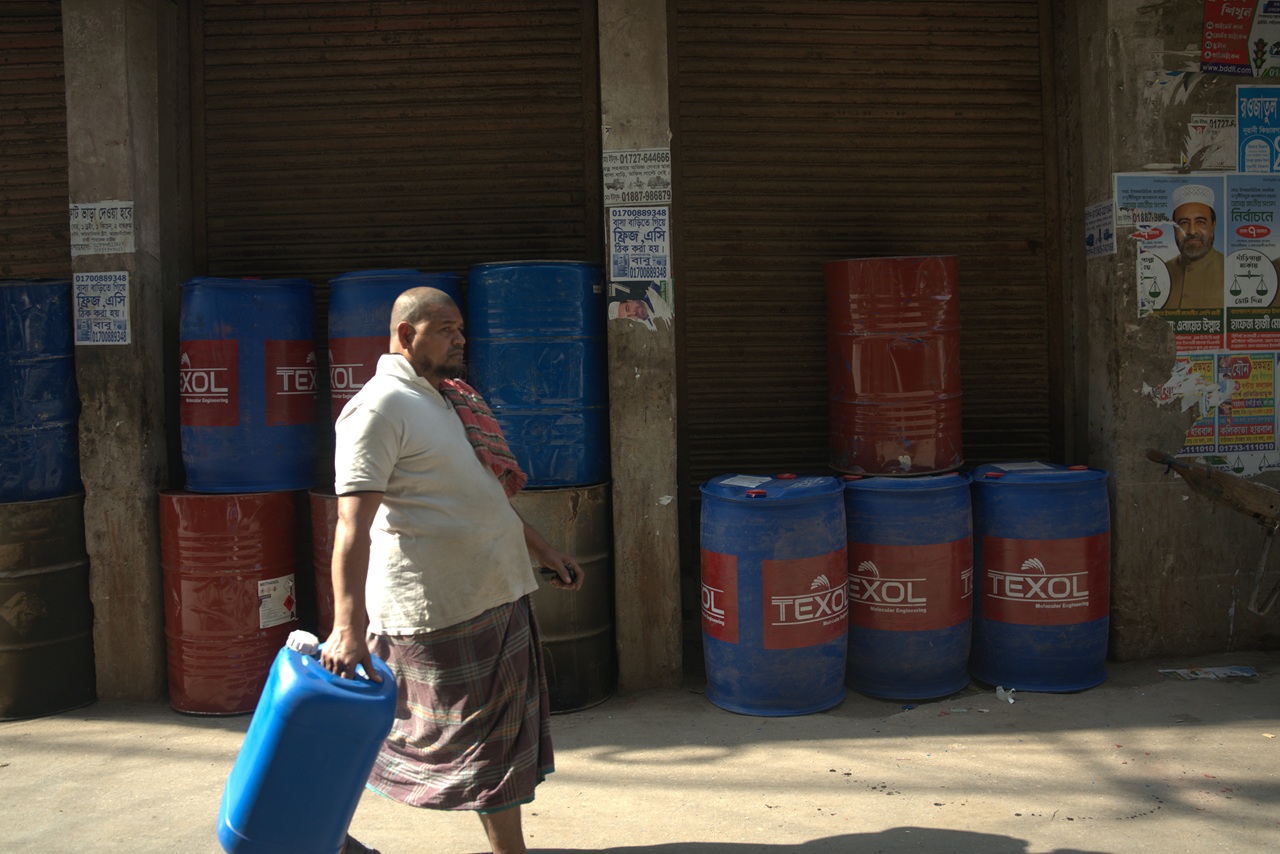
Transports are careless. Drums roll over uneven roads. Leakages go unnoticed. Vapours mix with the air of an already polluted neighbourhood. An accident here would not stay small. Old Dhaka is dense and buildings stand wall to wall. Fire trucks struggle to enter even during minor incidents.
A chemical fire or spill would spread fast. There would be no room to run. No space to contain it. No margin for error. The danger is not theoretical. Bangladesh has seen what happens when chemicals mix with negligence. Old Dhaka still carries scars from past tragedies. Yet lessons seem forgotten.




What makes Mitford even more alarming is its neighbour. Sir Salimullah Medical College Hospital, known to all as Mitford Hospital. A major public hospital sits within this risky zone. Thousands of patients come here every day. Elderly people, children and pregnant women are already fighting for breath and life.
A chemical leak would hit them first. Toxic fumes do not care about hospital walls. Emergency wards would turn into danger zones and doctors would become victims while trying to save others.
The public health risks are immense. Long-term exposure to chemical vapours can damage the lungs. Skin contact can cause burns and chronic disease. Contaminated air and water silently harm nearby residents.
Local people know the risk. They complain of headaches, strange smells at night and irritation in the eyes and throat. Yet business goes on because chemicals are profitable and enforcement is weak.
Relocating the chemical market is no longer a debate; it is a necessity. Strict regulation is not an option but a duty. Until then, Mitford remains a ticking clock, and every day without action brings the city closer to another avoidable disaster.