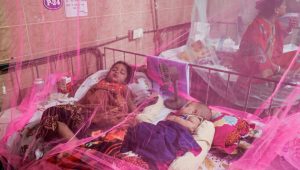
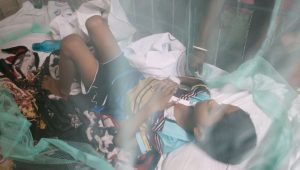
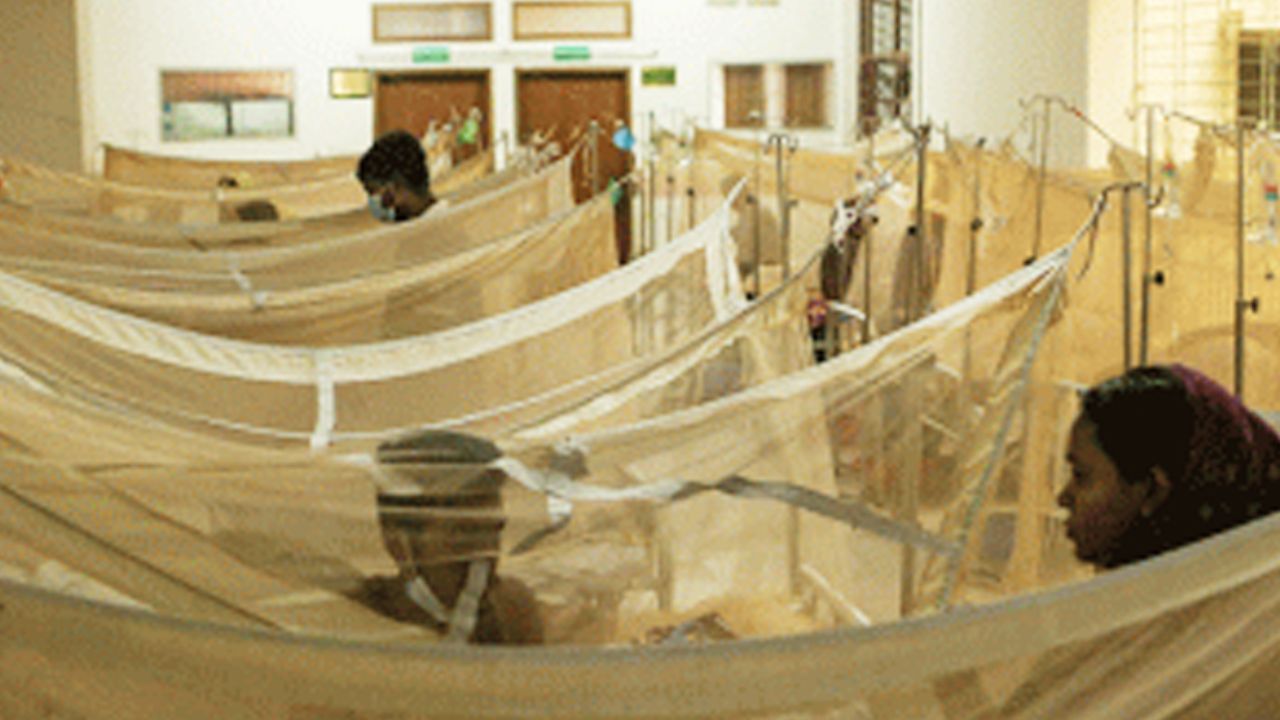
Inside a tiny, one-room home in the Korail area of Dhaka, six-month-old Abu Bakar lay struggling with a high fever, while his mother faced a heartbreaking reality. The family simply could not afford to take him to a hospital.
The illness soon spread to his four-year-old brother Omar Faruk. Jharna Begum – their mother – explained the impossible situation they were in, saying, “We could not admit them to the hospital. We did not have the money.”
For this family of five, living in a single rented room costing Tk3,500 a month, the choice between paying rent and seeking medical care was a constant weight on their shoulders.
When the children first fell ill, their parents hoped it was just a common fever and sought help from a local doctor. However, Abu Bakar’s condition quickly worsened as severe rashes covered his body and he stopped eating.
His mother remembered how thin he became when he could no longer take any food. Although local doctors later diagnosed the illness as measles and advised the family to keep the children cool and well-fed, a hospital visit seemed financially impossible.

Living in such a small space meant there was no way to isolate the sick children. Jharna asked, “How could we separate them? We all live in the same room.”
While the children are slowly recovering, Jharna credits their survival to mercy, saying, “By Allah’s mercy, they are getting better now.”
The struggle is even more tragic for families like Zakir Hossain’s in Gazipur Metropolitan City. His nine-month-old son, Md Raiyan, became critically ill with a fever and weakness that local treatments could not cure.

As the illness took hold, the family desperately moved between hospitals, from Gazipur Sadar to specialised facilities in Dhaka. However, the costs of transport and medicine grew so quickly that Zakir said they “could not even keep track of the spending.”
Despite their best efforts, the financial strain overshadowed every medical decision they had to make. Sadly, Raiyan’s condition declined rapidly, and he passed away on 4 May. His father noted that the entire experience was as much defined by financial hardship as by the illness itself.
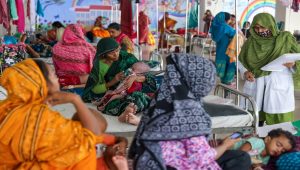
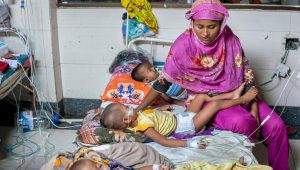
These personal stories reflect a much larger crisis unfolding across Bangladesh. In a recent 24-hour period ending Tuesday morning, nine more children died from measles or similar symptoms, bringing the total number of confirmed and suspected deaths to 424.
The scale of the outbreak is significant, with 87 new confirmed cases, bringing the total to 7,024, while suspected cases have climbed to over 51,567.
A 2026 study by the Bangladesh Institute of Development Studies (BIDS) highlights the continued pressure on households as healthcare costs remain predominantly borne by patients themselves. According to the findings, out-of-pocket payments accounted for 79 per cent of total healthcare spending in 2024, underscoring the burden placed on individuals rather than being covered through insurance or public support.
The study also highlights a sharp gap between income groups. It found that the poorest households spend around 35 per cent of their total income on healthcare, while the wealthiest spend about 5 per cent. This difference illustrates how medical treatment can quickly become unaffordable for low-income families, especially during outbreaks or sudden illnesses.
At the same time, broader poverty trends are worsening. Estimates from the Power and Participation Research Centre (PPRC) in 2025 place the national poverty rate at 27.93 per cent, up from 18.7 per cent reported by the government in 2022. Extreme poverty has also risen, reaching 9.35 per cent, up from 5.6 per cent during the same period.
Taken together, the data suggests a growing strain on vulnerable households, where rising poverty and high medical costs are increasingly turning illness into a serious financial risk.
Experts believe that the government must act to bridge the gap between the people and the care they need.
Professor Syed Abdul Hamid, a health economist at the University of Dhaka, suggested that existing support initiatives should be strengthened and expanded.
He noted that accelerating the rollout of assistance programs and increasing coverage for vulnerable families could help ease the problem.
For families like those of Abu Bakar and Raiyan, the hope is that healthcare will one day be a basic right that does not depend on the amount of money in their pockets.