The Metropolitan Chamber of Commerce and Industry (MCCI) has delivered strong criticism of the FY2025–26 national budget, warning that proposed tax and tariff measures could stifle economic growth, burden small businesses, and leave Bangladesh underprepared for its impending graduation from Least Developed Country (LDC) status.
Speaking at the 12th MCCI-PRI Post-Budget Dialogue held in Dhaka on Monday, business leaders and policy experts expressed concern over what they called a lack of coherence in trade policy, unrealistic revenue expectations, and regressive taxation that threatens formal sector growth.
MCCI President Kamran T. Rahman welcomed a few government concessions—such as raising the perquisite ceiling to Tk 20 lakh and allowing quarterly tax deduction at source (TDS) filings—but strongly objected to the proposed increase in turnover tax from 0.6% to 1%. He warned the hike would disproportionately hurt small and medium enterprises (SMEs) already grappling with high input costs, while discouraging compliance in the formal economy.
“This move undermines the process of formalisation and may deter investment at a time when the private sector is struggling to recover,” Rahman said, adding that the government should offer compensatory relief measures if the increase is implemented.

Dr Zaidi Sattar, Chairman of the Policy Research Institute (PRI), echoed this sentiment, saying the budget lacks strategic trade policy vision. He noted that nominal protection remains high at 28.1%, and para-tariffs continue to penalise exporters, reinforcing an anti-export bias. “There’s no transformative change. This budget may have been drafted by economists, but it is politically passive,” Sattar remarked.
He also urged the government to implement the long-delayed National Tariff Policy 2023, which is crucial for post-LDC competitiveness. “The private sector is the backbone of the economy, and reform requires close collaboration between government and business,” he said.

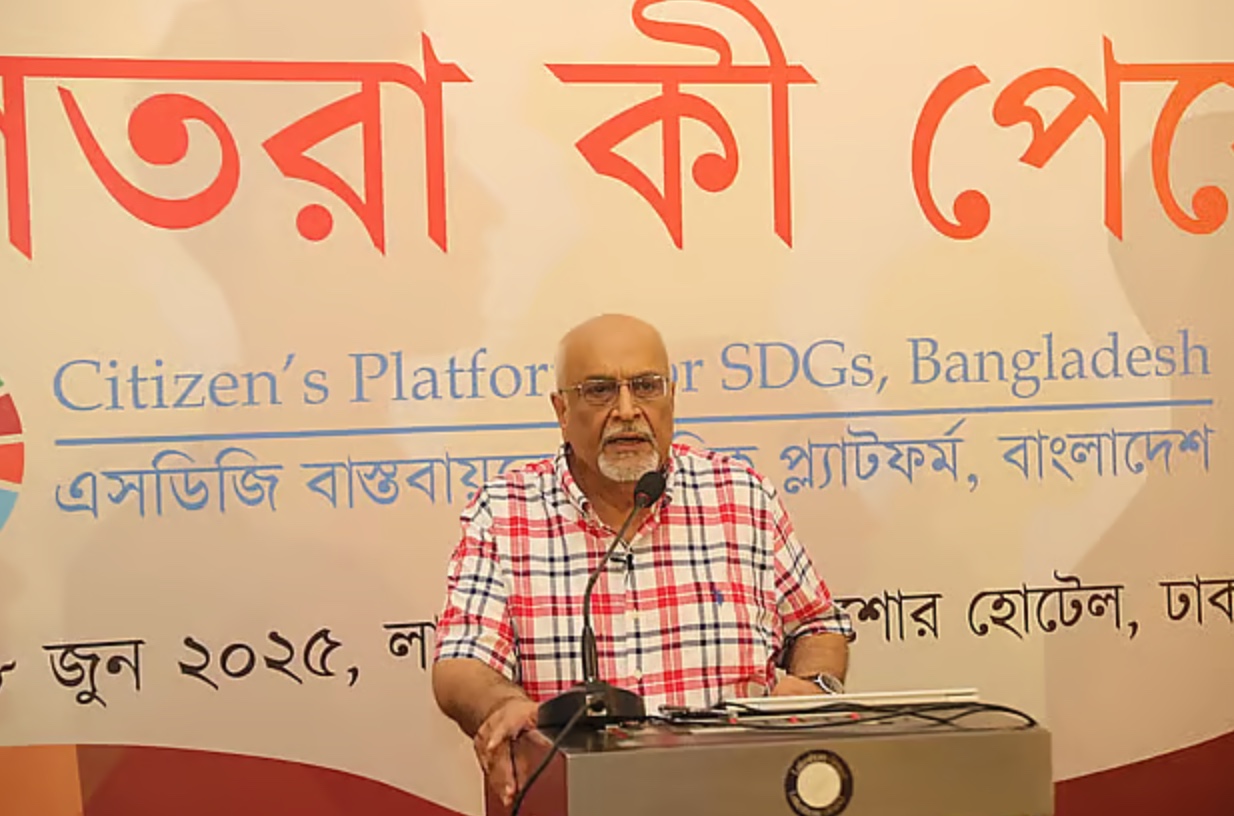
PRI Director Dr Bazlul Haque Khondker warned that the revenue target—projected to increase by 33%—is unrealistic, given that tax revenue grew only 4% in FY2024. “High rates with low compliance define our system. Bangladesh’s tax-to-GDP ratio is only 7.08%, among the lowest in the world,” he noted.
Khondker also cautioned that the proposed rise in import duties on essential sectors such as steel could hurt manufacturing and infrastructure development. Meanwhile, despite inflationary pressures, the government plans to borrow Tk 1.6 lakh crore from banks, potentially crowding out private credit and raising borrowing costs.
Special Assistant to the Chief Adviser for Finance, Anisuzzaman Chowdhury, acknowledged that high tariffs remain the easiest route for revenue collection, but noted that reform is essential to broaden the tax base. “Citizens must also take responsibility. Tax is the price of citizenship,” he said, quoting a line common in US tax campaigns.
He also stressed less national dependency on foreign loans as it weakens government freedom to opt for own policy.
On the social front, experts were disappointed with declining allocations. Education and health received just 1.53% and 0.67% of GDP respectively, while the social safety net outlay, though expanded, remains modest at 1.9%.
Despite duty cuts on LNG, pharmaceuticals, and IT equipment, new tax burdens on textiles, tobacco, and construction have raised concerns over sectoral competitiveness.
The forum concluded with a call for structured, public-private dialogue to address structural weaknesses in banking, taxation, and governance. “Sustainable economic recovery depends on rational tax policy and better regulation,” Rahman said.
With global uncertainties mounting and fiscal tightening looming, business leaders urged the government to adopt pragmatic reforms that foster resilience, protect vulnerable groups, and maintain Bangladesh’s growth momentum.