




The government’s latest plan to formulate a new law to combat online misinformation and disinformation has sparked immediate doubt and outrage.
shackle social media, digital platforms, and private television channels has sparked immediate outrage.
The controversy began not with the regulations themselves, but with the people chosen to draft them.
The 11-member committee formed to recommend a new legal framework for Bangladesh’s rapidly expanding digital landscape contains lawyers, bureaucrats and government officials, but not a single journalist, media professional or representative of press freedom defenders.
The Ministry of Information and Broadcasting cited the need to combat online disinformation and misinformation by a mushrooming network of web portals and social media handles as the primary justification for enacting the law.
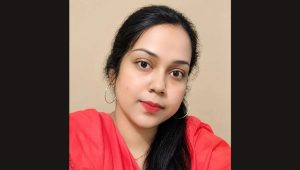
Tasnuva Shelley, a member of the committee tasked with preparing the draft, told TIMES of Bangladesh, “By using social media, frauds happen, scams take place, disinformation spread. Everything happens by using social media. So how can we use this social media responsibly? Because we cannot live without it.”
Critics find omission of journalists not a minor oversight but the entire story.
They say a committee tasked with shaping the future of communication has been created without the very people who understand newsrooms, journalism and the practical realities of free expression.
The panel was formed on 2 July, headed by an additional secretary of the Ministry of Information and Broadcasting. It held its first meeting with Information Minister Zahir Uddin Swapan in the chair, where officials recommended reviewing existing laws and introducing new legislation to address the challenges created by the explosive growth of digital communication.

Officials present at the meeting told TIMES that the minister instructed the committee to study international regulatory models and identify a framework suitable for Bangladesh.
But critics argue the problem lies in who is designing that framework.
The committee features a deputy attorney general, an assistant attorney general, a prosecutor from the International Crimes Tribunal, and several deputy and senior assistant secretaries, a formidable lineup of legal and administrative expertise.
What it does not feature is a single person who spent years chasing stories, editing reports, defending journalistic independence or dealing with the daily pressures of publishing news.
To media professionals, that absence speaks louder than official assurances about building a response to a “complex digital ecosystem”.
Saiful Alam Chowdhury, associate professor of Mass Communication and Journalism at Dhaka University, said the pattern was familiar.




“When media laws are drafted without media representatives, they often turn into instruments of state control rather than safeguards for journalism,” he told TIMES.
While accepting the need for updated legislation in the digital age, he questioned whether a purely bureaucratic approach could produce laws that protect freedom of expression instead of restricting it.
M Abdullah, former president of the Bangladesh Federal Union of Journalists, echoed the concern.
“Journalists are among the primary stakeholders whenever laws affecting journalism are being considered,” he said.
Any attempt to exclude media professionals from the process, he warned, would inevitably face strong opposition.
Asked about the absence of any representative from journalist community, Information Minister Zahir Uddin Swapan claimed the committee an in-house one and said it has been formed to monitor the situation.
“It will review the existing laws and determine whether any new legislation needs to be introduced. The committee comprises ministers, state ministers, advisers, and relevant law officers,” he said.
“The need for new laws has arisen due to the digital ecosystem. An in-house committee has been set up to make this assessment.”
He added that the ministry would consult with stakeholders if their input is required, reassuring that the government will not take any action without their involvement.
“I don’t know why there are no journalists in the main committee,” committee’s convener, Additional Secretary Md Shah Alam, told TIMES.
He insisted, however, that the ministry would eventually consult “hundreds more people,” including journalists’ organisations and regional representatives.
Asked if the law would be restrictive, Alam replied, “I will not tell you anything about it.”
Committee member Tasnuva Shelley, also a deputy attorney general, pointed to Bangladesh’s difficulties in dealing with global technology companies such as Meta.
She said the country lacks effective legal mechanisms to hold major digital platforms accountable and often struggles to obtain information from them.
But the committee’s stated ambition goes beyond foreign technology companies.
Tasnuva also confirmed that the proposed framework would cover domestic private television broadcasters, a move that has intensified concerns across the media industry.
Shakil Hasan, senior reporter at Jamuna Television, warned against placing citizen-driven social media activity and professional journalism under the same regulatory umbrella.
“Social media and journalism operate differently. Bringing them under one sweeping framework risks creating unnecessary restrictions on independent reporting,” he said.
He cautioned that laws designed around fear and uncertainty could leave journalists operating under constant legal pressure.
“When reporters begin worrying about restrictions instead of reporting facts, independent journalism suffers,” he added.
Asked why journalists were absent from the committee, Tasnuva offered a familiar bureaucratic response.
She said discussions would be held with government and private stakeholders before any legislation was finalised.
But critics remain unconvinced.
They argue that consultation after the framework has already been designed is no substitute for participation at the drafting table.