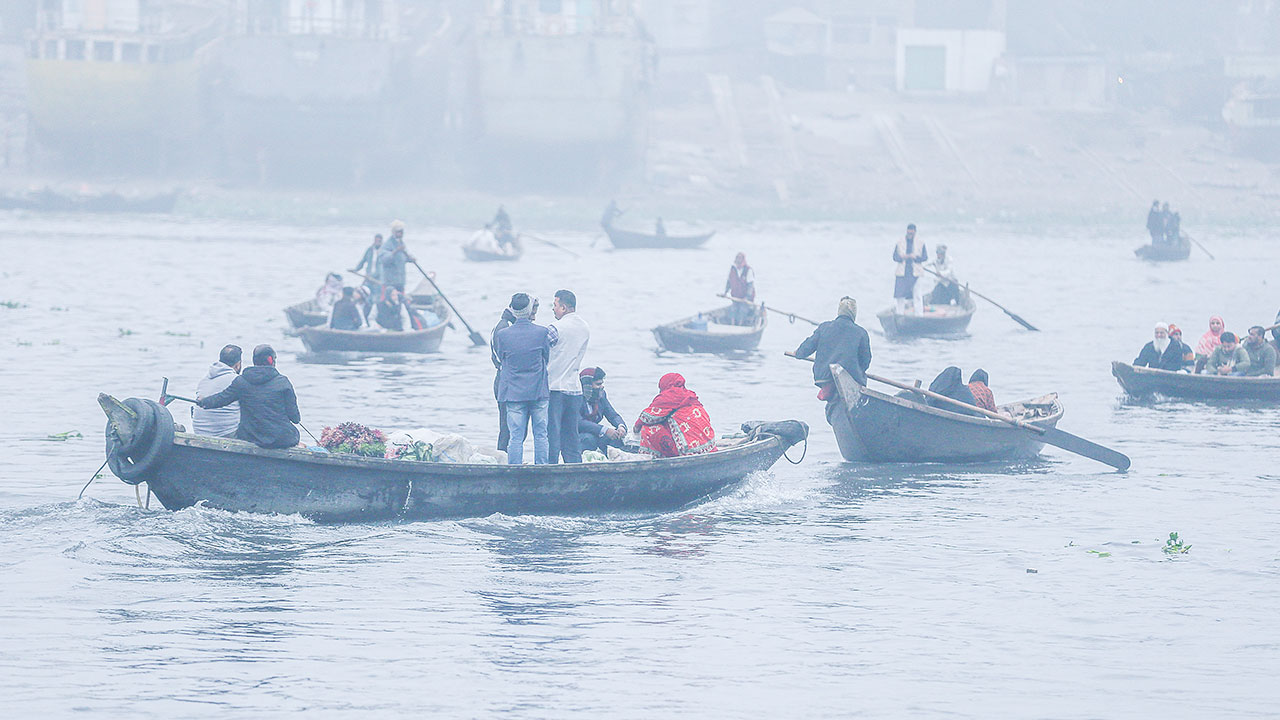

Every winter, fog descends on Bangladesh. It comes quietly with the season. At dawn, rivers disappear, the horizon melts, water and sky become one. For a country built on rivers, this is not just a seasonal inconvenience but a danger.
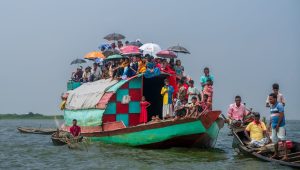
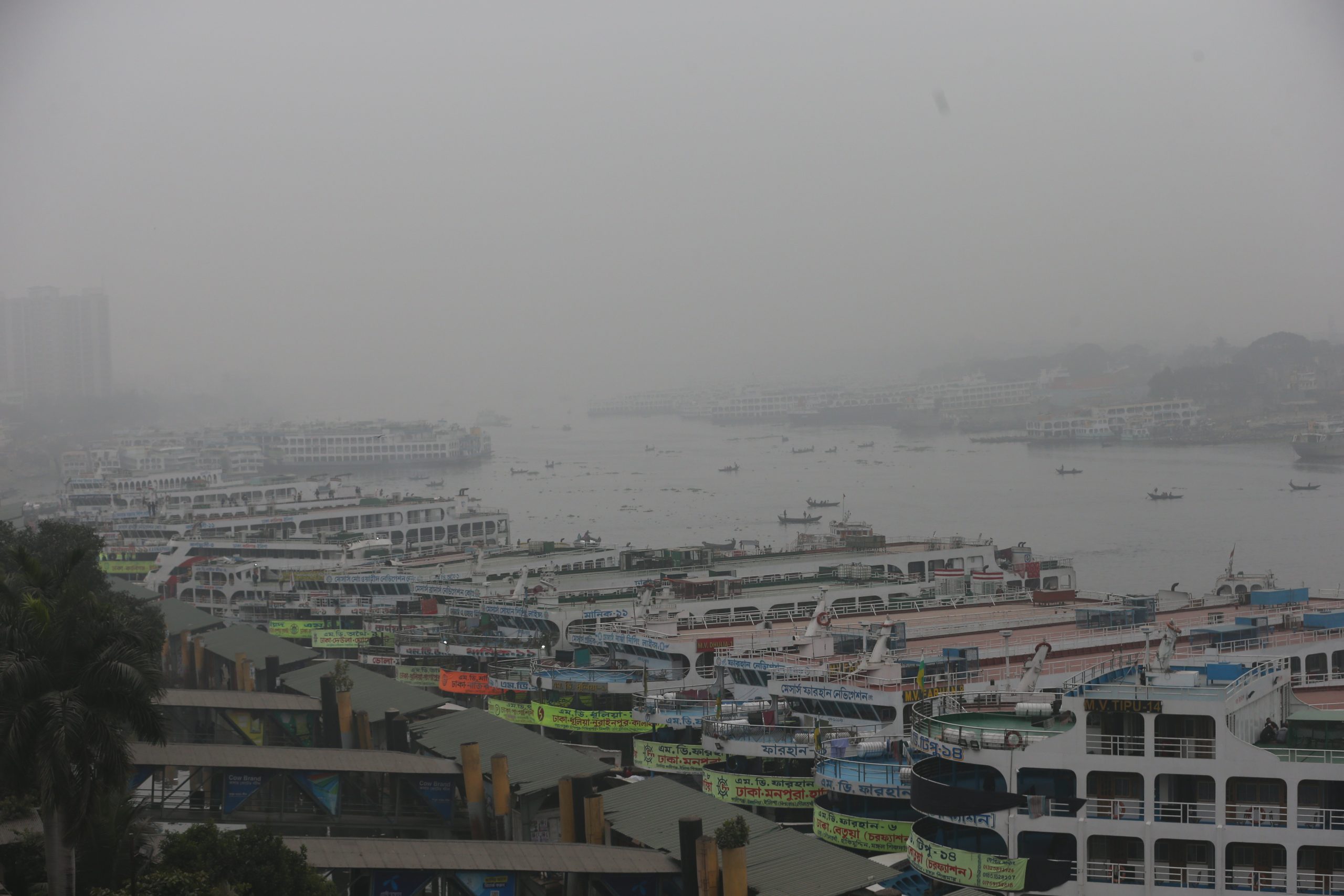
Bangladesh depends heavily on waterways. Thousands of launches and ferries move daily across the Meghna, Padma, Jamuna and Buriganga. They carry officegoers, businessmen, students and entire families. In winter, many of these journeys turn into blind trips.
Fog reduces visibility to a few metres. Sometimes less. River markers vanish. Channel lines blur. Captains rely on instinct more than sight. One wrong turn is enough. The consequences are deadly.
This winter, on December 26, 2025, at least six people were killed in two separate waterway accidents in dense fog. Two passenger launches collided on the Meghna River in Chandpur, killing four people. In Narayanganj’s Buriganga River, a passenger launch hit a sand-laden bulkhead. Two workers died in that crash. Several more passengers were injured.

History offers darker reminders. In 2009, a ferry collided with a launch in heavy fog in Kishoreganj. At least 47 people died. Many bodies were never recovered. The river swallowed them quietly. The accident struck just a week after Bangladesh was still mourning another ferry disaster that killed at least 85 people.




Every winter, similar stories surface. Launches slow down or stop completely as fog engulfs the river basins. Ferry services between major points like Daulatdia and Paturia have been suspended for hours at a time because captains could not see ahead. Passengers are left waiting, anxious about time and safety.
Most launches operating today are very old. Many were built decades ago and kept running through repeated repairs. Their navigation systems are outdated or barely functional. Radar is often absent. GPS systems are unreliable or unused. Modern fog-detection tools are a luxury few vessels have.
In many cases, the captain’s eyes are the main navigation system. When fog covers the river, those eyes become useless. On busy routes like Dhaka-Barishal or Dhaka-Chandpur, multiple launches often move simultaneously through narrow channels. Without proper navigation aids, vessels depend on sound signals and guesswork. Horns echo in the mist, engines slow down, but collisions happen.
Authorities often suspend naval movement during severe fog. Especially at night or early morning. While this saves lives, it also exposes another reality. The system reacts only after danger becomes visible. There is little long-term preparation.
Passengers know the risk, yet they travel. Work does not wait, nor do emergencies. For many river-dependent communities, there is no alternative route. Boatmen admit their fear. They speak of sudden shapes emerging from fog, sometimes hearing another engine too late.
Winter fog is natural, but unsafe waterways are not. With ageing vessels, weak enforcement and poor navigation technology, Bangladesh’s rivers become traps during winter. Each foggy morning carries the same question. Will everyone reach home?
Until modern navigation systems are made mandatory and old launches are upgraded or retired, the danger will remain silently and deadly. The fog may lift by noon, but losses will not.