




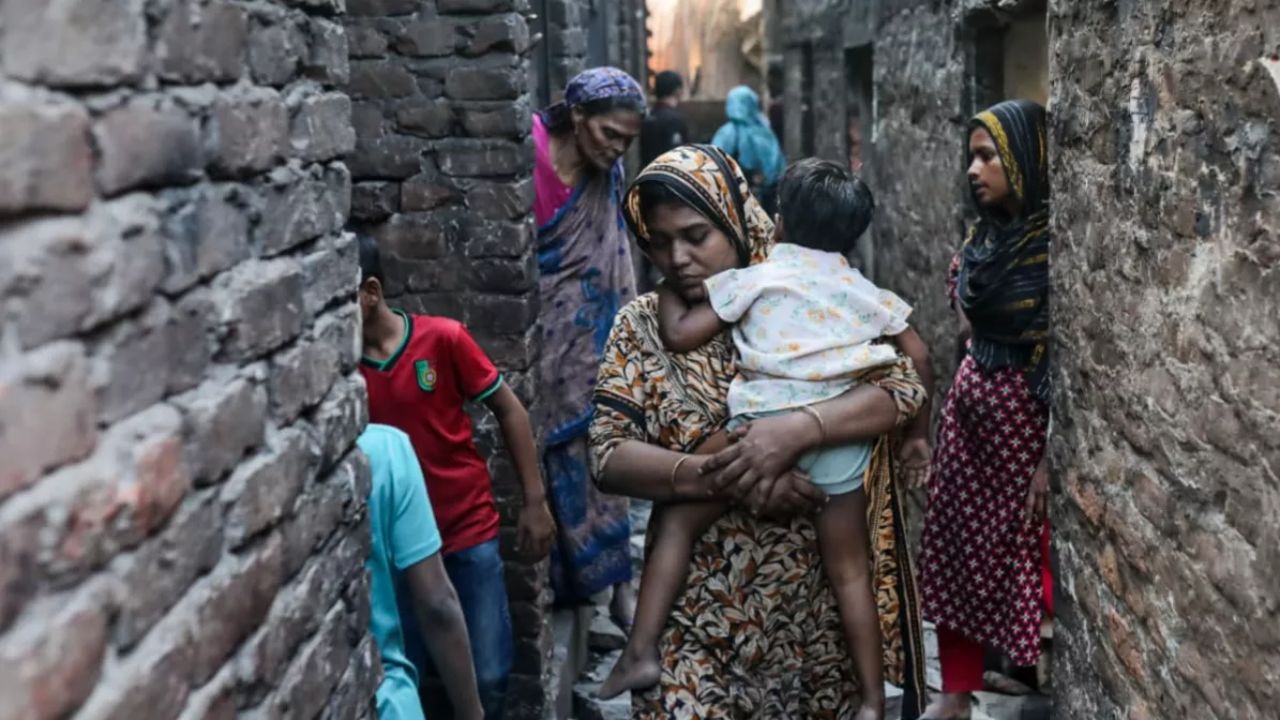
Allegations of irregularities have emerged over the distribution of Family Cards in Korail Bosti in Dhaka, where residents say many low-income families have been excluded while some comparatively well-off households, including landlords, have received benefits.
At the same time, a significant number of approved beneficiaries are yet to receive monthly payments, with officials citing inconsistencies between National Identity Card (NID) records and mobile financial service registrations.
Korail Bosti comprised part of the prime minister’s constituency in Dhaka and his first election rally was also held here, where a pledge was made that Family Cards would be introduced upon coming to power.
The Family Card initiative, introduced as part of a wider social protection programme, was promoted in the run-up to elections as a targeted support mechanism for vulnerable households, particularly in urban informal settlements.
Several residents in Korail Bosti, one of Dhaka’s largest informal settlements, say expectations were high after public commitments were made that eligible families would receive monthly cash support but implementation on the ground has fallen short of those promises.
Twenty-one-year-old auto-rickshaw driver Md Shanto said he had hoped the scheme would ease financial pressure on his household. Born and raised in the settlement, he attended a distribution event in March with his pregnant wife, expecting they would be included.
Instead, he remains without assistance. “My landlord has received the Family Card, but those of us who actually need the money did not get one,” he said.
Shanto’s wife has since given birth at her parental home after he sent her there due to financial constraints. He continues to work as an auto-rickshaw driver, hoping for the monthly Tk2,500 support promised under the scheme.
According to government guidelines, Family Cards are intended for landless and homeless households, families owning up to 0.5 acres of land, female-headed households, persons with disabilities, elderly dependents, ethnic minorities, and other marginalised and low-income groups.
Yet residents claim these criteria have not been consistently applied. In one case cited by locals, Rahim Sagar, a landlord who owns a two-storey building in Koral Bosti and earns around Tk24,000 a month from rental income, has reportedly received a card. His eight tenant families, who collectively represent some of the area’s lowest-income households, have not.
Residents say this pattern is not isolated. In interviews conducted with 40 families across eight houses, none reported receiving a card.
They also alleged that data collection by field officials was limited and failed to properly verify living conditions inside the settlement, with assessments reportedly concentrated in open areas such as “Beltola” field.
Payment delays linked to data mismatches
Even among approved beneficiaries, many are facing interruptions in payments. Ruhul Ahmed, 69, who is unable to work, said his family initially received one instalment but has not received any further payments.
“When I went to the councillor’s office, I was told my voter ID did not match the records,” he said. A Social Welfare Ministry official, speaking anonymously, said payments for 16,495 beneficiaries were suspended due to mismatches between NID details and SIM or mobile financial service accounts such as bKash and Nagad.
Of these, data corrections have enabled payments to resume for 6,837 people, while verification work continues for the rest.
Ministry data shows that under a pilot phase, 37,567 female-headed households across 14 locations received Family Cards in the first batch. Around 15,000 of these beneficiaries are from Dhaka’s Korail, Sat Tola and Vashantek settlements, although a breakdown specific to Korail has not been provided.
The ministry maintains that the pilot programme is designed to identify operational gaps before a nationwide rollout covering one crore families.
Under the proposed 2026–27 budget, the BNP government has allocated Tk1,44,338 crore for social protection. The Family Card programme alone is expected to support 41 lakh women, with Tk14,500 crore earmarked to provide Tk2,500 monthly per beneficiary.


