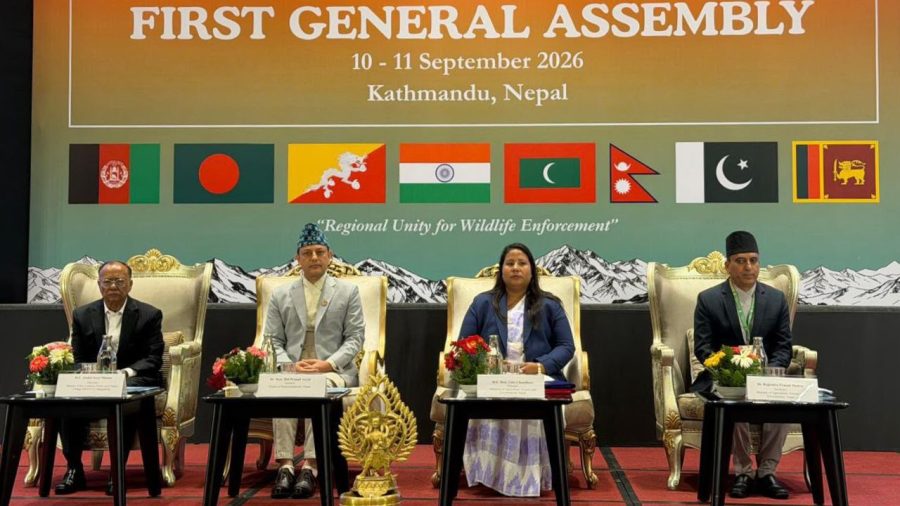

Member countries of South Asia Wildlife Enforcement Network (SAWEN) have adopted the “Kathmandu Declaration” by consensus to further strengthen regional cooperation in combating illegal wildlife trade and related transnational organised crime in South Asia.
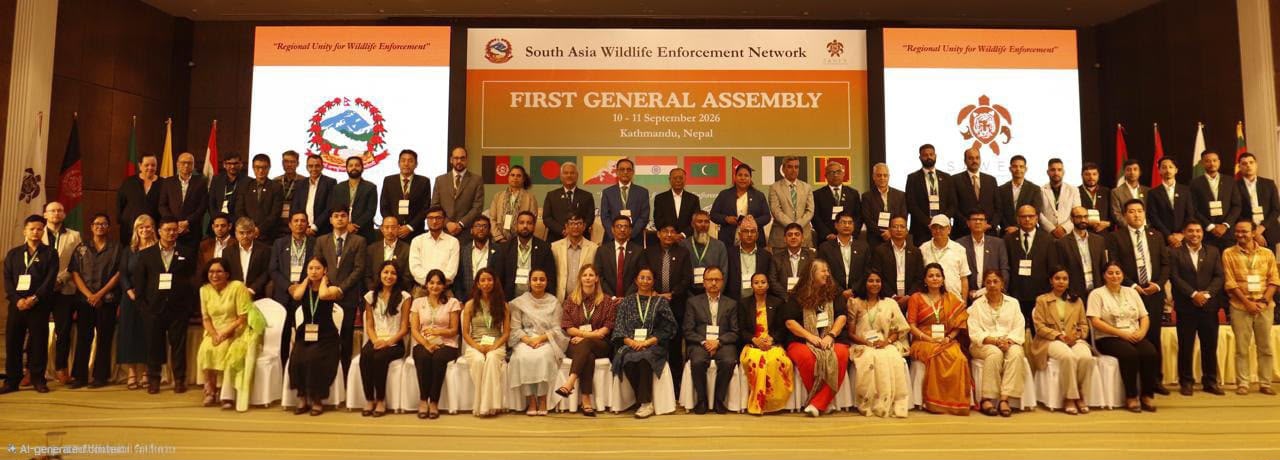
The declaration was adopted on Friday, the concluding day of First General Assembly of SAWEN held in Kathmandu, Nepal, by ministers and heads of delegations of the member countries.
The declaration reaffirmed the commitment of member countries to strengthen regional cooperation in preventing, detecting and combating illegal wildlife trade, as well as their commitment to objectives and principles of SAWEN.
Expressing concern over the evolving threat, the declaration said illegal wildlife trade is increasingly developing into a more sophisticated form of transnational organised crime, involving corruption, illicit financial flows, other serious crimes, misuse of digital technologies and vulnerabilities along borders.

Under Kathmandu Declaration, member countries emphasised intelligence-led and financial investigations, anti-money laundering measures, asset recovery and effective prosecution to address serious wildlife crime, particularly offences linked to transnational and organised criminal networks.
They also committed to further strengthening information and intelligence sharing, coordinated law enforcement and criminal justice cooperation.
In addition, the declaration called for enhancing capacity to address wildlife crime, biopiracy, illegal access to biological resources and emerging threats through science, technology, innovation, research and regional knowledge sharing.




It further committed to strengthening the capacity and safety of rangers, customs officials, police, prosecutors and other frontline personnel.
Speaking at the closing ceremony, Environment, Forest and Climate Change Minister Abdul Awal Mintoo said that wildlife crime can no longer be effectively addressed by any country acting alone.
He said such crime is becoming increasingly organised, transboundary and technology-driven. He stressed that just as traffickers do not respect national borders, law enforcement responses must also go beyond borders and be coordinated.
The environment minister said the spirit of cooperation, mutual trust and shared commitment demonstrated among member countries during the Assembly provides an important foundation for future regional initiatives.
He called for greater emphasis on timely intelligence sharing, joint investigations and coordinated operations, closer cooperation among relevant law enforcement agencies, and stronger attention to online wildlife trafficking and financial investigations.
Kathmandu Declaration also commits member countries to strengthening public awareness, education, behavioural change and demand reduction by engaging local communities, civil society, academia, youth, women, the media and relevant private-sector actors, including transport, logistics, financial services, e-commerce and tourism.
It was also announced that 30 January will be observed every year as “SAWEN Day.”
Moreover, emphasis was placed on strengthening bilateral and regional cooperation to combat transboundary wildlife crime and expanding partnerships with relevant international and regional conventions, organisations and development partners.