The International Monetary Fund (IMF) has requested a comprehensive roadmap from the newly elected government, regarding the progression of financial sector reform programmes initiated by interim administration.
During a visit to Dhaka, a top official from the global lender met with the Bangladesh Bank (BB) to seek a written outline detailing the continuity, schedule, and implementation plans for these reforms.
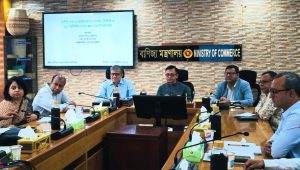
The discussions took place on Tuesday at the central bank, where Krishna Srinivasan, director of the IMF’s Asia and Pacific Department, held talks with BB Governor Md Mostaqur Rahman. Three deputy governors and officials from relevant departments also attended the meeting.
Demand for written outline
A senior official present at the meeting, speaking on condition of anonymity, noted that while the original reform plan proposed by Bangladesh during the loan agreement was finalised, the IMF later introduced new conditions.
The implementation of these plans is evaluated during the release of each loan tranche. The IMF now seeks to ensure that the reform continuity remains under the new government and has requested a new roadmap to this effect.

Shahriar Siddiqui, assistant spokesperson for Bangladesh Bank, confirmed the matter to TIMES, adding, “They have asked for a report similar to a roadmap – a written concept of what steps will be taken, when, and how.”
Economic hurdles and NPL surge
Bangladesh entered the IMF loan package under specific circumstances following a post-COVID economic recovery period marked by a surge in imports, which strained foreign exchange reserves.
This led to a crisis in foreign transactions and allegations of money laundering under the guise of imports, causing a significant depletion of reserves.
Following the fall of Awami League regime in 2024, the interim government launched investigations into the money laundering activities of at least 10 business groups.


After taking office as governor, Ahsan H Mansur brought the true state of non-performing loans (NPLs) to light and initiated the merger of weak banks. Notably, five private banks were merged to form the state-owned Sammilito Islami Bank.
During this period, the NPL rate escalated to approximately 36 percent.
Although the central bank announced measures following special inspections of at least 18 banks, tensions arose with the IMF over the full transition to a market-based exchange rate and the devaluation of the Taka.
Additionally, there was pressure to reduce tax exemptions amid declining revenue. The IMF delayed the release of loan instalments due to the interim government’s firm stance on these issues, later stating that further disbursements would be discussed with an elected government.
Central bank officials noted that while previous plans aimed to reduce NPLs gradually, the rate has instead reached 35 percent.
A new plan is now required to determine how long it will take to align these figures with international standards and how initiatives to restore good governance in weak banks will proceed.
Future funding and spring meetings
Bangladesh Bank is currently maintaining a contractionary monetary policy until high inflation subsides to a target of 5 to 6 percent.
However, fresh concerns have emerged regarding pressures on the banking sector, volatility in foreign transactions, and rising fuel import costs due to the conflict involving Iran.
Under these conditions, the central bank believes further foreign loans may be necessary to sustain reserves. Discussions regarding an increase in the loan amount may take place during the IMF Spring Meetings in April.
Finance Minister Amir Khosru Mahmud Chowdhury, following a meeting with the IMF at the Secretariat on Tuesday, stated, “These matters are under discussion. We are going to Washington for the Spring Meetings, where detailed talks will be held.”
Bangladesh initially signed a $4.7 billion loan agreement with the IMF in 2023, which was later increased to $5.5 billion. To date, the country has received $3.64 billion across five tranches, with approximately $1.86 billion remaining.
The sixth tranche was scheduled for release last December but was stalled due to policy disagreements. Stakeholders now hope that if a satisfied IMF receives the updated reform roadmap from the new government, the next disbursement could occur by June.