The deepening conflict between Israel and Iran is no longer only a military confrontation. It is rapidly becoming an economic flashpoint. As both sides exchange deadly strikes for a fourth consecutive day, global markets are bracing for a shock that could push up energy prices, unsettle currencies and strain already fragile supply chains.
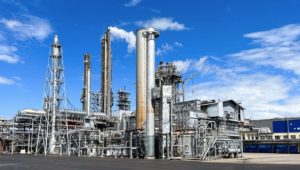
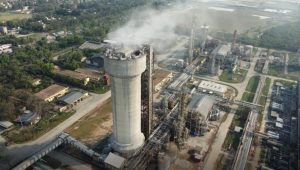
According to a detailed analysis by Al Jazeera, Israeli strikes killed several of Iran’s top military commanders and nuclear scientists and damaged nuclear facilities before targeting parts of Iran’s fossil fuel sector, including the South Pars gasfield.
On his Truth Social platform, United States President Donald Trump warned Tehran that further attacks would be “even more brutal” and urged Iran to strike a deal on its nuclear programme.
As the confrontation edges closer to full-scale war, investors are watching oil prices, stock indices and safe-haven assets with growing anxiety.
Energy markets have reacted first. Brent crude rose to $74.60 per barrel early Monday, up nearly 7 percent from the day before Israel launched its surprise attack, according to Al Jazeera. Later trading showed even sharper gains.
By Wednesday morning, Brent climbed another 1.2 percent to $82.45 per barrel, the highest level since July 2024. Since the start of the war, crude prices have jumped 14 percent.

European natural gas prices have surged even more dramatically. Reports indicate a 70 percent rise amid fears that instability could affect Qatar, the world’s largest liquefied natural gas exporter. Traders fear disruption along the Strait of Hormuz, through which roughly 20 percent of global oil and gas supplies move. Shipping traffic in the area has slowed significantly.
The Strait of Hormuz remains the conflict’s most critical pressure point. The narrow 33-kilometre-wide waterway connects the Arabian Sea to the Indian Ocean and carries around 21 million barrels of oil daily, nearly one-third of the world’s seaborne supply, Al Jazeera notes.
Iranian news agency IRINN, quoting senior lawmaker Esmail Kosari, reported that Tehran is considering closing the strait. Goldman Sachs warned that a blockade could push oil prices above $100 per barrel. However, even during the Iran–Iraq War in the 1980s, the strait never closed completely.



Analysts also stress that any closure would damage Iran’s own exports, particularly to China. Hamzeh Al Gaaod of TS Lombard told Al Jazeera that shutting the passage would prove “severe for Tehran itself”.
Rising oil prices feed directly into inflation. When energy costs climb, producers pay more for transport and manufacturing, and consumers ultimately absorb those increases. Economists warn that oil-importing countries could face higher inflation and slower growth if hostilities continue.
Al Gaaod said G7 central banks, currently on an interest rate-cutting cycle, would worry about an energy-driven inflation shock. The Bank of England recently reduced its base rate to 4.25 percent, while the US Federal Reserve has held steady after earlier tariff-related pressures.
Financial markets have swung sharply. On Friday, the S&P 500 and Nasdaq Composite fell 1.1 and 1.3 percent respectively, according to Al Jazeera. Egypt’s EGX 30 index dropped 7.7 percent, and the Tel Aviv Stock Exchange 35 Index declined 1.5 percent.
European markets also retreated, with Germany’s DAX and France’s CAC 40 down more than 1.1 percent and the UK’s FTSE 100 slipping 0.5 percent.
Asian markets have faced steeper losses. South Korea’s Kospi index fell 8 percent in morning trade. Japan’s Nikkei 225 dropped 3.6 percent, and Australia’s ASX 200 declined 1.8 percent.
Not all sectors suffered. Defence stocks rose as investors anticipated higher military spending. BAE Systems gained nearly 3 percent in London. In the United States, Lockheed Martin, Northrop Grumman and RTX also advanced.
Oil giants BP and Shell posted gains of nearly 2 percent and just over 1 percent respectively. Gold climbed about 1 percent to $3,426 per ounce, close to its April record of $3,500, reflecting demand for safe assets.
Currency markets also shifted. The US dollar strengthened as investors sought safety, pushing the dollar index up 0.2 percent to 99.28, its highest in three months. The euro fell 0.3 percent to $1.15, while the British pound slipped 0.3 percent to $1.33. Even cryptocurrencies reacted, with Bitcoin rising 0.8 percent to $68,585.
Aviation has not escaped the fallout. Emirates suspended flights to and from Iraq, Jordan, Lebanon and Iran until 30 June, with Lebanon services halted temporarily. Etihad cancelled flights between Abu Dhabi and Tel Aviv and rerouted others. Qatar Airways suspended services to Iran, Iraq and Syria.
Iran and Iraq closed their airspace, while Jordan temporarily restricted its skies. Eastern Iraq hosts one of the world’s busiest air corridors, linking Europe and the Gulf, and closures have forced airlines to reroute dozens of flights.
For now, the world economy stands at a crossroads. Markets have absorbed the first shock. Oil has surged but remains below the feared $100 threshold.
Investors still hope the conflict will not spread across the wider Gulf energy system. Yet the longer the fighting continues, the greater the risk that higher fuel costs, tighter financial conditions and fragile supply routes will converge into a broader economic slowdown.
The battlefield may lie in the Middle East, but the economic consequences stretch far beyond it.