





Bangladesh has made significant progress in improving child health over the last two decades, yet childhood malnutrition remains a serious challenge. According to UNICEF data, around 28 per cent of children under five are “stunted”, meaning they are too short for their age due to long-term inadequate nutrition. About 10 per cent suffer from “wasting”, which means they are excessively thin for their height and is an important indicator of acute malnutrition.
These conditions are more than just numbers on a growth chart. Long-term malnutrition can affect a child’s physical growth, weaken the immune system, interfere with brain development and learning and ultimately influence their future ability to study, work and thrive.
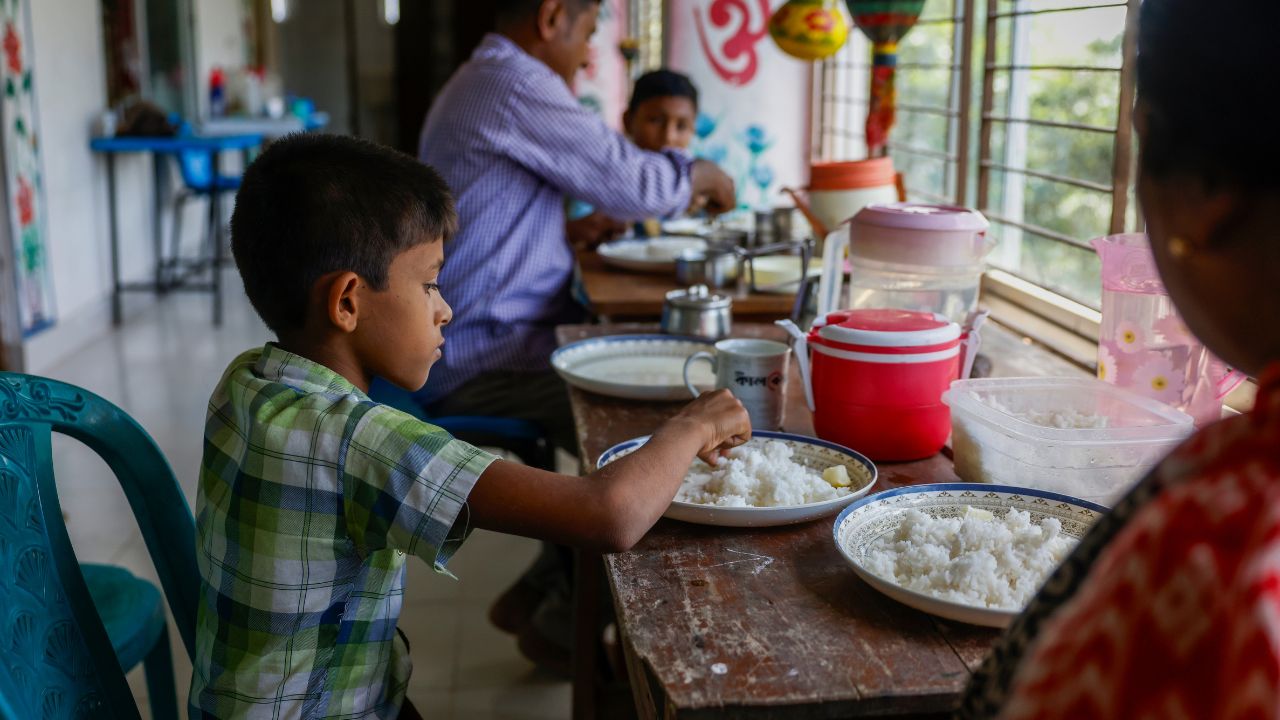
At first glance, malnutrition may seem like a problem caused simply by not having enough food. But the reality is often more complicated. Many children may eat regular meals every day and still fail to receive enough of the vitamins and minerals their bodies need. This is known as “hidden hunger”, a condition in which a person consumes enough calories but does not get enough essential nutrients.
Think about it this way: food provides energy, but calories alone are not enough for a child to grow and develop properly. Children need nutrients such as iron, zinc, iodine, vitamin A and calcium to build strong bodies, support brain development and maintain healthy immune systems. When these nutrients are missing from everyday diets, children can face nutritional problems even when they do not appear hungry.
This is where fortified foods can play an important role. Food fortification is the process of adding essential vitamins and minerals to foods that people already consume regularly. The idea is straightforward. Instead of asking families to completely change their eating habits, fortification can improve the nutritional value of familiar foods that are already part of their daily routines.
According to the World Health Organization (WHO), food fortification is one of the most effective and cost-effective ways to address nutrient deficiencies at a population level. The reason is simple. While everyday foods provide energy and basic nutrition, they may not always contain enough of the specific nutrients children need. Fortification can help fill some of these nutritional gaps.
Around the world, fortified foods have long been used to address iodine deficiency, iron deficiency, vitamin A deficiency and other nutritional problems. In many countries, they have become an important part of public health strategies aimed at improving the nutrition of children and mothers.
In Bangladesh, one familiar example is Shokti+ from Grameen Danone Foods Limited. Made from locally sourced milk, Shokti+ fortified yogurt contains several nutrients that are important for children. The idea was to create a nutritious food that could fit easily into children’s familiar dietary habits while helping them receive essential nutrients.
What makes Shokti+ particularly interesting is that its nutritional impact has also been studied scientifically.
A study on fortified yogurt in Bangladesh involved researchers from Johns Hopkins University. The findings were later published in a peer-reviewed scientific journal. Researchers examined various nutritional and growth-related indicators among schoolchildren who consumed fortified yogurt and compared them with children who consumed regular yogurt.
The study found positive changes in several important nutritional and growth-related indicators among children who consumed fortified Shokti+ yogurt. These included hemoglobin levels, iodine and certain protein-related indicators, as well as some aspects of physical growth. In simple terms, the findings suggested that fortified yogurt could make a positive contribution to children’s nutritional status and physical growth.
The involvement of Johns Hopkins University also adds an important research dimension to the discussion. The university is internationally recognised for its work in medicine and public health research, and the study provided evidence that fortified foods can potentially contribute to addressing nutritional gaps among children.
Of course, fortified food is not a complete solution to childhood malnutrition. A child’s nutritional well-being depends on many factors, including access to a diverse and balanced diet, healthcare, safe water, sanitation, maternal nutrition, appropriate feeding practices and nutrition education. No single food or intervention can address every aspect of malnutrition.
Still, fortified foods can play an important supporting role. By helping address nutrient gaps that ordinary diets may sometimes leave behind, they offer a practical way to increase the nutritional value of foods that children already consume.
As Bangladesh continues working to improve child nutrition, approaches such as food fortification can complement broader eff
orts to ensure children receive the nutrients they need for healthy growth and development.
Because when we ask whether a child has eaten enough, there is another question worth asking: Is the child also receiving the nutrients they need to grow, learn and thrive?
The answer will not come from a single food or solution. It will come from a combination of diverse diets, nutrition awareness, healthcare, safe water and sanitation, and, where appropriate, scientifically formulated fortified foods. Together, these efforts can help give Bangladesh’s children a healthier start and a stronger chance to reach their full potential.
Chowdhury Naim Ahmed Mujib is a Communications Consultant at an NGO in Bangladesh. The views expressed in this article are the author’s own and do not necessarily reflect the views of TIMES.


