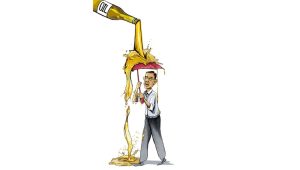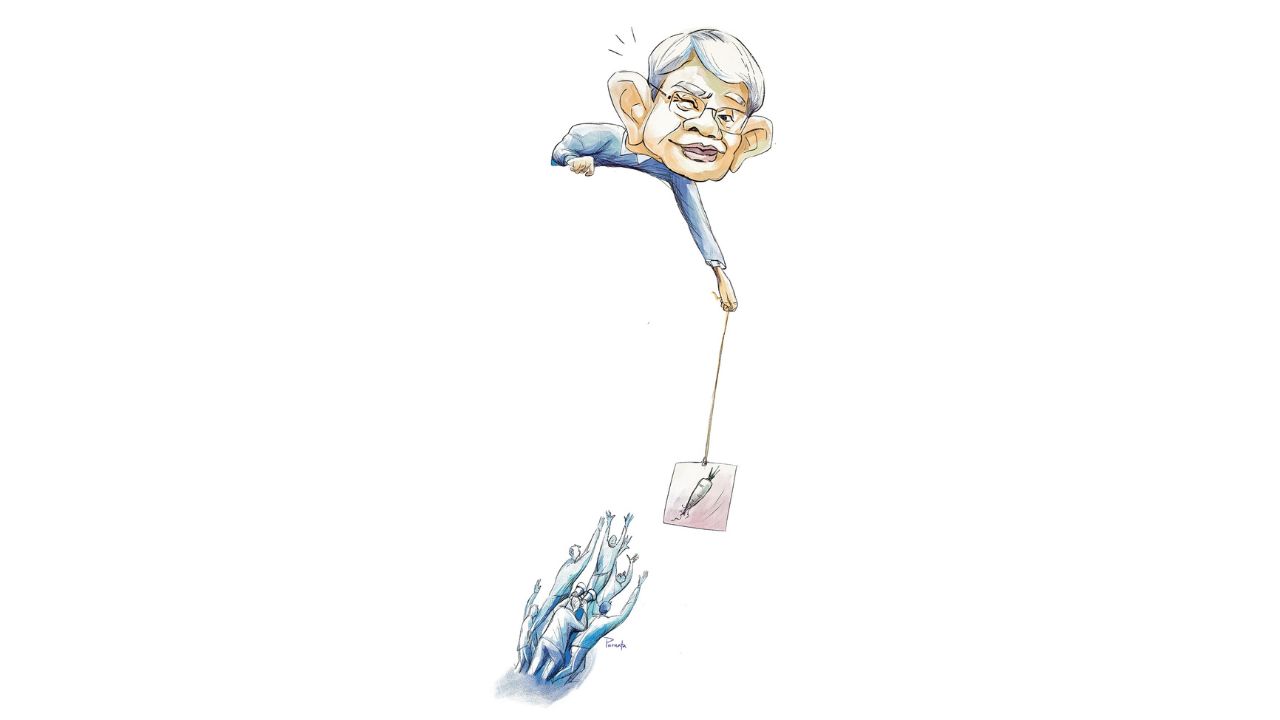

The interim government has reversed its plan to raise public sector salaries and allowances, drawing criticism from analysts over both the U-turn and the earlier decision, which they say ignored the country’s economic realities.
Finance Adviser Salehuddin Ahmed disclosed the development on Sunday while speaking to journalists after chairing the weekly meeting of the Advisory Committee on Purchase at the Secretariat.
“The decision on implementing a new pay scale will be taken by the next elected government,” he said.
The abrupt policy shift has triggered frustration among public servants, who had been expecting a revised pay structure after earlier assurances that the new scale would be introduced during the interim government’s tenure.
Economists and governance experts also questioned the rationale of proposing a major financial commitment only to later withdraw from it.

They said the interim government had taken office with a primary mandate to hold a credible election and initiate institutional reforms, but became entangled in decisions involving major fiscal implications, including a potential overhaul of public sector salaries.
Retired secretary AKM Abdul Awal Majumder said the reversal reflects a fundamental weakness — the government’s inability to stand firm on its own decisions.
“If you were not going to revise salaries, why form a pay commission at all? Why give public officials false hope?” he said.
He warned that the U-turn could erode trust among civil servants and potentially have consequences in the next election.




“If there is no confidence in the government, why would officials take risks working for it?” he added.
On 30 September, the finance adviser had said the interim government would implement a new pay scale within its tenure and issue a gazette notification to formalise it.
He had also said the government would not wait for an elected administration to roll out the revised pay structure.
Centre for Policy Dialogue Executive Director Fahmida Khatun said the decision exposed the government’s failure to maintain policy consistency.
“It shows the interim government could not remain firm on its stance. However, in the end, it was the right decision,” she said.
Khatun argued that a pay increase amid high inflation and economic stress could have exacerbated market pressures.
“Businesses are already under strain. A public sector pay hike now could fuel inflation further, and low-income groups would suffer the most,” she added.
In July, the interim government formed the National Pay Commission 2025 to review the existing pay structure and recommend a pragmatic salary framework for government employees.
The commission was mandated to factor in the cost of living for a family of six, education and healthcare expenses, economic growth, the government’s fiscal capacity, poverty reduction priorities, and the need to attract and retain skilled civil servants. It was given six months from its first meeting to submit its report.
The policy reversal has triggered widespread discontent among public servants.
“I am very frustrated hearing the decision,” said Moinul Islam, an administrative officer at the Finance Division.
“We had long hoped for an increase. But the government has finally backtracked,” he told TIMES of Bangladesh.