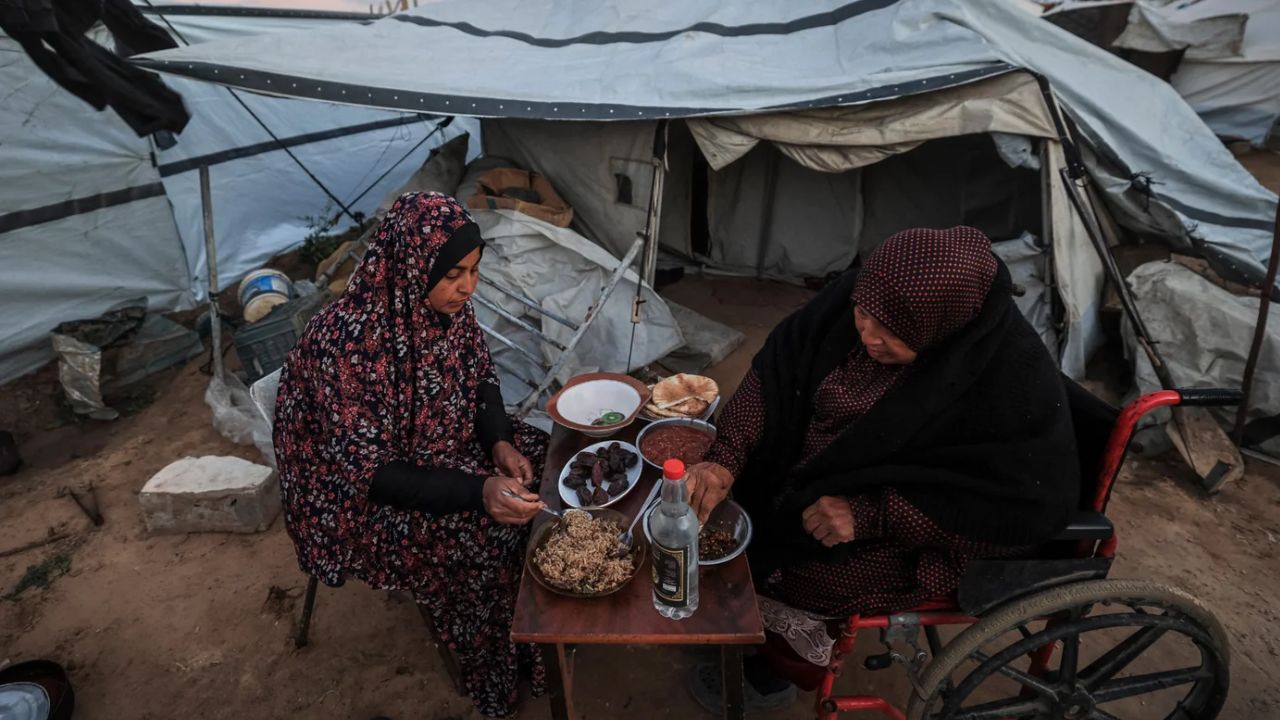



Food prices in Gaza are rising sharply as border crossing closures linked to the widening regional war involving Israel, the United States and Iran deepen shortages in the besieged enclave.
Residents and traders say staple foods have become scarce in recent days, while market prices have jumped as families rush to buy whatever supplies remain available, Al Jazeera reported.
Reporting from Gaza City, Al Jazeera correspondent Hani Mahmoud said the effects of the latest escalation were being felt directly in daily life.
“The latest escalation is being felt in the most immediate way possible: through shrinking supplies and tightening access at border crossings,” he said.

Gaza relies heavily on crossings with Israel and Egypt for nearly all food, medicine, fuel and other basic goods. When those routes close or operate at reduced capacity, shortages quickly appear across markets and essential services.
Israel shut Gaza’s crossings on 28 February as Israeli and US forces launched attacks on Iran, halting humanitarian aid deliveries and patient evacuations from the enclave.
Authorities later reopened the Karem Abu Salem crossing for the “gradual entry” of aid, but access remains restricted, while the Rafah crossing with Egypt has stayed closed.




The World Health Organization’s Eastern Mediterranean regional director Hanan Balkhy told Reuters that only about 200 trucks a day were entering Gaza, far below the roughly 600 required daily to support the population. She said about 18,000 people were still waiting for medical evacuation.
On the ground, rising prices are already affecting household food access.
Mahmoud said a kilogram of tomatoes that sold for about $1.50 a month ago is now close to $4, while cucumbers and potatoes have also become significantly more expensive.
“People can no longer afford to buy vegetables and fruits due to high prices caused by the war between Israel and Iran,” one shopper told Al Jazeera.
Traders and residents say supplies are entering more slowly while demand is rising, causing shelves to empty quickly. Cooking oil, flour and several canned foods have largely disappeared from some shops in Gaza City.
The United Nations humanitarian agency said the current pace of aid deliveries is too low to maintain stocks, with many items selling out within days.
Aid agencies also warn that shortages are affecting other essential services. Limited fuel supplies have forced the suspension of some waste collection and reduced water production, while hospitals and health centres have activated emergency measures.
The World Food Programme warned that the fragile improvement in food supply seen earlier this year could quickly reverse if humanitarian access does not stabilise.
With crossings still restricted, families across Gaza face growing uncertainty over whether basic food supplies will remain available in the coming weeks.