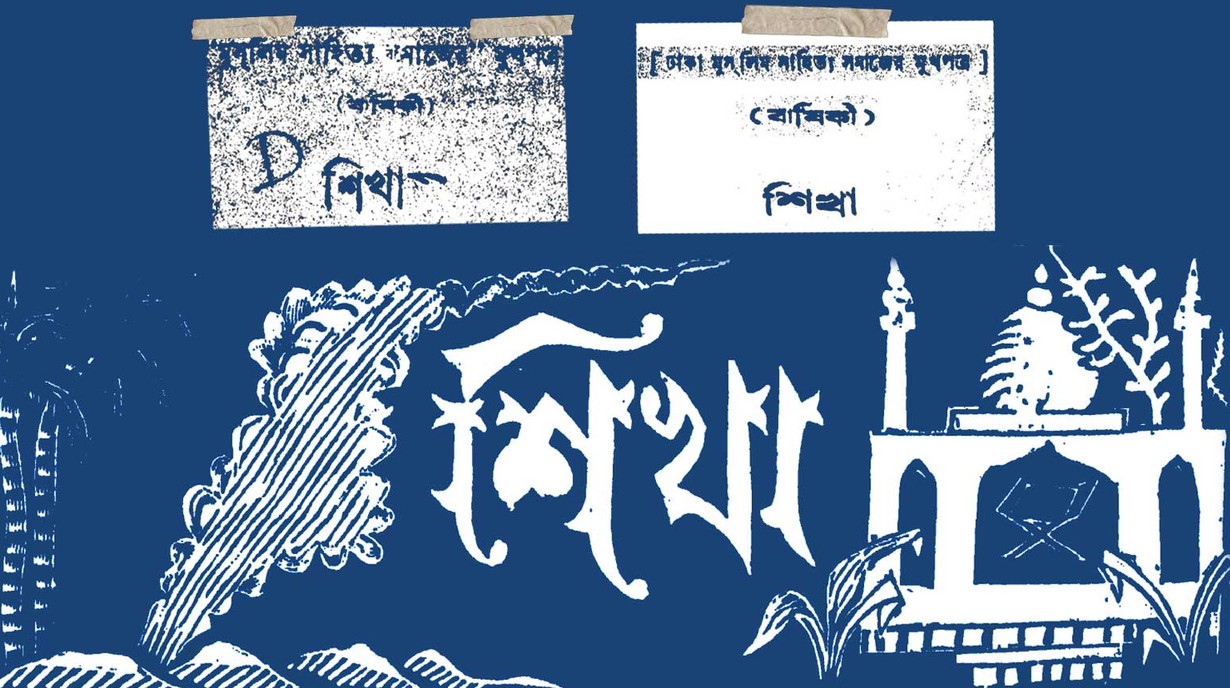



A hundred years ago, the light of enlightenment dawned in Dhaka, breaking the shackles of mental imprisonment and awakening generations of Bengali Muslims to think, question, and aspire. When the ‘Muslim Sahitya Samaj’ was established in 1926 and the ‘Shikha’ in 1927, it was found that there was an unsolved problem: Have we learnt how to think for ourselves or just how to continue the old tradition of obedience to the digital screen?
The Muslim Sahitya Samaj was not just a literary society. Kazi Abdul Odud, Abul Hussain, and their associates have changed the mindset of society through literature. There was no hostility towards religion in freedom of intellect. It involved looking at religion, scripture, tradition and social conventions in a rational, historical and evolving human needs framework. They said that ‘where knowledge is confined, intellect is paralysed, and freedom is impossible’, challenging monopolies over knowledge and interpretation. The movement was a political one in the truest sense of the world. Politics has nothing to do with parties, elections, and state power. It also involves who is allowed to think, to speak, what is fair, what is not, what is good, what is wrong, and so on. Its proponents knew that a new ruler does not necessarily bring freedom to society. A new order can generate old authority if the structures of thought aren’t modified.
Resistance was fierce. Kazi Abdul Odud’s firm stance on the prohibition and command issues in his The Hypnotised Muslim and Abul Hussain’s book were rarely responded to. They were denounced as atheists, heretics or enemies of Islam by their authors. The possibility of religious and social interpretations that might have been called into question based on reason and history became a matter of choice between Islam and its opposition. Discrediting a speaker rather than dealing with an argument is not new. The epithets hurled at Kazi Nazrul Islam were part of the same politics of character assassination. However, it is not a heroic story to make of the movement. It had been a campaign of the intellectual, urban, middle-class men. It was led by almost no women, and had no strong connection with Begum Rokeya’s feminist ideas. It also failed to convey free thought to the peasants and workers, to rural women and to the people with little formal education.
Institutional weakness was its biggest disadvantage. Rooted structures of power could not be matched by a movement that relied on an annual journal, occasional meetings and a handful of people. There were only five issues of ‘Shikha’ and the Muslim Sahitya Samaj did not continue after 1938. Its enemies had religious institutions, family authority and local influence. The movement was still confined to cities and restricted. It is a tale of courage, and it is a warning about progressive ideas that have no organisation and no wide social support.

After a hundred years, technology has changed, but the power is still the same. Social media provides more avenues for expression, and not all voices are heard in the same way. Argument and emotion move quickly; dialogue even faster; identity moves even quicker. The identity of the person who wrote a statement is investigated before reading the statement. People do not answer a question; they declare which side the questioner is on. This culture produces fear and silence. The dominant view seems more widespread than what it is in the silence that surrounds it. As the process of religious reinterpretation or critical history or minority viewpoints becomes a contentious issue, self-censorship in the present is brought forth by an old fear through a new technological system.
In this place, the lessons of the movement are still pertinent. There need be no insulting of religion; but respect for religion does not warrant the termination of every question. When the language, experience and beliefs of the common people are ignored, and rationalism becomes educated self-congratulation. We require a language that is not only able to articulate the concept of faith, but does so without evasions of truth, without divorcing faith from tradition, without elevating faith above history, without accepting faith upon the basis of cheapness.
This movement is not just a success or failure situation. It helped to lay the intellectual foundation for the Language Movement, the struggle for Bengali cultural identity and secular political awareness. However, it did not have a mass base, continuity and organised strength to develop a culture of rational enquiry. Its core message is this dual inheritance. It is easy to recall great thinkers, but it is much more difficult to make social space for the knotty questions on their minds.


That’s more complicated in the digital age. Algorithms demand attention – and not necessarily truth. Rather than patient reasoning, there is more visibility of anger, fear and certainty. Information does not necessarily equal knowledge, unconfirmed statements and echo chambers can trap people in prejudice. Silencing a question was a lengthy process in the ‘Shikha’ era. In the present day, a coordinated attack on the web can make a writer or citizen fearful of going on the record.
The question that is not being raised is which is more rational, Muslims or Hindus. Whether we have really attempted to construct a society of reason. A society which honours thinkers but hates questioning, which holds book fairs but fears ideas, which enlarges universities, but contracts independent judgment is a society of non-knowledge. It’s a society of monuments, ceremonies and slogans.
The true measure of intellectual freedom is not at commemorative meetings. It comes when an unpopular opinion may state its case; when the exercise of power in the name of religion may be criticised without hatred directed at religion; when majority emotion is not accorded sole status as a standard of truth. It is more truthful at the centenary to recognise the unfinished task of the movement, than to declare victory. Nowadays, knowledge is not scarce, but intellect is chained with many fetters. In the absence of intellect, mental emancipation is impossible even with political freedom.
It is the centenary when remembering is a challenge to the present; it’s the centenary when it becomes clear that there is a gap between the freedoms we celebrate and the freedoms, we are not yet prepared to defend in the public forum. Freedom of thought is not a consummation yet. It is a discipline developed each day: to defend the right to ask questions and listen to different points of view, to bring the most precious of our beliefs before the bar of reason.
To inherit the mantle of ‘Shikha’ means to create a society where people who ask questions are not enemies of others, where difference of opinion is not a crime, and where faith and reason are comrades in the quest for truth. That society has not yet been created. The Freedom of Intellect movement is thus not just history after a hundred years. We still have an unfulfilled future ahead.
The views expressed in this article are solely those of the author
The writer is an Associate Professor, Department of Communication and Journalism, University of Chittagong; Doctoral Scholar, School of Journalism and Mass Communication, Jadavpur University, India. Email: [email protected]