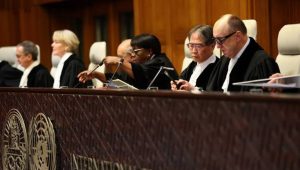



In a historic verdict, the International Court of Justice (ICJ) has ruled that Myanmar committed genocide against the Rohingya minority ethnic group.
Delivered on Thursday by ICJ President Yuji Iwasawa of Japan following a three-hour reading, nine of the 15-judge panel voted in favour of the decision and issued a landmark reparations order, reports Al Jazeera.
The ruling marks the first time since its establishment in 1945 that the World Court has held a state responsible for genocide, delivering a final judgement that cannot be appealed.
Vindication, legal backing, and restitution for Rohingya
For the Rohingya, survivors and rights advocates view the ruling as clear vindication after decades of systematic persecution, mass violence, and forced displacement.
The verdict provides unprecedented legal backing for justice and accountability at the highest international level, bolstering their long-standing hopes of returning safely and with dignity to their ancestral homes in Rakhine State while securing official state recognition from Myanmar.
Arsalan Suleman, partner at law firm Foley Hoag and lead counsel for The Gambia, described the judgement as a landmark victory that honours the perseverance of victims seeking justice.
Meanwhile, Matthew Smith of the advocacy group Fortify Rights emphasized that the ruling gives much-needed momentum to efforts aimed at holding the individual perpetrators and architects of the genocide criminally accountable.

Importantly for the displaced population, the ICJ instituted explicit restitution and reparations measures. The court ordered Myanmar to immediately cease all acts of violence, investigate and prosecute culpable individuals, and provide guarantees against non-repetition.
Myanmar is required to:
- Allow and facilitate the safe and voluntary return of displaced Rohingya.
- Return or replace all collective property damaged during military operations.
- Facilitate searches for missing persons and ensure proper burials.
- Provide physical and psychological rehabilitation for survivors and protect them from further persecution.
Although the court stated it could not immediately determine monetary compensation, it ordered Myanmar to submit an action plan report within two years, establishing a deadline for November 2028.
Fortify Rights campaigner Matthew Smith stressed that reparations must be comprehensive and shaped by Rohingya survivors themselves – encompassing financial compensation, land restitution, restoration of citizenship, medical care, trauma support, education, and livelihood opportunities – rather than being conflated with routine humanitarian assistance.



Detailed findings of genocidal intent
The court established that Myanmar security forces killed thousands of Rohingya in western Rakhine State, committed widespread sexual violence, and carried out acts of extreme violence against children.
According to the panel, Rohingya villages were systematically destroyed, replaced with permanent structures, and re-settled by non-Rohingya populations, while high-ranking officials disseminated anti-Rohingya hate speeches depicting the group as “subhuman and a violent threat”.
The justices noted that targeted acts against children established the military’s intent to prevent births within the group. The court concluded that Myanmar violated its legal obligation under the 1948 Genocide Convention to prevent genocide by proceeding with operations while aware of the risk when armed civilians and allied militias participated.
Kyaw Min Sabber, founder of the Rohingya Human Rights Initiative, stated that the community hopes the ruling will end arbitrary killings and displacement in Rakhine State. He called on international supporters to maintain pressure on Myanmar until refugees achieve safe return with full equal rights, security, and dignity.
Background to the case and human cost
The legal action was brought before the ICJ in November 2019 by The Gambia, a Muslim-majority West African nation supported by the 57-member Organisation of Islamic Cooperation (OIC).
The Gambian legal team was initially led by former Justice Minister Aboubacarr Tambadou in 2019, and later by current Justice Minister Dawda A Jallow during hearings in January 2026.
Eleven nations formally filed to support the proceedings: Canada, Denmark, the Netherlands, Germany, the Maldives, the Democratic Republic of the Congo, Slovenia, Ireland, Belgium, France, and Britain.
Former civilian leader Aung San Suu Kyi personally defended Myanmar at The Hague in 2019 before her overthrow in a 2021 military coup.
Current military leader-turned-president Min Aung Hlaing, who commanded the 2017 crackdowns, denied all allegations, contending that forces conducted legitimate “clearance operations” following insurgent attacks by the Arakan Rohingya Salvation Army (ARSA).

Prior to the 2017 offensive, which killed roughly 10,000 Rohingya and forced 750,000 across the border, an estimated 1.4 million Rohingya lived in Myanmar, where a 1982 citizenship law stripped most of their citizenship by treating them as “illegal migrants”.
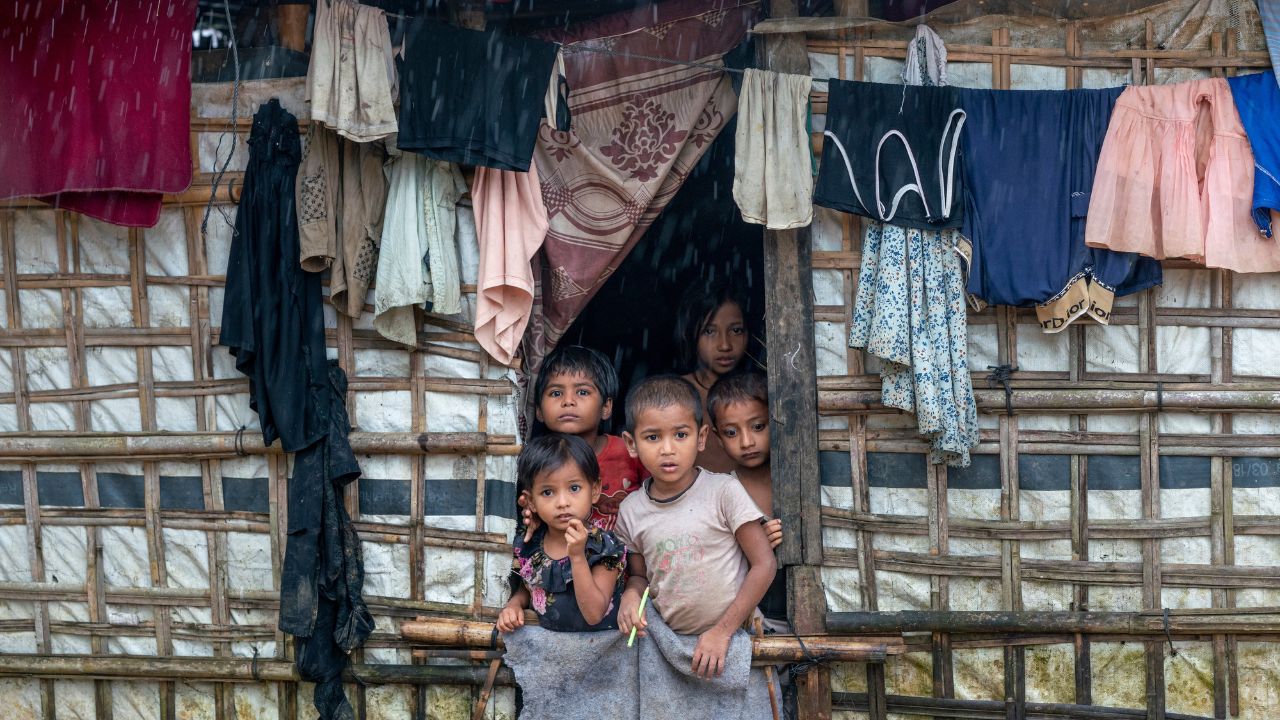
Today, approximately 1.2 million Rohingya reside in overcrowded camps in Cox’s Bazar, Bangladesh, while 520,000 remain under strict restrictions in Myanmar.
Additional refugee populations reside in India, Pakistan, Saudi Arabia, Malaysia, Thailand, and Nepal. International aid for the camps has shrunk significantly, particularly after US President Donald Trump took office in January 2025 and enacted foreign aid spending cuts.
Practical hurdles and implementation challenges
Despite the legal victory, severe operational and political obstacles remain before the Rohingya can experience practical relief. The ICJ possesses no direct enforcement mechanism, though The Gambia may now table the binding verdict before the United Nations Security Council to request international action.
Myanmar remains locked in a severe civil war following the 2021 coup, which has killed an estimated 100,000 people and displaced 3.5 million nationwide.
Escalating hostilities between the military and the Arakan Army, a largely Buddhist rebel group in Rakhine State that also targets Rohingya, have further deteriorated security.
Although Myanmar verified more than 300,000 refugees in Bangladesh for repatriation in August, it insisted returns can only begin once security is restored in Rakhine.
Michael Becker, an international law professor at Trinity College Dublin and former ICJ legal officer, observed that current political conditions in Myanmar mean practical relief is unlikely to be realized in the short term.