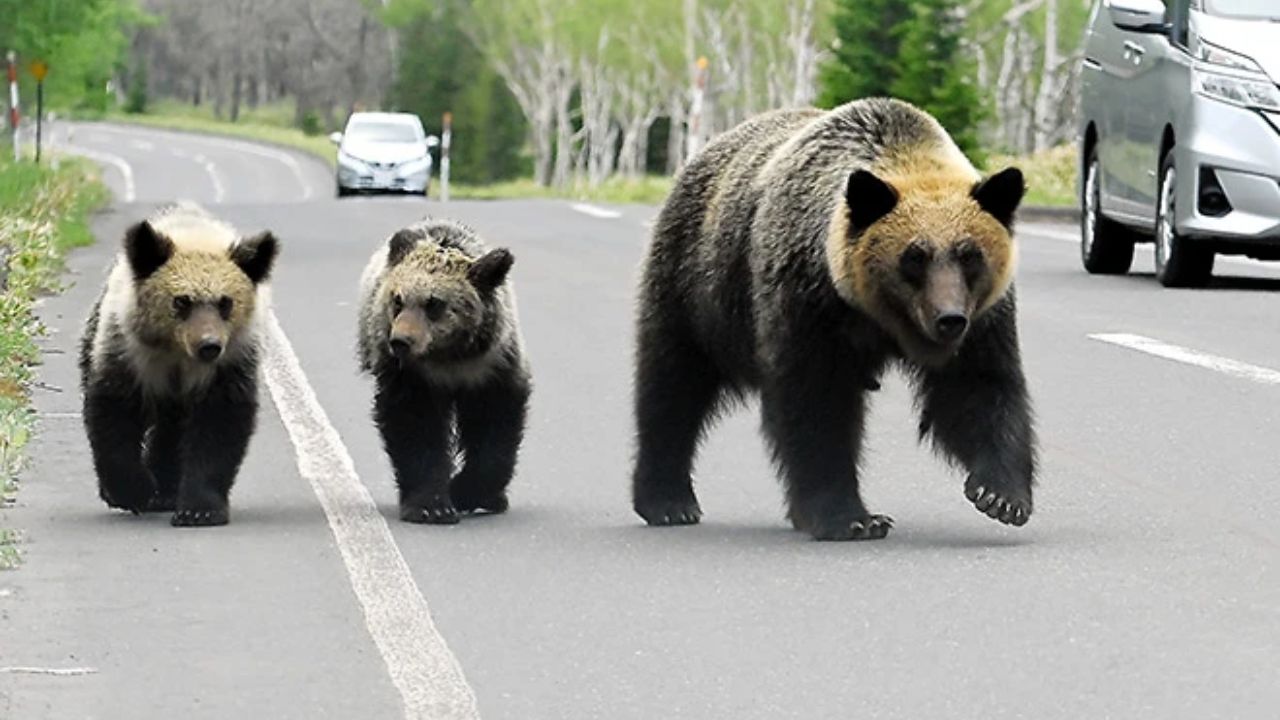

Japan is witnessing an alarming rise in bear attacks this year, prompting the government to deploy military personnel, enhance surveillance systems, and issue urgent public warnings.
Since April, at least 13 people have been killed and more than 100 injured — the highest toll since official record-keeping began in 2006, according to the Ministry of Environment of Japan, reports Al Jazeera.
The country’s diverse bear population includes the massive brown bears of Hokkaido, which can exceed 450kg, and the more widely distributed Asiatic black bears, often found in the densely populated mainland.
While black bear encounters are more common, experts say brown bear attacks tend to be far more severe due to their sheer size and strength.
Shota Mochizuki, a wildlife specialist at Fukushima University, noted that Japan’s mainland offers far more opportunities for unexpected contact. “Black bears live across regions where many people reside,” he said.
“Brown bears remain limited to Hokkaido, but their attacks are usually much more dangerous.”

Northern prefectures hit hard
The surge in incidents has been most pronounced in northern districts. Public broadcaster NHK reports that Iwate has recorded five deaths this year, followed by Akita with four fatalities, and additional deaths in Hokkaido, Nagano, and Miyagi.
Akita has emerged as a particular hotspot, where bear sightings have increased sixfold. More than 50 people have been injured in the prefecture since May, many in residential neighbourhoods. In one November incident, a 78-year-old woman and another resident who rushed to assist her were mauled in Gojome Town.
Akita Governor Kenta Suzuki warned that local authorities are overwhelmed. Conditions on the ground have surpassed what municipalities can manage alone, he wrote in a recent statement.
Terrifying encounters




Several attacks have gained national attention. A New Zealand resident in Japan was seriously injured while running in a forested area of Myoko after a black bear dragged him to the ground, crushing his arm and injuring his leg. He has since undergone multiple surgeries.
In central Japan, a bear entered a supermarket in Numata City last month, injuring several shoppers before escaping.
The spike in attacks has prompted the US and UK to issue advisories to travellers, warning them to avoid forested regions, remain alert and refrain from leaving food waste outdoors.
Reasons behind increased attacks
Experts cite two key factors – food shortages and growing bear populations.
Bears depend heavily on acorns and beech nuts, which have been scarce this year. As natural food sources dwindle, bears are increasingly wandering into towns and farms. Similar patterns emerged in 2023 after poor acorn harvests, a trend some researchers link to climate change.
At the same time, Japan’s bear population has grown following decades of conservation efforts and reduced hunting. Government data indicates there are now over 54,000 bears nationwide — a sharp rise from previous estimates.
Rural depopulation has further complicated the situation, leaving many farmlands and forest edges unmanaged, creating easier pathways for wildlife.
Authorities respond on this
To tackle the crisis, Japan has mobilized riot police and Self-Defense Forces (SDF) personnel in hard-hit regions like Akita. While riot police are authorized to shoot aggressive bears, SDF members can only assist behind the scenes by installing traps or clearing areas where hunters have acted.
“Japan’s military cannot kill wildlife under the law,” Mochizuki explained. “Licensed hunters hold that authority, and they are essential in controlling dangerous animals.”
Local administrations are also using drones and AI-driven surveillance systems to monitor bear activity and issue rapid alerts to residents.
Preventive measures being urged
Wildlife experts recommend eliminating food sources near homes, properly disposing of garbage and removing fruit-bearing trees that attract bears. Electric fencing around farms and village boundaries has also proven effective.
Early warning tools such as motion sensors, camera traps and mobile alerts can further reduce risks. However, Japan faces a shortage of experienced hunters due to its ageing population, a challenge officials say needs urgent attention.
Mochizuki emphasized that public awareness remains crucial.
As Japan braces for the winter months — a period when bears increasingly seek food — authorities warn that vigilance and community-level coordination will be essential to prevent more lives from being lost.