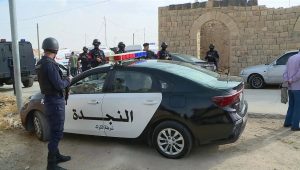
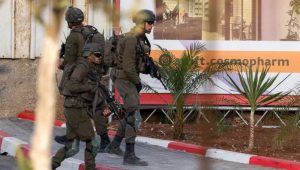
As Houthi insurgents intensify their blockade on the southwestern Yemeni city of Taiz, local women who previously provided bakery goods for defending troops have pivoted to purchasing firearms and ammunition.
The grass-roots initiatives emerged following a surge in combat across the western countryside of Taiz governorate in early September, pitting Saudi-supported forces of Yemen’s internationally recognised government against the Iran-aligned Houthi movement.
Initially, female volunteers gathered to bake cookies for frontline combatants. Amira al-Saghir, an activist participating in the effort, stated that the original objective was “to strengthen the relationship between the supportive social base and the members of the national army and pro-government popular resistance forces stationed at the front lines in defence of their besieged city, which is subjected to daily shelling in preparation for an invasion.”
The cookie drive gained broad public participation and widespread social media support alongside broader community provisions of food and essential goods.
In Yemen, a conservative nation and the Middle East’s poorest country, women rarely engage in direct combat during the civil war that started in 2014.

Nevertheless, these community efforts have enabled women to assist pro-government combatants and contribute directly to their city’s defence.
A four-year period of relative calm, established under a United Nations-brokered truce in April 2022, was shattered in early September when Houthi forces launched a major ground assault in western Taiz.
The armed group swiftly captured territory along the Red Sea coast, taking control of the strategic port city of Mocha on 10 September and extending its reach near the Bab al-Mandeb strait, reports Al Jazeera.
Advancing further into the governorate, Houthi forces seized key access routes to the provincial capital, effectively surrounding Taiz whilst government troops executed counter-offensives.



The renewed blockade has severely restricted traffic and basic supplies, triggering acute shortages of food, fuel, and medical items.
As fighting escalated and rural districts fell to the Houthis, donors began stipulating that a portion of their financial contributions be directed towards military ammunition.
Social media reports highlighting critical ammunition shortages among government fighters further accelerated this transition, compelling women to intervene to prevent the city from falling.
Humanitarian activist Huriya Wabel explained that women felt compelled to take decisive action after witnessing what she termed a Houthi “war of extermination” against the city.
She noted that numerous civilians wished to join the fighting but lacked weaponry, making arms procurement an urgent necessity.
Khadija al-Majidi, a local activist involved in gathering donations for weapons and food, described the strategic shift as an inescapable response to the encirclement.
“When the enemy reaches the gates of your city and imposes a complete siege on it in preparation for storming it by force, and everyone in it, including you, your children, and members of your family, is threatened with being killed, captured, or displaced … then what do you expect from us?” she remarked.
“Did you expect us to carry flowers for the criminal who came from the farthest reaches of the country to destroy our city and kill us?”
Al-Majidi regularly visits active combat zones near Jabal Sabir, a mountain overlooking southern Taiz.
On one such trip, she delivered $3,000 worth of ammunition and military supplies alongside winter clothing, footwear, and food supplies to a frontline commander. She noted that enduring more than ten years of devastating warfare had erased her fear of visiting active battlefields.
To expand fundraising efforts, the women’s department of the Supreme Council for Popular Resistance in Taiz initiated a drive on 8 October aimed at supplying 10,000 pro-government fighters with rifles and ammunition, calling for support from Yemenis locally and overseas.
Donations have continued to arrive from Yemeni expatriates and local residents despite the severe humanitarian distress in Taiz. According to al-Saghir, one soldier’s wife surrendered her wedding ring to aid the cause, while al-Majidi reported that other women contributed gold jewellery. In another instance, a donor submitted envelopes filled with Yemeni and Saudi banknotes inscribed with the message: “God willing, we will win. Buy ammunition for the heroes with this”.