


Setting up a factory in Bangladesh can take up to 457 days and require 19 licences and 154 documents, prompting a government-backed reform panel to propose a five-year digital trade licence to cut approval delays and compliance costs.
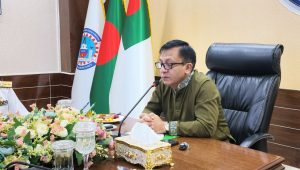
Principal Secretary Abdus Sattar made the proposal at the 16th meeting of the Private Sector Development Policy Coordination Committee on Saturday at the Prime Minister’s Office.
The proposed licence would be valid for five years and carry a single tax rate based on business size.
Business Initiative Leading Development (BUILD) CEO Ferdaus Ara Begum said manufacturers face duplication across more than 10 agencies. She proposed replacing separate Import Registration Certificate and Export Registration Certificate requirements with the existing trade licence system, saying the change would have little revenue impact while reducing costs, particularly for small and medium-sized enterprises.
Sattar called for more frequent reviews and better-prepared reform proposals to speed up decisions. The aim is to reduce the number of approvals, paperwork and time businesses need before starting operations.

The meeting also highlighted the failure of the central effluent treatment plant at the Savar Tannery Estate as a major constraint on leather exports.
Federation of Bangladesh Chambers of Commerce and Industry Secretary General Md Alamgir said the plant’s failure is undermining traceability and export performance, putting leather producers at a disadvantage to garment exporters that operate their own treatment facilities.
Metropolitan Chamber of Commerce and Industry President Kamran T Rahman said the tannery estate had been moved to Savar without adequate preparation or technology.




Ministry of Industries Additional Secretary Md Nurruzzaman said design problems in the plant are being examined by an Italian consultant and a Dhaka University expert.
Compliance with environmental standards is essential for Leather Working Group certification, which is important for access to international buyers, he said, but fixing the plant will require substantial investment.
Tannery waste adds to the problem.
Ministry of Environment, Forest and Climate Change Acting Secretary Fahmida Khanam said the waste contains recyclable material and sludge, while separating hazardous chrome remains difficult. Commercial waste-utilisation models could help address the problem, she said.
The reform panel also discussed solar manufacturing. Bangladesh Standards and Testing Institution (BSTI) Director General Kazi Emdadul Haque said standards had been developed for 39 solar products and proposed including photovoltaic modules, inverters, secondary cells and batteries and charge controllers in the Import Policy 2026-2029.
Energy Division Additional Secretary Md Sabur Hossein sought policy support for domestic solar manufacturers. Sattar urged BSTI to resolve certification bottlenecks and encouraged businesses to use duty-free solar accessories announced in the budget.
For cross-border digital commerce, Bangladesh Bank Deputy Governor Md Habibur Rahman said payment aggregator EkPay is being developed, while private platforms are also being encouraged.
National Board of Revenue (NBR) Acting Chairman Ahsan Habib said the proposed Import Policy would allow partial exporters to import inputs through a free trade zone operating like a central bonded warehouse.
The NBR is also automating tax refunds, while advance income tax payments can be adjusted against final returns.
A centralised software platform is being developed to integrate trade licensing across local government bodies, Local Government Division Joint Secretary Parimol Sarkar said.
The committee suggested one month to finalise the Companies Act 1994 and another month for the corporate social responsibility policy.
Sattar recommended a meeting in three months to assess whether the reforms have actually reduced approvals, paperwork and the time businesses need to operate.