





The Bangladesh Premier League (BPL) will return this winter with a sleeker, five-team format as the Bangladesh Cricket Board (BCB) looks to restore order and credibility to a tournament that has too often lurched between chaos and charm.
Following weeks of evaluation, the BPL Governing Council approved Dhaka Capitals, Chattogram Royals, Rajshahi Warriors, Rangpur Riders and Sylhet Titans for the next cycle. The decision, announced on Thursday, ends speculation over the league’s structure and confirms a smaller, more financially vetted competition.
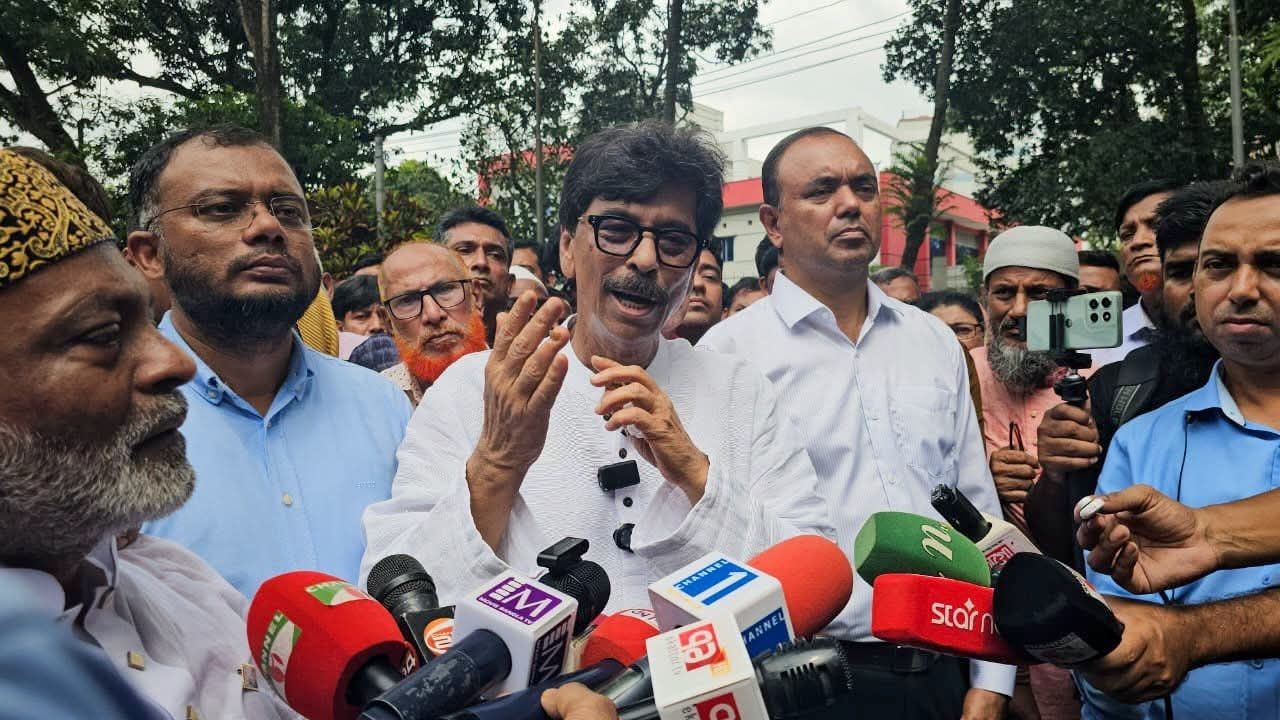
“The decision was not about reducing teams, it was about ensuring sustainability,” said Ifthekar Rahman, the BPL Governing Council’s member-secretary. “Each franchise had to show clear financial capability and operational readiness. We want stability, timely payments and a professional product.”
The BCB has reportedly required each franchise to deposit a Tk 10 crore bank guarantee before the player draft, an effort to prevent the payment delays and disputes that marred earlier seasons. The tournament is scheduled for a compact mid-December to mid-January window, aligning neatly with a gap in Bangladesh’s international commitments and allowing for the participation of several overseas cricketers.
Pros and cons of a five-team BPL
The downsizing has split opinion across Bangladesh’s cricketing fraternity. For some, it is a timely correction; for others, a missed opportunity.
Among the positives, a five-team competition could mean a higher concentration of quality. Fewer squads allow franchises to secure stronger local and foreign players within their budgets, which in turn can improve on-field standards. It also simplifies logistics, scheduling and venue management, longstanding headaches for organisers.
Former Bangladesh captain Habibul Bashar believes the move could lead to more competitive cricket. “If every team is strong and balanced, you’ll get closer contests,” he said. “That’s what fans want, every game to matter.”
The trimmed field also increases the likelihood that top overseas professionals will feature prominently. The timing, if it is from mid-December to mid-January, conveniently avoids clashes with major tournaments like the IPL or The Hundred. While it overlaps partially with Australia’s Big Bash League and the UAE’s ILT20, the BPL’s shorter duration might still attract global T20 freelancers such as Alex Hales, Rahmanullah Gurbaz and David Wiese, who have previously featured in Dhaka and Chattogram colours.
However, the drawbacks are equally clear. Fewer teams mean fewer opportunities for domestic players, particularly emerging talents who depend on the BPL’s visibility for national selection. Former opener Javed Omar expressed concern: “The BPL has been a finishing school for young cricketers. If you cut down the number of teams, you’re cutting down the number of chances.”
There’s also the risk of oversaturation in match-ups. With only five sides, teams will face each other repeatedly, and the novelty factor may fade if scheduling isn’t handled smartly. Moreover, a smaller pool amplifies the impact of any one franchise underperforming: if one side struggles financially or competitively, it could distort the balance of the league.
The bigger picture
Since its inception in 2012, the BPL has been Bangladesh’s grand cricketing experiment: a showcase of flair, unpredictability and, at times, administrative fragility. After seasons beset by payment rows and ownership reshuffles, the BCB appears to have prioritised credibility over scale.
The move brings the BPL in line with other streamlined T20 leagues. Pakistan’s PSL began with five teams before expanding to six, while South Africa’s SA20 has maintained a six-franchise model under stringent financial checks. The BCB’s decision, therefore, fits within a global trend of quality control over expansion.
Internationally, a five-team BPL could prove easier to follow and market. With clear regional identities — Dhaka, Chattogram, Rajshahi, Rangpur and Sylhet — the tournament retains nationwide representation without spreading itself thin. Broadcasters in the UK, where Bangladeshi cricket enjoys a strong diaspora following, are likely to benefit from the simplified structure and consistent scheduling.
The franchises confirmed
- Dhaka Capitals
- Chattogram Royals
- Rajshahi Warriors
- Rangpur Riders
- Sylhet Titans
Each side will enter a new rights cycle, with contracts reportedly set for multiple seasons to encourage long-term investment and stability.
For a tournament that has so often flirted with disorder, the BPL’s latest reset feels pragmatic. Five teams may sound modest, but if the cricket is fierce, payments are punctual, and the organisation is tight, this edition could mark a new beginning for Bangladesh’s domestic showpiece.
As Habibul Bashar summed it up: “The BPL doesn’t need more teams. It needs more trust.”


