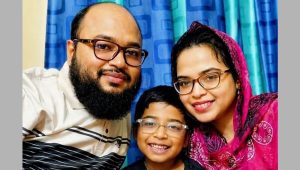
Six-year-old Sajid and four-year-old Sabid arrived at the Ferdous Steel Ship Recycling Yard in Bhatiari, Sitakunda, on Sunday afternoon holding a photograph of their father, Abdul Alim Sujan.
Clutching their mother Suborna Akhter’s hands, the two children came with their grandfather to the yard where their father had worked as a safety officer. Sujan was among 10 workers who died after being exposed to toxic hydrogen sulfide gas while cutting a scrap vessel at the yard.
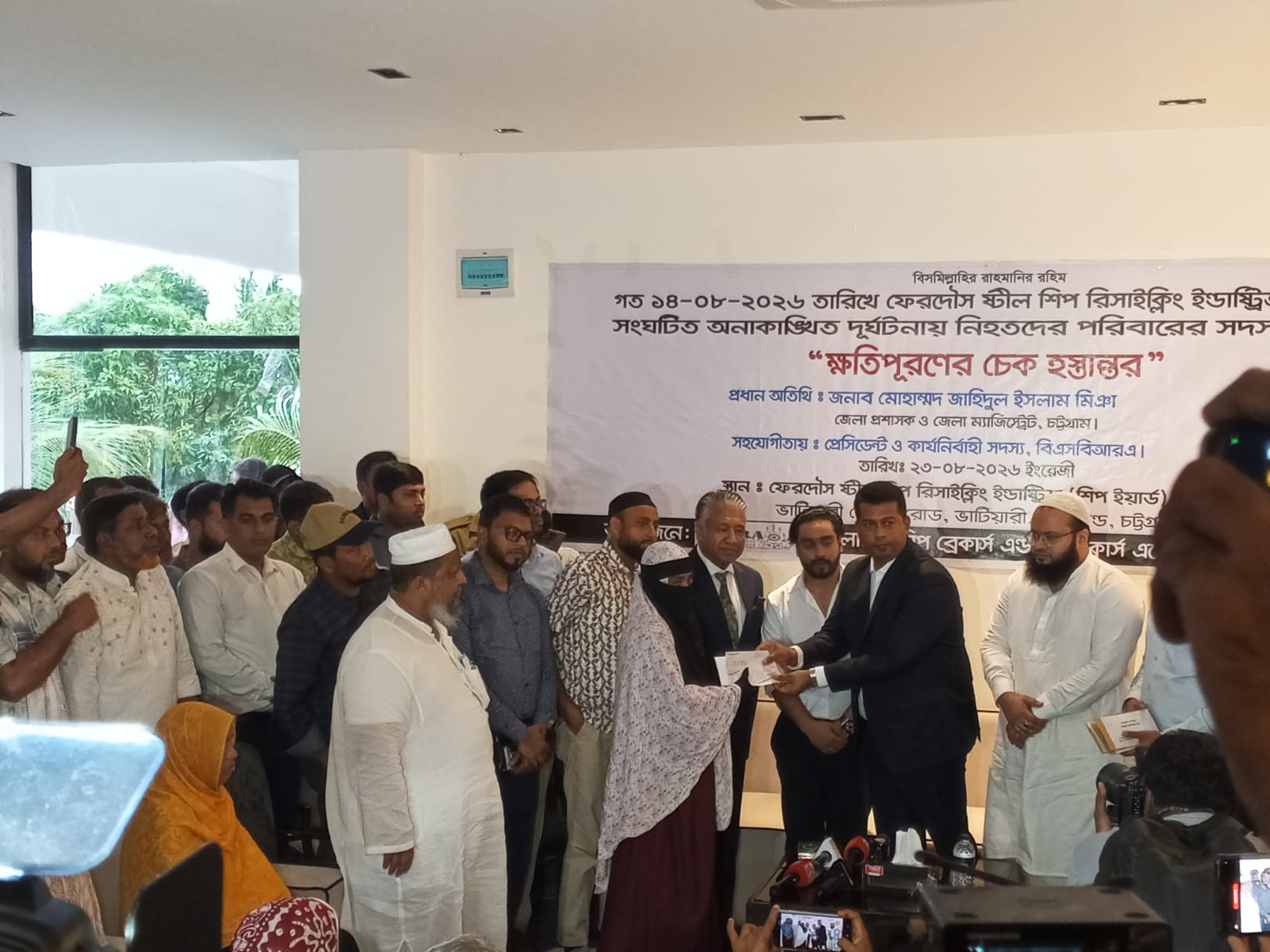
The event turned emotional as grieving relatives, yard officials and representatives of the district administration gathered to remember the workers who lost their lives.
Chattogram Deputy Commissioner Mohammad Zahidul Islam Miah handed over the compensation checks to the families of the deceased workers.

Sujan’s wife, Suborna Akhter, broke down in tears while receiving the check. Our family used to depend entirely on my husband’s income. Now there is no one left to look after us. I don’t know how I will raise our two young children,” she said.
Ferdous Shipyard CEO Ferdous Wahid expressed deep regret over the incident and apologized to the victims’ families.
“I don’t know what cruel twist of fate brought us to a day like this. We tried our best to ensure the highest level of safety. If we made any mistake, we, the Ferdous Steel family, apologize to you,” he said.




Mohammad Zahidul Islam Miah said, the investigation into the accident was still underway. Hydrogen sulfide gas was initially identified as the cause of the deaths, but the exact circumstances leading to the accident would be established after the investigation is completed.
He said investigators initially could not enter the site because the toxic gas had spread around the accident area. Later, a three-member expert committee was formed to examine the hydrogen sulfide gas and determine how it accumulated at the site and why it had not been released earlier.
Mohammed Mohsin, president of the Bangladesh Ship Breakers and Recyclers Association (BSBRA), said specialized teams and consulting firms had been engaged to identify and address safety and environmental risks in the ship recycling industry.
He said the consultants were working to identify potential hazards and recommend safe working procedures. Although the initiative involved additional costs, it was necessary to improve safety standards across the industry.
“Work is already underway at 23 shipyards, while another 10 to 15 yards are carrying out various development activities. In many of these yards, around 40 to 60 percent of the work has been completed. The remaining work will also be completed gradually,” Mohsin said.
He said substantial investment was needed to make shipyards safer and more environmentally friendly, but yard owners were unable to obtain bank loans for such investments.
“As a result, we are reinvesting the money earned from the business into the development of the yards. This process takes time, and we also need government support,” he said.
It was announced at the ceremony that the Bangladesh Ship Recyclers Association (BSRA) and the yard authorities had approved compensation of Tk10 lakh for the family of each deceased worker.
Of the amount, Tk1 lakh was paid to the families immediately after the accident, while Tk2 lakh was deposited with the concerned ministry in accordance with industrial policy provisions. The remaining Tk7 lakh was handed over to the families in the form of checks at Sunday’s ceremony.