Liakat Hossain Zakir has been arrested several times over the past two decades on allegations of producing counterfeit currency, only to return to the same trade after securing bail.
Zakir, also known as “Mazar Zakir”, is now being sought again by law enforcement agencies.
Police say he has long been involved in the fake currency trade and allegedly sold counterfeit printing technology to others, while also training people in the operation.
The Detective Branch (DB) of Dhaka Metropolitan Police arrested him for the third time in June 2024.
Police say the circulation of counterfeit money tends to rise ahead of major festivals such as Eid, when cash transactions increase sharply across the country.
This year has been no exception, with several people linked to counterfeit networks detained in different parts of Bangladesh in recent weeks.
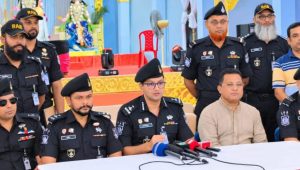
On Wednesday, three alleged counterfeit traders were arrested in raids in Uttara and Gazipur.
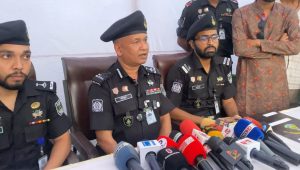
DB Joint Commissioner Robiul Islam told TIMES of Bangladesh that all of them had all been detained previously in similar cases.
“After being released on bail, they returned to the same activities,” he said.
Law enforcement officials say convictions in counterfeit currency cases remain rare because of weak evidence and lengthy legal processes.

Police also say many suspects, like Liakat, disappear after securing bail but continue operating from hiding.
Officials from DB and Criminal Investigation Department (CID) say multiple organised groups are involved in producing and circulating counterfeit currency across Bangladesh.
They said law enforcement agencies are carrying out regular raids based on intelligence information.
Investigators also say counterfeit traders are increasingly using Facebook to spread fake notes, opening various groups online to lure people into the business.
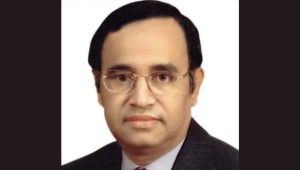
M Masrur Reaz, chairman and CEO of Policy Exchange Bangladesh, told TIMES that counterfeit money was creating growing risks for the economy amid the ongoing economic slowdown.
“Fake currency can have a serious impact on the economy during a period of economic stress,” he said.
Police data show that around 7,500 cases related to counterfeit notes were filed across the country between 2001 and 2024.




More than 100 additional cases were recorded in 2025, while reports suggest at least 23 cases have already been filed in the past four months.
In Dhaka alone, more than 700 cases were filed across 50 police stations between 2010 and March 2024.
Police records also show that 28 counterfeit currency cases remained pending in the capital until April this year.
According to police statistics, 2,486 new counterfeit currency cases were filed between 2013 and 2022, but only 977 were disposed of during the same period.
However, officials say disposal of a case does not necessarily mean conviction, as most accused are eventually acquitted because of insufficient evidence.
Regular arrests, recurring networks
Law enforcement agencies say counterfeit currency operations have been uncovered in many parts of Bangladesh, including Mirpur, Turag, Sadarghat and Bangladesh Medical University in Dhaka, as well as Bandarban, Subarnachar in Noakhali, Sirajganj, Muksudpur in Gopalganj, Tongi and Lalmohan in Bhola.
Police have recovered fake notes along with printing equipment and materials used to produce counterfeit currency during the raids.
Police records identify several organised networks allegedly led by individuals known as Zakir, Humayun and Kawsar.
Since the beginning of this year, members of different counterfeit gangs have been arrested from various districts on charges of printing and circulating fake money.
On 13 May, detectives arrested three people in raids in Uttara and Gazipur, recovering counterfeit notes worth Tk34 lakh along with equipment used to manufacture fake currency.
Earlier in May, several others were also detained in similar operations.
On 4 May, police conducted a raid in the Bhangna Mujibnagar area of Keraniganj and arrested two suspects.
Officers recovered counterfeit notes worth Tk8 lakh from them, along with machinery and materials used for printing fake currency.
Several counterfeiters were also arrested earlier this year.
On 7 April, Rapid Action Battalion arrested Md Murshidul Haque in Sherpur on allegations of printing counterfeit notes.
RAB later said he sold fake notes with a face value of Tk1 lakh for around Tk30,000.
How counterfeit notes are made
Officials from DB and CID involved in investigating counterfeit currency cases say many people are now learning the trade through videos on Facebook and YouTube.
Investigators say counterfeiters use laptops, high-quality printers, photocopy machines and scanners to create and print images of banknotes.
They usually print the notes on thin, lightweight bond paper so that the texture feels similar to genuine currency when touched.
To replicate the brightness and colour of real notes, they also use specialised inkjet ink, according to investigators.
Officials say some groups attempt to imitate the security thread found in genuine currency by using gold or silver foil paper, or special glitter materials.
The imitation strip is then inserted between layers of paper using adhesive to make the fake notes appear more authentic.
In some cases, counterfeiters reportedly wash low-denomination genuine notes with chemicals until the original print fades.
They then print higher-value note designs on the same paper so that the texture and quality of the material do not raise suspicion.
Mawlana Bhashani Science and Technology University Police and Crime Science Department Professor Omar Faruk told TIMES that public awareness about identifying fake notes remained weak despite existing guidelines.
“The instructions provided for detecting counterfeit notes are not creating enough awareness among ordinary people,” he said.
“Organised criminal groups are taking advantage of this while operating under the protection of influential quarters.”