


Employment remains one of the top concerns for citizens in Bangladesh, with voters increasingly demanding that political parties move beyond promises and present clear, actionable plans ahead of the upcoming national election.
The issue was discussed at a dialogue jointly organised by Democracy International and The Business Standard in Dhaka on Monday, bringing together policymakers, political party representatives, business leaders and labour experts to examine employment challenges and policy responses.
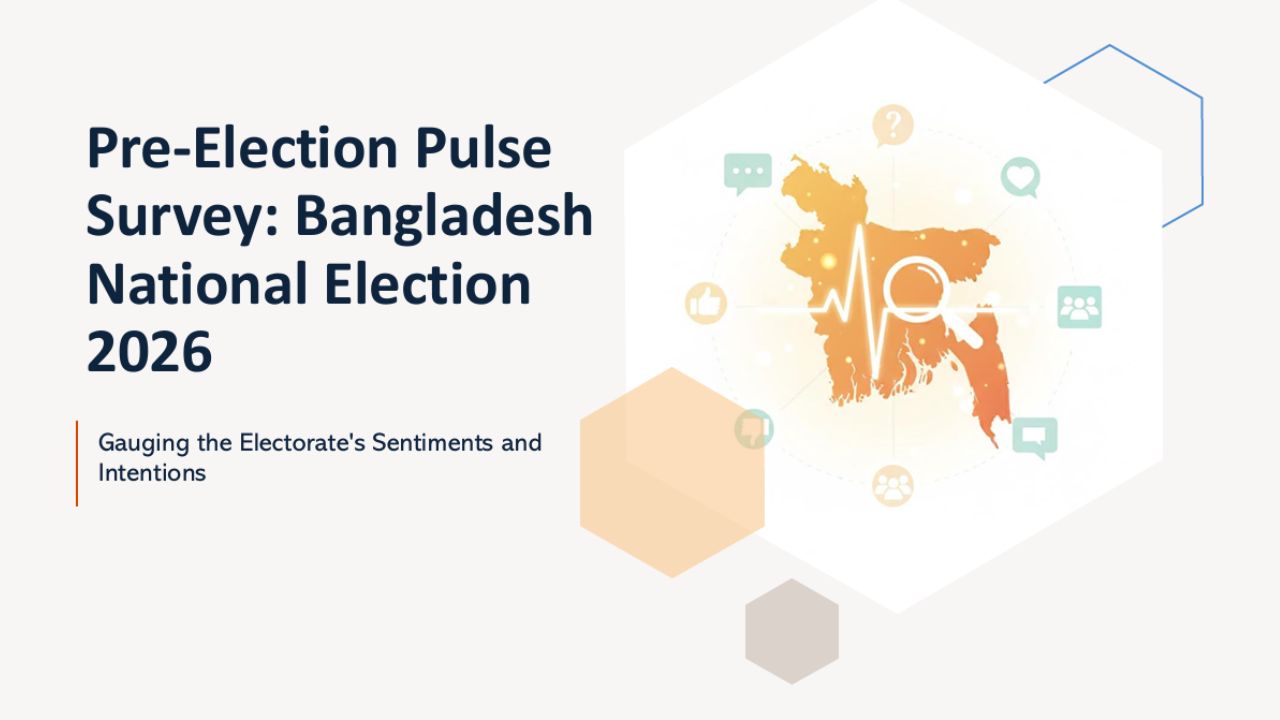
An opinion poll conducted by Democracy International in November 2025 found that 40.4 per cent of respondents were not better off than a year earlier, with 27.4 per cent citing reduced income opportunities and 17 per cent blaming rising commodity prices.
The survey also showed that 37.2 per cent believe political parties do not seiously consider youth concerns, while 13.9 per cent said they were uncertain.
Opening the discussion, Democracy International chief of party in Bangladesh Catherine Cecil said employment has remained a long-standing priority for citizens, particularly among young people.

From the private sector, Bdjobs founder Fahim Mashroor said Bangladesh’s unemployment challenge should be assessed in a global context, noting higher unemployment rates in some neighbouring countries, while warning that educated unemployment rose sharply from 4.9 per cent in 2010 to 12 per cent in 2022 even as uneducated unemployment declined.
AkijBashir Group group HR director Dilruba S Khan said the labour market suffers from a disconnect, with industries reporting labour shortages while jobseekers struggle to find opportunities due to skilled labour shortages and weak coordination between training programmes and industry demand.




She stressed the need for productivity growth, skill-based education and curriculum reform beginning at the school level to address the gap.
Refugee and Migratory Movements Research Unit programme director Marina Sultana said between 1.1 million and 1.2 million young people migrate abroad each year, mostly aged 18 to 26, but around 40,000 migrant workers returned home in the first six months of last year due to skill mismatches and limited job opportunities.
She pointed to weaknesses in recruitment management and training systems and called for market-oriented training and stronger regulation of recruitment agencies to remain competitive in the global labour market.
Representing the industrial sector, Bangladesh Knitwear Manufacturers and Exporters Association president Mohammad Hatem warned that factories are gradually being forced to shut down due to challenges arising from banking and industrial policies.
“In the last two years, we have faced challenges unlike anything in the past 38 years,” he said, urging urgent reforms to strengthen the industrial base and protect employment.
Outlining political party positions, BNP policy team member Saiyed Abdullah said job creation would be central to addressing future challenges, citing plans focused on skill development, IT sector expansion, low-interest loans for migrant workers and language education from the high school level.
Bangladesh Jamaat-e-Islami National Election Conducting Committee member Hafizur Rahman described youth employment as a top priority, proposing large-scale skill-based training, youth loan programmes, local language centres and tax reforms.
National Citizen Party senior joint convener Ariful Islam Adeeb emphasised merit-based recruitment, job security and employment generation in the agriculture and IT sectors.
Ganosamhati Andolon political council member Taslima Akter said recent factory closures have caused widespread job losses, while Karigar managing partner Tania Wahab said factories are struggling to retain workers and called for reducing harassment, extortion and insecurity faced by entrepreneurs.
Wahab also urged region-specific development plans, particularly in tourist areas, to support local entrepreneurship and employment.
The dialogue was moderated by The Business Standard executive editor Shakhawat Liton and concluded with a vote of thanks by Democracy International deputy chief of party Aminul Ehsan.