
Thursday morning at Dhaka’s polling centres was a test not just of civic duty, but of sheer determination for many elderly and disabled voters. At several centres across Dhaka-13, Dhaka-14, and Dhaka-17, voters had to climb multiple flights of stairs without lifts or any special arrangements to reach their booths.
At Mirpur Tolarbag’s Walk-Up High School, 75-year-old Sufiatun Nahar, a long-time overseas resident, struggled up the narrow stairs to reach her polling booth on the fourth floor. With her daughter’s help, she finally cast her vote. “Voting is more than a right; it’s a deep expression of love for my country,” she said, her face lighting up with relief and pride.
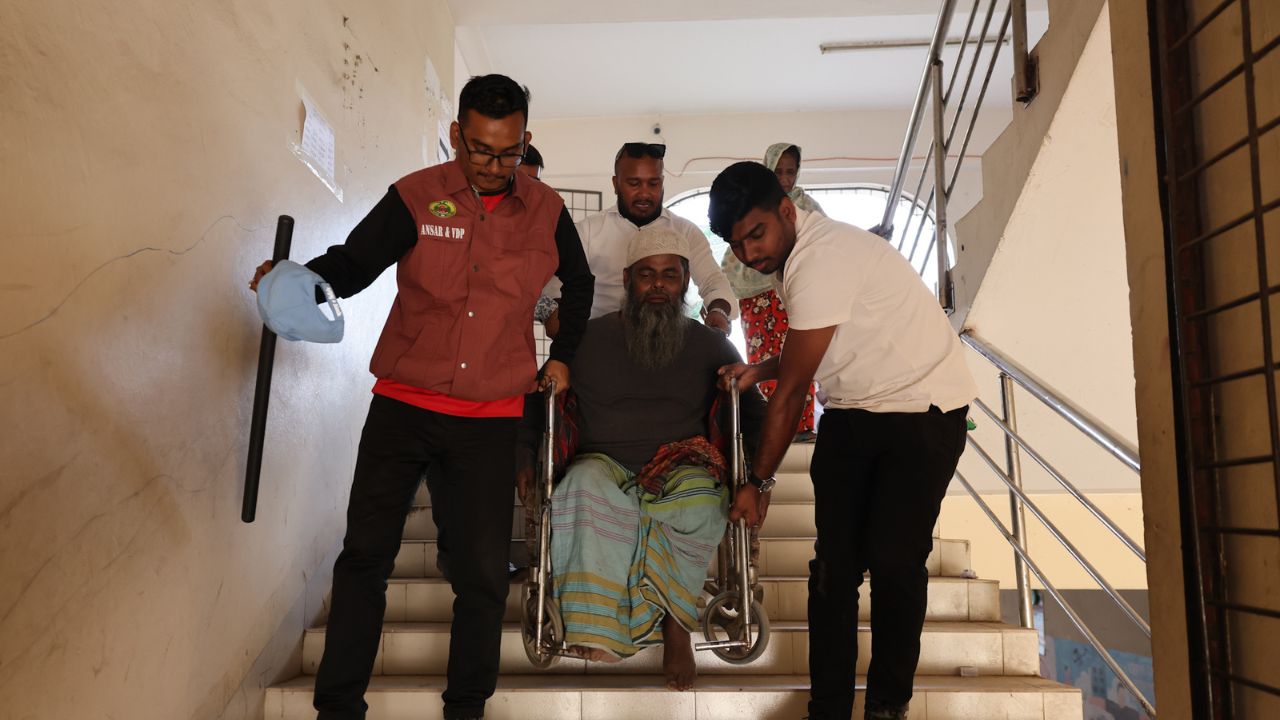
Similarly, at BADC High School, Abdur Rashid arrived in a wheelchair. His booth was on the second floor, but with family assistance, he managed to vote. “It was tough, but I am happy to cast my vote in a peaceful environment after so many years,” he said, urging authorities to make special arrangements for voters with disabilities or illnesses.

At Banani Vidyaniketan in Dhaka-17, 79-year-old Amzad Hosain faced the daunting climb of three flights of stairs in a wheelchair, each push a labour of determination. His son and security personnel helped him reach the booth. “Climbing three flights of stairs was extremely difficult for people like us,” he said.



Physical challenges did not stop others. In Mohammadpur, Dhaka-13, Eman Hosen, a tea vendor with one leg, reached his booth on his own using a crutch. “If there were separate arrangements for disabled voters on the ground floor, it would have been much easier,” he said, reflecting on the last election when someone else had cast his vote. This time, he proudly completed the process himself.
Presiding officers at these centres acknowledged the lack of dedicated facilities for elderly and disabled voters but said law enforcement personnel are always on hand to assist those in need.
Despite these obstacles, the determination of voters shone through. Each step up the stairs, each struggle through narrow corridors, became a symbol of civic pride, resilience, and love for the country.