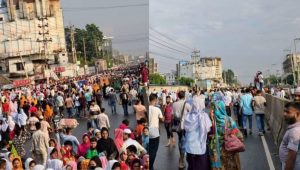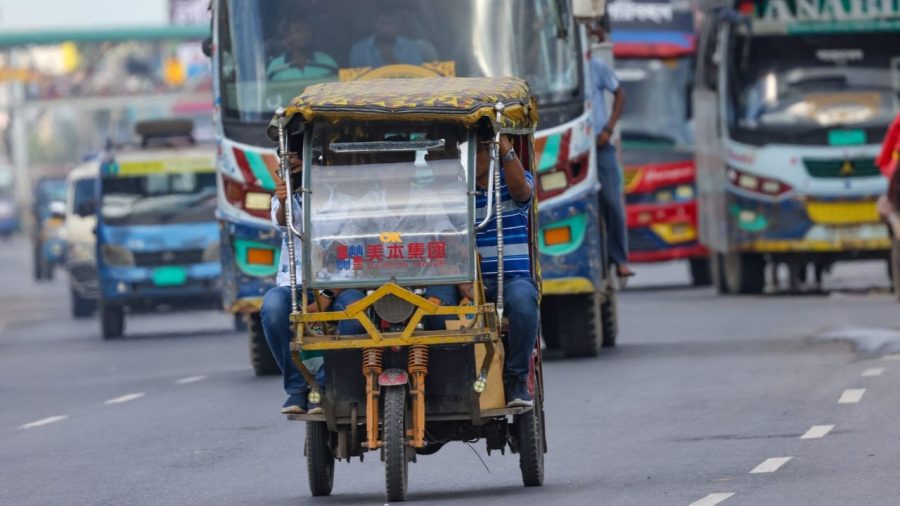



Dhaka will be divided into eight zones, each assigned a specific colour for battery-run electric rickshaws (e-rickshaws), as part of new guidelines to regulate their movement in the capital.
Announcing the policy at a press conference at the Secretariat on Sunday afternoon, State Minister for Local Government, Rural Development and Co-operatives Mir Shahe Alam said e-rickshaws registered in one zone will not be allowed to operate in another.
Registration for e-rickshaws will open across 13 city corporations from Monday, while legal amendments will be made later to extend the framework to municipalities.
Driver licensing will not be mandatory immediately due to capacity constraints in city corporations handling hundreds of thousands of applicants simultaneously.
Initially, rickshaw owners will issue identity cards to drivers, with formal driving licences to be introduced in phases following a separate gazette notification.
The state minister urged current drivers not to panic, reassuring them that existing rickshaws will not be removed overnight, but rather phased out gradually as registration progresses.
Zonal divisions and registration fees
Under the new rules, the areas under Dhaka North City Corporation and Dhaka South City Corporation will each be split into four zones, making eight zones in total.

The respective city corporation and traffic division will jointly determine the specific roads, routes, colours, and total number of rickshaws permitted in each zone.
Moreover, e-rickshaws registered under one city corporation cannot be used for commercial purposes in another city corporation area.
A single National Identity Card (NID) will allow an individual to register a maximum of five e-rickshaws across one or multiple city corporations.
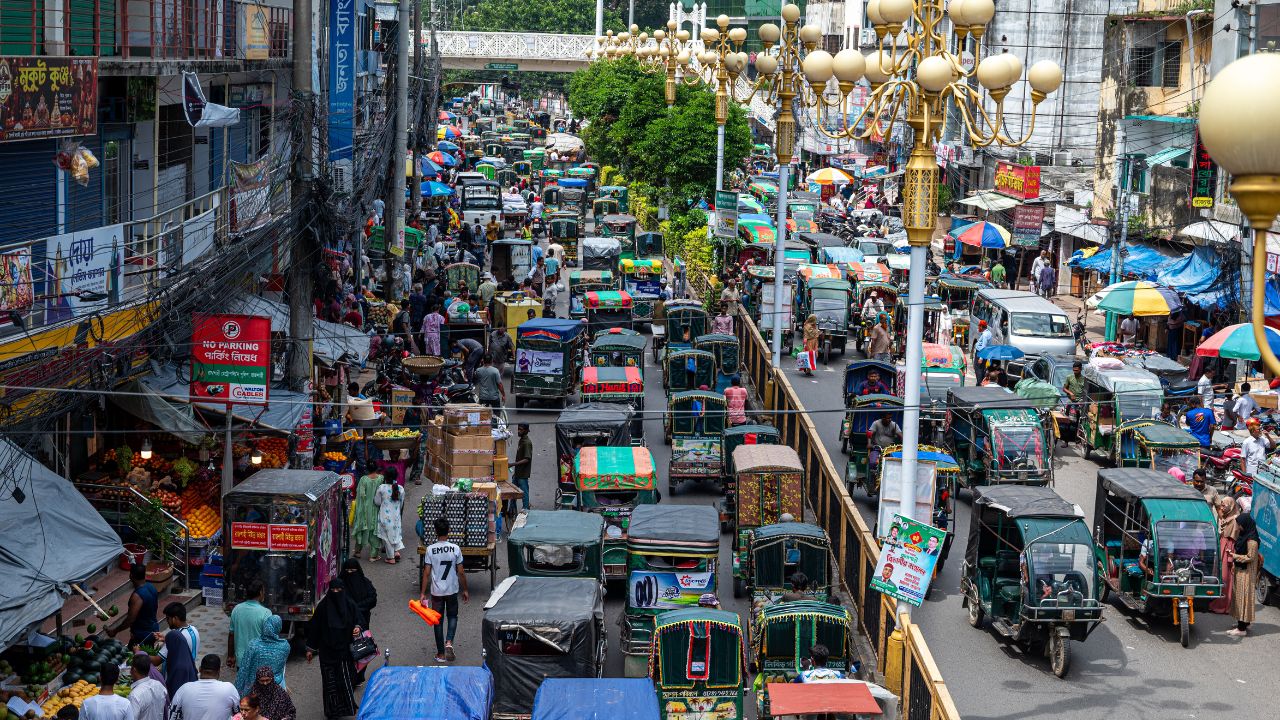
For two-passenger e-rickshaws, the initial registration fee is Tk8,000 with an annual renewal fee of Tk4,000, while four-passenger models require a Tk 10,000 registration fee and a Tk 5,000 annual renewal fee.




Additionally, owners must pay Tk 1,000 for a unique QR-coded number plate that displays registration details, owner and driver information, the city corporation, and the operating zone.
All registration, renewal, and plate fees must be borne by the owner rather than the driver, and fitness certificates must be renewed annually. Each e-rickshaw will have an operational lifespan of 12 years from registration, after which its registration and number plate will be cancelled.
Technical standards, speed limits
Existing e-rickshaws must undergo structural modifications to conform to safety and technical designs approved by Bangladesh University of Engineering and Technology (BUET) before obtaining registration.
Modifications must receive a fitness certificate counter-signed by the traffic division.
Explaining the process, the state minister noted that BUET itself will not alter the vehicles; instead, manufacturers will execute modifications according to BUET designs with city corporation approval.
Unregistered or unrenewed e-rickshaws will be prohibited from plying the roads.
The guidelines cap the maximum speed of e-rickshaws at 25 kilometres per hour, which drops to 15 kilometres per hour near schools, hospitals, religious institutions, and crowded areas. All vehicles must be fitted with a speedometer or odometer.
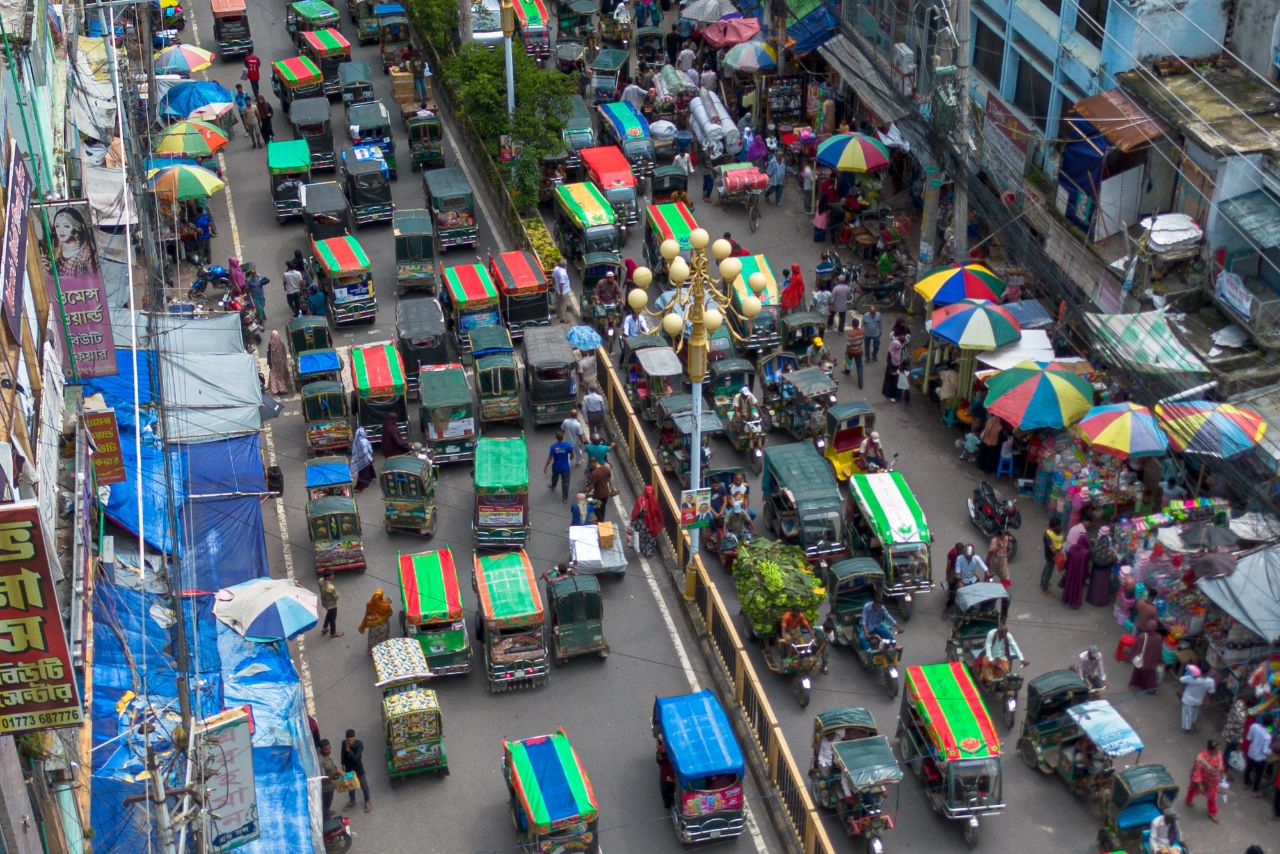
Depending on size, e-rickshaws can carry up to two or four passengers excluding the driver, but they are strictly barred from national highways, expressways, elevated expressways, main bus routes, footpaths, and roads restricted by the administration.

Designated parking areas will be identified by city corporations in consultation with the traffic division.
Offences, fare structure and environmental rules
Violations subject to legal action include operating without registration, speeding, overloading, carrying goods instead of passengers, using unauthorised batteries, making unapproved structural or motor modifications, ignoring traffic signals, fleeing after accidents, and plying restricted roads.
Fares will be fixed on a per-kilometre basis following the registration drive through joint discussions among owners, the traffic division, and city corporations, taking operational expenses into account to keep rates affordable.
Drivers will not participate in fare discussions, as the responsibility rests with owners.
Charging stations to require approval
Charging stations for e-rickshaws will require approval or trade licences from city corporations, with preference given to facilities incorporating solar power. Stations will utilise an integrated grid and solar system, feeding daytime solar energy to the grid and drawing grid electricity at night to charge batteries.
City corporation magistrates will monitor charging points to penalise illegal power connections. On environmental safety, discarded batteries cannot be dumped in open spaces, soil, water bodies, or burned.
Battery sellers must collect old units during new sales and forward them to recycling plants, while breaking or melting batteries without clearance from the Department of Environment is strictly prohibited.
The government did not specify the exact number of e-rickshaws currently operating in the capital or a deadline for completing structural modifications. However, Mir Shahe Alam informed that government officials will meet journalists in one month to report on registration progress, actions taken, and the timeline for removing illegal e-rickshaws.