



Dhaka’s mornings are no longer covered by natural fog. Instead, the city is wrapped in a thick layer of polluted air. With every breath, people are inhaling poison.
According to data from IQAir, a Switzerland-based organization, Dhaka ranked as the most polluted city in the world for three consecutive days until Sunday, leaving behind even Delhi, which frequently tops the list.
Observations show that on many days in January, Dhaka’s Air Quality Index (AQI) stayed between 200 and 300, which falls under the categories “very unhealthy” to “hazardous.”
So, being number one on the pollution list is not a one-day accident. It is a serious warning.

The seriousness becomes even clearer when we look at the last two years’ data. In 2025, Dhaka’s average PM2.5 level was about 40 times higher than the safe limit set by the World Health Organization (WHO). In 2024, it was already about 15 times higher. This shows that the situation is not just bad. It is getting worse very fast. Air pollution is no longer only an environmental issue; it has silently become a long-term public health crisis.
Experts say the most dangerous part of Dhaka’s air pollution is its strength and long duration. During winter, the air becomes almost still due to temperature layering. Because of this, polluted particles cannot rise and spread away. As a result, vehicle smoke, brick kiln emissions, construction dust, and industrial waste all remain trapped at the same level in the air.



There is also a regional factor. Polluted air flowing from the north-west of the country adds extra pressure on Dhaka’s air quality. In the end, people pay the highest price.
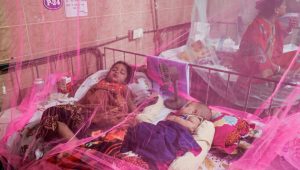
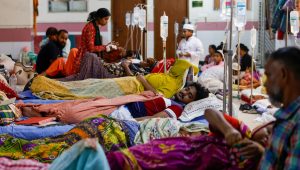
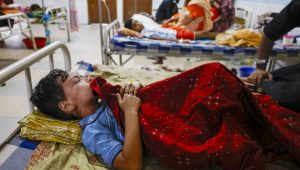
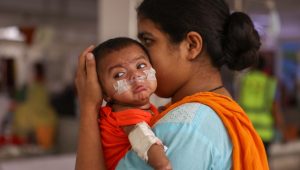
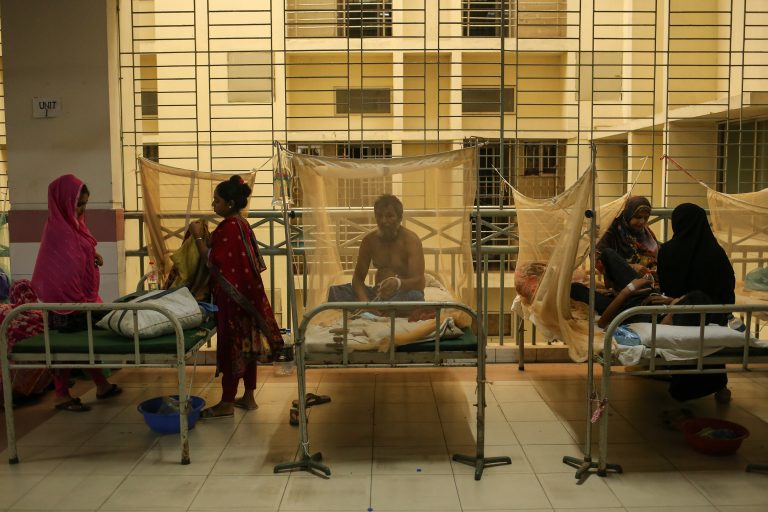
Former director of the National Institute of Cardiovascular Diseases, Professor Dr Md Afzalur Rahman, says that long-term exposure to fine particles like PM2.5 causes chronic lung inflammation, reduces blood vessel flexibility, and greatly increases the risk of heart disease and stroke.
For children and the elderly, the danger is even greater. Children’s lung growth is affected, while older people face higher risks of breathing problems, asthma, and heart attacks.
Facing such a major public health crisis, questions arise about the government’s preparedness.
The public relations officer of Dhaka South City Corporation, Md Russell Rahman, told TIMES that the corporation has strengthened regular water spraying activities on busy roads in Dhaka to reduce air pollution.
Admitting the limits of this step, Md Hasan Hasibur Rahman, director (Planning Division) of the Department of Environment, said, “Since major projects have already ended, there is currently no mega project directly working to control air pollution. The World Bank-supported ‘Bangladesh Clean Air Project’ is still waiting for approval from ECNEC.”
In short, instead of temporary measures like spraying water on roads, the structural and long-term solutions that could truly improve Dhaka’s air are stuck in long administrative delays.