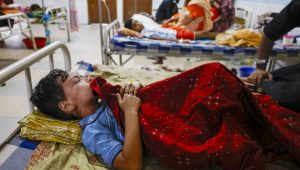
The country is grappling with a worsening dengue crisis that has stretched into December, pushing the death toll to 401 this year, as experts warn that poor coordination remains a key driver of the surge in cases and fatalities.
“What we are advising is not being heard, and what the government is saying may not be reaching us properly,” Professor Golam Mostafa, entomologist at Jahangirnagar University, told TIMES of Bangladesh.
“We need coordinated efforts, seminars, symposiums and effective communication – but that is not happening,” he said.
Since January, Bangladesh has recorded its third-highest annual dengue death toll since 2000, with 401 fatalities so far, compared with 575 deaths in 2024. The year 2023 remains the deadliest on record with 1,705 deaths.
Data from the Directorate General of Health Services (DGHS) show November as the deadliest month of 2025, with 99 deaths. Fatalities were comparatively low earlier in the year but began rising steadily from June.

In the 24 hours to Tuesday morning, three more people died from dengue, according to DGHS.
During the same period, 421 patients were admitted to hospitals nationwide, bringing total hospitalisations this year to 98,705.



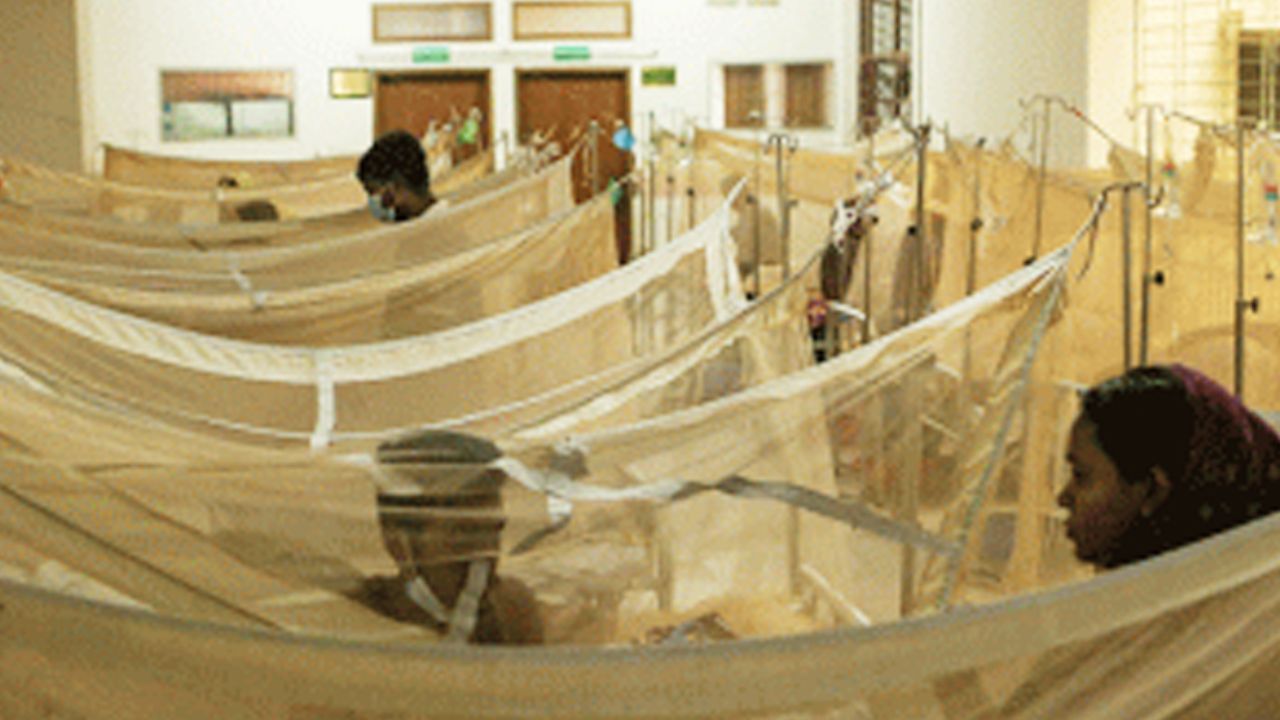
Data show that despite substantial spending on mosquito control – Tk688.39 crore in Dhaka North and Tk323.63 crore in Dhaka South between FY2016-17 and FY2025-26 – dengue hotspots persist. Even with increased insecticide use in Dhaka South this year, the area remains a major transmission zone.
Experts attribute the failure to a lack of coordination between what is needed and what is actually being implemented at the field level.
Fogging alone is inadequate. While it kills adult mosquitoes, eggs and larvae survive unless morning larvicide treatments are carried out consistently alongside sustained cleanliness drives to remove stagnant water, said an expert.
Professor Mostafa said that without proper larvicide use, meaningful results will remain out of reach. He urged authorities to focus on eliminating breeding sites and preventing larval development.
Professor Kabirul Bashar, entomologist and public health specialist, said the mosquito problem could be controlled if existing resources were used more efficiently.
“Political commitment is essential to reduce the mosquito problem. Strong will and the right strategy are the most important things a government must have,” he added.
Several attempts to reach health officials for comment were unsuccessful.
Authorities at city corporations said that beyond ineffective fogging, structural challenges persist. Officials pointed to a severe manpower shortage, with just one public health worker per 11,000 residents – far below the international standard of 2.3 per 1,000.
At an event on Tuesday, DNCC Administrator Mohammad Azaz said, “Alongside conventional measures, integrating modern technology is extremely important in preventing dengue.”
“Considering the unique characteristics of Dhaka as one of the largest megacities in the world, various programmes will be implemented with the highest priority given to raising public awareness, cleanliness drives, the use of innovative technology and citizen participation,” he added.