




The country is witnessing a slight rise in COVID-19 cases following months of low transmission, prompting renewed government focus on testing, vaccination, and variant surveillance.COVID-19 rise.
According to the Directorate General of Health Services (DGHS), 26 new cases and one death were recorded on June 15 from 291 tests, while four individuals recovered,Vaccine rollout.
Since the start of 2025, the country has logged 145 confirmed infections and four deaths– an indication of sustained but low-level community spread.
Although daily case numbers remain modest, health authorities are closely monitoring the uptick.

“We are not in a crisis, but the rise in Omicron subvariants is a red flag. Early action now can prevent a bigger wave later,” said Dr. Md. Nazmul Islam, Director of Disease Control at DGHS.
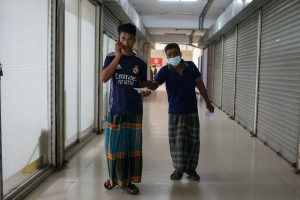
The recent increase in infections has been linked to highly transmissible Omicron subvariants, including XFG, XFC, JN.1, and NB.1.8.1. These variants were initially identified in Chattogram through genomic analysis by icddr,b and IEDCR, and are now appearing in other urban areas.
So far, no evidence suggests increased severity, but officials emphasise that complacency would be premature.

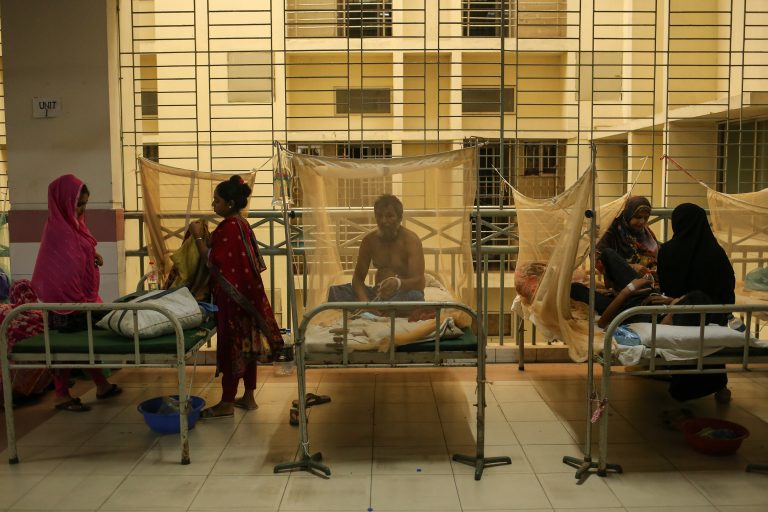


In response, the government has revived its COVID-19 preparedness strategy.
DGHS has rolled out an 11-point guideline that includes ramped-up testing, mandatory mask use in high-risk areas, replenishment of personal protective equipment (PPE), and stricter screening at entry points.
Hospitals that had suspended COVID-19 testing due to depleted supplies are being resupplied, and authorities are working to stabilise data reporting, which has faced interruptions due to reduced staffing and irregular bulletins.
Aligning with the Health Directorate’s guidelines, the Directorate of Secondary and Higher Education (DSHE) has issued five key health protocols for educational institutions, including mandatory mask use.
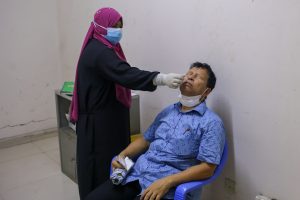
Vaccination remains a core pillar of the national response. Although Bangladesh currently holds around 3.1 million vaccine doses, more than half are set to expire by August.
“With over half the available vaccines set to expire by August, we have a narrow window to act. Expanding booster eligibility and restoring public confidence are crucial,” said Dr. Tahmina Shirin, senior virologist and advisor on immunisation strategy at the Institute of Epidemiology, Disease Control and Research (IEDCR).
To prevent wastage, the health ministry has launched a targeted booster campaign focusing on people over 60, frontline workers, and those with underlying health conditions. Experts are urging the government to expand eligibility to include individuals who received their last dose more than six months ago.
Public health officials estimate that 78% of the population has received their primary vaccine series, and about 45% of eligible adults have received at least one booster dose.