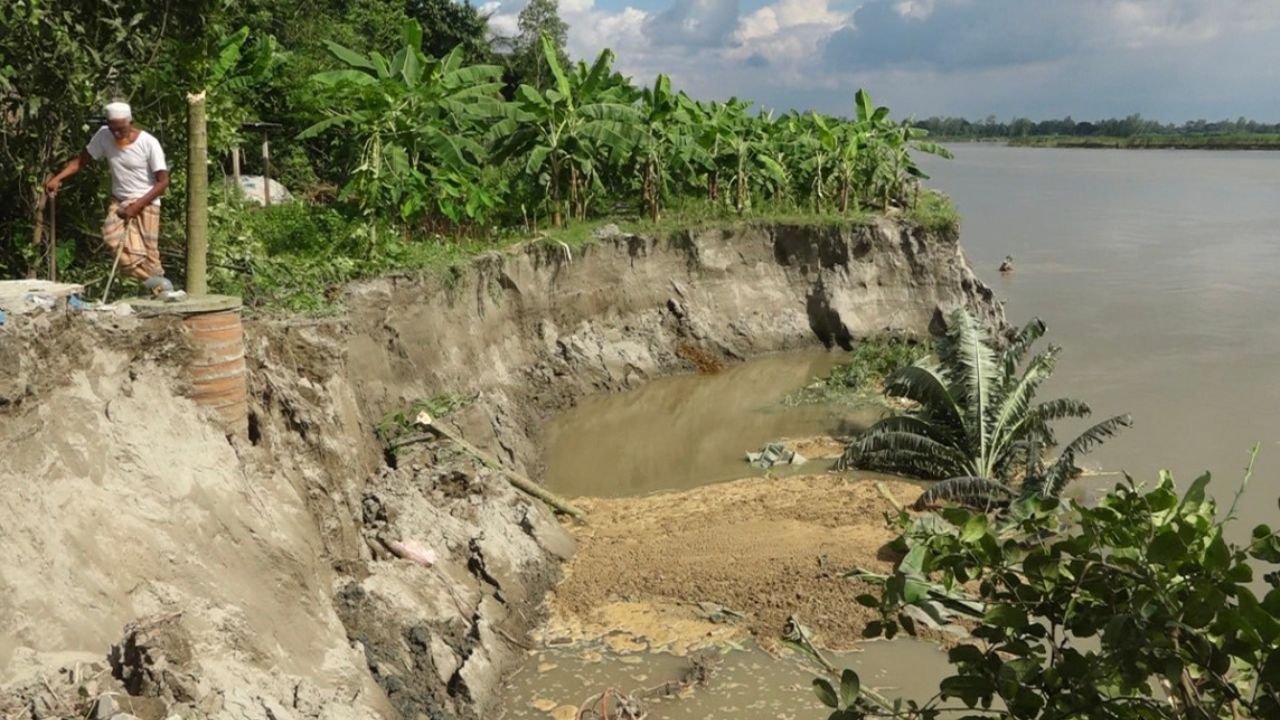



Riverbank erosion and swelling tidal waters are putting the homes, livelihoods, and fragile ecosystems of Bangladesh’s coastal islands under severe threat.
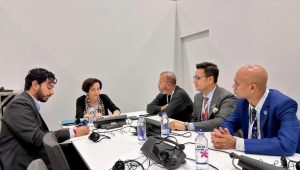
At a discussion session held on Saturday at the Bangladesh Pavilion during the United Nations Climate Conference (COP31) in Antalya, Turkey, speakers issued a stark warning and demanded increased climate financing, strengthened coastal defences, and guaranteed compensation for loss and damage to save vulnerable islands such as Sandwip, Urirchar, and Kutubdia.
Organised by Human24 under the title “Chattogram to COP31: Climate Risk, Economic Growth, and Environmental Accountability”, the meeting highlighted how coastal populations – who contribute the least to global climate change – are being forced to bear its heaviest burdens.
Presided over by Sheikh Faridul Islam, state minister for Environment, Forest and Climate Change, the discussion featured prominent panel members including Professor Pierluigi Bozzi of the International University Network on Cultural and Biological Diversity (IUNCBD) and Monira Sharmin, Joint Convenor of the National Citizen Party (NCP), with the key position paper presented by Human24 Team Leader Saleh Noman and moderation led by Sohanur Rahman, executive coordinator of YouthNet Global.
Addressing the session, Faridul pointed out that rising salinity is accelerating the decay of coastal infrastructure, weakening cyclone shelters, and worsening shortages of safe drinking water, noting that salinity causes local structures to naturally degrade within just seven to eight years.
Highlighting government countermeasures, the state minister detailed ongoing programmes in tree plantation, canal excavation, waste management, the deployment of electric buses and vehicles to curb pollution, the mandated use of concrete blocks instead of traditional burnt bricks for road building, and Bangladesh’s substantial potential in wind and solar power generation if appropriate technology and firm foundations are established.

Sandwip shrinking in the tide
Presenting the paper’s primary geographical findings, Saleh Noman illustrated the dramatic contraction of Sandwip over the decades.
According to data presented at the conference, Sandwip encompassed approximately 502 square kilometres in 1880, but recent measurements reveal it has shrunk to just 258 square kilometres, having lost more than 71 square kilometres of land between 1973 and 2020 alone.
Entire settlements, including the historic villages of Katgarh, Batajora, and Namaste, have been swallowed by the riverbed, while Urirchar Union currently stands on the brink of complete disappearance.
Although new sandbars (chars) continuously emerge in the Meghna estuary due to silt accumulation, they remain highly vulnerable to erosion and tidal inundation, making permanent settlement, sustainable livelihoods, and essential public services nearly impossible to secure.




Noman stressed that more than half of Sandwip’s residents have suffered home displacement at least once in their lifetime, yet global climate discourse treats their plight as an unavoidable norm.
Describing the island’s transport and connectivity crisis as a “medieval nightmare” that has remained unchanged for years, Noman underscored that affected communities bear no responsibility for the climate breakdown.
He said when families are displaced, they lose far more than physical property; they are stripped of agricultural lands, fishing areas, traditional livelihoods, social networks, and cultural roots. Consequently, he urged that the lived reality of coastal inhabitants be centrally integrated into national and international climate policy frameworks.
Redress for non-economic loss and inclusive policies
The session further drew insights from special guest speakers, including Arifur Rahman, chief executive of Young Power in Social Action (YPSA); Sadia Jahan Rothi of the Centre for Climate Change and Environmental Research (C3ER) at BRAC University; journalist Shamsuddin Elias; and Golam Mawla Murad, general secretary of the Chattogram Press Club.
Panelists emphasised that climate change inflicts grave non-economic losses – destroying cultural identity, traditional knowledge, local biodiversity, and community cohesion – which financial compensation alone can never repair.
They argued that loss and damage mechanisms and rehabilitation strategies must directly prioritize the experiences and self-stated needs of victims while addressing the profound social and psychological tolls of displacement.
Speakers also brought to light the heightened exposure of coastal women to gender-based violence and social inequality, alongside the severe physical and systemic barriers faced by persons with disabilities when attempting to access early warning systems, storm shelters, healthcare, and relief services.

To combat these systemic vulnerabilities, the panel advocated for gender-sensitive policies, barrier-free protection infrastructure, and the active inclusion of women and persons with disabilities in decision-making processes, alongside young people, fishermen, coastal labourers, and marginalized communities in all climate finance planning.
Environmental safeguards and grant-based climate finance
Concluding the meeting, speakers cautioned against damaging coastal ecosystems in the pursuit of economic growth or infrastructure development, asserting that the environmental costs of progress must not be transferred onto vulnerable populations.
Instead, national climate frameworks must safeguard the livelihoods of fishermen and labourers while conserving natural ecosystems, particularly blue carbon habitats such as mangroves and seagrasses, which are prioritized under COP31’s ocean-climate action agenda to counter marine heatwaves and ocean acidification.
Faridul reiterated the necessity of holding major greenhouse gas-emitting nations accountable and called for stronger solidarity between Global South countries and vulnerable island states in mitigation, adaptation, and ecosystem recovery.
Addressing international financial targets, speakers highlighted the New Collective Quantified Goal (NCQG) established at COP29, which mandates developed countries to lead in delivering at least $300 billion annually by 2035 to developing nations, within a broader target of mobilizing $1.3 trillion per year from public and private sources.
The panel insisted that these funds must reach frontline communities as grant-based financing rather than debt-creating loans, ensuring full transparency and local execution in coastal defence and ecosystem restoration.
While Professor Pierluigi Bozzi highlighted that local institutions and households must take proactive ownership of their sustainable economic planning rather than waiting solely for top-down action, the panel unanimously affirmed that local initiative cannot substitute for the financial and moral obligations of major polluting nations to deliver climate justice and preserve the heritage of coastal peoples.