As dusk falls over Jhenaidah, a quiet magic awakens along the highway. The hum of passing trucks softens, and the night air turns tenderly sweet – thick with the perfume of blooming Chhatim flowers.
Travelers slow down, roll down their windows, and breathe in deeply, letting the scent of winter’s arrival wrap around them like a soft shawl.
Each evening, this ordinary stretch of the Jhenaidah–Chuadanga regional highway transforms into something extraordinary – a natural perfume corridor that stretches nearly 20 kilometers from the edge of Jhenaidah town to Dashmail Bazar.
Beneath the pale glow of streetlights, rows of Chhatim trees (Alstonia scholaris) release their delicate fragrance into the air, blurring the line between earth and heaven.

The fragrance lingers strongest near the Government Veterinary College, Abdur Rouf Degree College, and the Silk Development Board grounds, where commuters often pause to take in the scent.
A regular night journey turns peaceful and dreamlike, gently connecting people with nature’s calm.
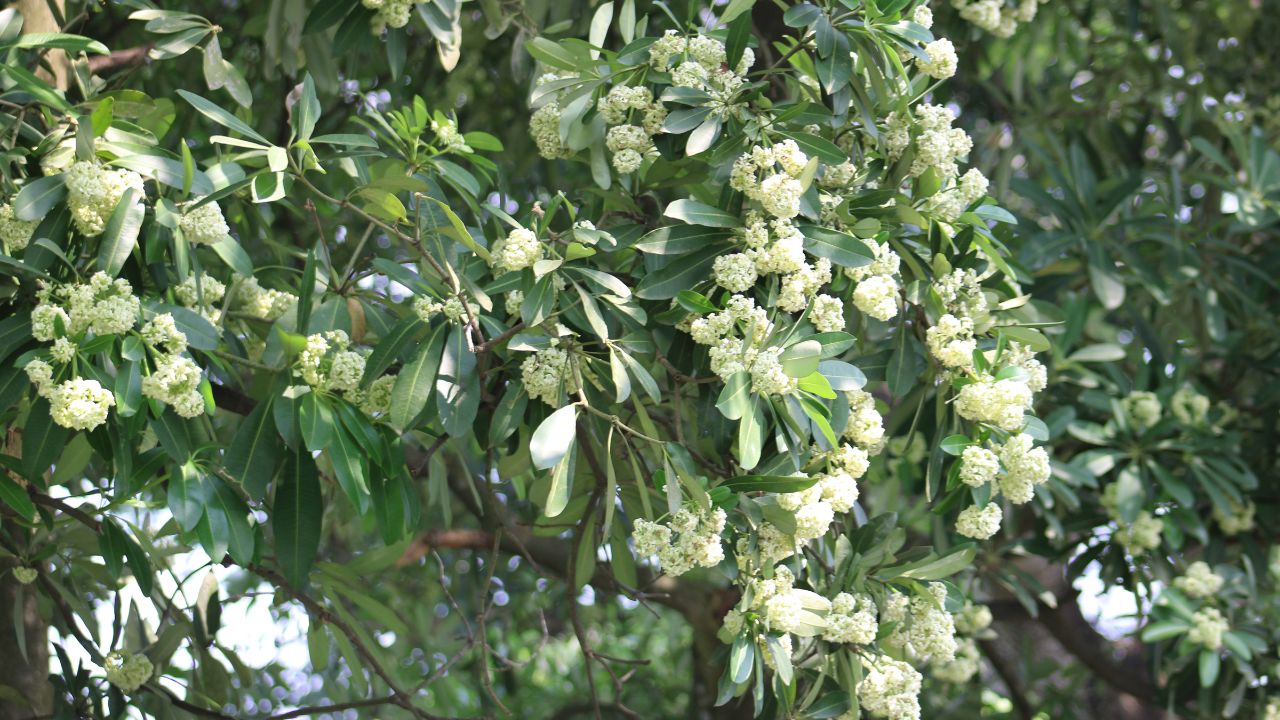
Afan Mondal, a farmer from Sagarna village, said, “I have a few plots by the roadside. Every morning when I check my fields, the air is thick with the fragrance of Chhatim flowers. It feels wonderful.”




For many locals, the scent is now part of their lives. Arif, a youth of the same village, added, “From Amerchara Bazar to Baidanga Bazar, the road is lined with these trees. After dusk, the aroma is everywhere. My friends and I often come here for night walks – it is hard to leave.”
Right in front of Abdur Rouf Degree College, Amena, a local resident, lives in a tin-roofed house surrounded by seven or eight Chhatim trees. “After sunset, the fragrance fills our home and yard,” she said. “It makes our little house feel like heaven.”
Zakir Hossain, acting officer of the Social Forestry Nursery and Training Office in Jhenaidah, the authorities have planted thousands of forest tree saplings along this highway, including Chhatim trees. He said, “This tree not only purifies the air but also has many medicinal properties.”
The Chhatim tree blooms at the end of autumn. As evening dew settles, its fragrance intensifies and travels far, carried gently by the night breeze.
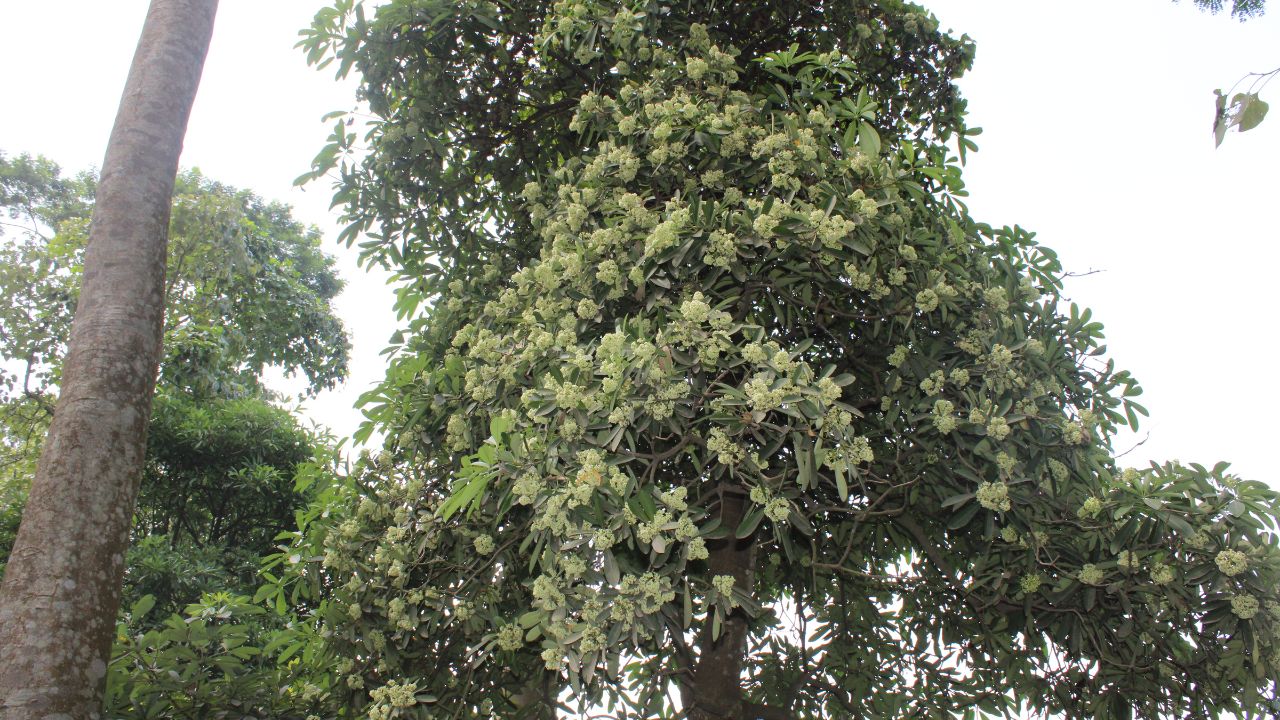
Known in Sanskrit as Saptaparni and locally by names such as Chatian, Chaittan, Chatin, or Cheten, the tree has long been cherished for both its beauty and utility. Its wide, umbrella-like branches are said to have inspired the name “Chhatim”.
Standing 15 to 20 meters tall, the Chhatim tree is elegant in form – its straight trunk rising smooth and strong, crowned with whorled leaves that gleam under moonlight. Belonging to the Apocynaceae family, it is also known as the “Devil’s Tree” in English. Its softwood was once prized for making blackboards and pencils.
Native to the Indian subcontinent and parts of Southeast Asia, Chhatim thrives in moist, clayey soils. Traditional medicine values its bark and milky latex for their healing powers – used to treat fever, heart disease, asthma, wounds, dysentery, and even leprosy.
Now, as winter nights settle softly over Jhenaidah, the Chhatim-lined highway becomes more than a road — it’s a sensory journey. Every traveler who passes through becomes a part of the story the trees have been quietly telling for years: a story of fragrance, of serenity, and of nature’s ability to turn an ordinary night into something unforgettable.