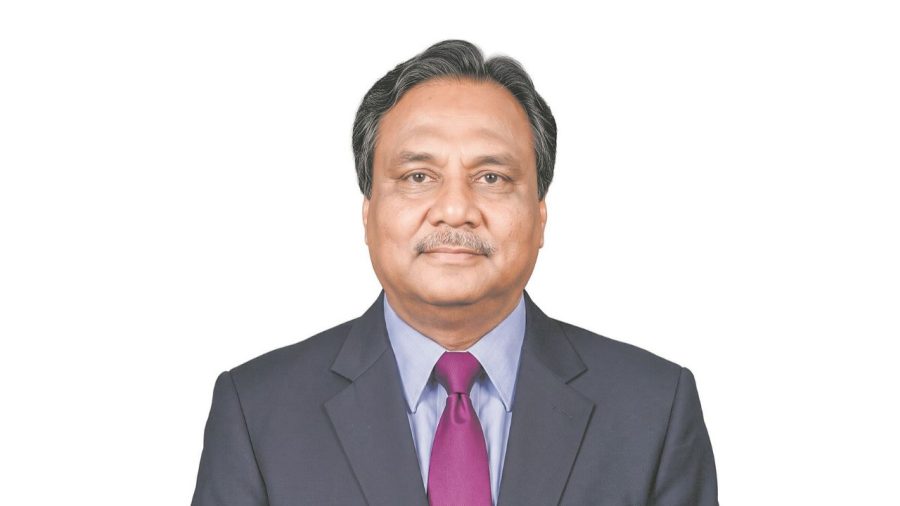



Former education minister M Osman Faruk cited ill health as the reason for resigning as an MP, but local BNP leaders say he had been frustrated over not securing a ministerial post in the new government.
The 86-year-old BNP leader, who served as education minister from 2001 to 2006, was widely expected by his supporters to return to the cabinet after winning the Kishoreganj-3 (Karimganj-Tarail) seat in February’s parliamentary election. His exclusion from the cabinet disappointed his followers, while some local leaders claim Faruk himself had expressed frustration over the decision.
Karimganj Upazila BNP President Azizul Islam Dulal said they had expected Faruk to be given responsibility for an important ministry but felt he had not been properly recognised.
“He would occasionally express his frustration over not getting a ministerial post to local party leaders and activists. We knew about his frustration. However, we never imagined that he would resign without informing us,” Dulal told TIMES.
Faruk, who is currently in the United States, submitted his resignation letter, stating that he wished to step down with effect from 14 November. Speaker Hafiz Uddin Ahmad received the letter the following day and accepted it after finding that it complied with parliamentary rules.
The speaker said Faruk had cited physical illness as the reason for his resignation.
The sudden decision has sparked disappointment and anger among some of his supporters in Karimganj, who say he did not consult local party leaders before stepping down.
Karimganj Municipal BNP President Ashraf Hossain Pavel said party leaders and activists had worked tirelessly to secure Faruk’s election victory.

“With great hopes and expectations, party leaders and activists worked day and night and elected him as a Member of Parliament. But he did not discuss his resignation with us even once. If he had been ill or had any other frustration, he should at least have spoken to party leaders and activists. We are deeply saddened and hurt that he suddenly resigned without informing anyone,” Pavel said.
Karimganj Upazila BNP General Secretary Abdul Mannan Dulal Sikder also linked the resignation to Faruk’s disappointment over his position within the party.
“He was frustrated. Previously, he was the education minister. Now he has to sit in the back rows of parliament, and he is not valued within the party. We believe these are the reasons why he resigned,” Sikder said.
However, Faruk’s cousin and personal assistant, Mezbah Uddin Tutul, rejected suggestions that the former minister had been frustrated.
“Rather, he used to say, ‘I have grown old. It is a good thing that I was not given a ministerial post,'” Tutul said.
Faruk’s resignation has also exposed divisions within the local BNP, with another section of party leaders and activists welcoming his decision.




They said that although Faruk was regarded as an honest politician, his advanced age and deteriorating health had limited his ability to fulfil his parliamentary responsibilities.
Some claimed that his memory had weakened with age and that he struggled to recognise several party leaders and activists.
“After the election, he visited the constituency only once or twice. This created frustration among party leaders, activists and ordinary people,” a local BNP leader said.
This section of the party also alleged that Faruk’s prolonged absence had allowed his cousin and personal assistant, Tutul, to oversee constituency affairs, including development activities.
They claimed that the arrangement had contributed to internal disputes and divisions within the local BNP.
Karimganj BNP activist Tajul Islam welcomed the resignation, saying it would end what he described as a syndicate centred on Faruk’s personal assistant.
“We are grateful to Osman Faruk sir. He has made a timely decision. Because of his physical limitations, a syndicate centred on his personal assistant had developed in Karimganj and Tarail. His resignation has brought an end to it. We wish him good health,” Tajul told TIMES.
Tarail Upazila BNP General Secretary Sarwar Alam said Faruk’s age and illness had prevented him from maintaining regular contact with his constituency.
“He had grown old, was ill and could not visit the constituency. What can be done now? What has happened has happened,” Alam said.
He added that Faruk had visited the constituency only twice since the election.

Former Kishoreganj district BNP vice-president Jalal Md Gaus also said Faruk had spent very little time in the constituency after being elected.
According to Gaus, Faruk left for medical treatment after a brief visit, saying he would return and spend more time in the area once his treatment was completed.
Several officials of the Karimganj and Tarail upazila administrations, speaking on condition of anonymity, said Faruk had attended an introductory meeting with government officials and a programme to distribute clothing among school students after becoming an MP. Beyond those events, his contact with the local administration was limited. Officials said they could reach him when necessary, but he rarely initiated communication.
Faruk’s political career has also seen periods of absence from electoral politics. Although he served as education minister in the BNP-led government from 2001 to 2006, the BNP-led Jatiya Oikya Front did not nominate him in the 2018 parliamentary election.
He returned as the BNP candidate for Kishoreganj-3 in the 13th parliamentary election held in February, around a year and a half after the 2024 mass uprising.
His supporters had expected the victory to bring another ministerial post to Karimganj-Tarail, but those expectations were not fulfilled.
Kishoreganj-3 seat declared vacant
Speaker Hafiz Uddin Ahmad informed parliament that the Kishoreganj-3 seat had become vacant under Rule 178(3) of the Rules of Procedure of the Jatiya Sangsad.
The Parliament Secretariat also issued an official notification declaring the seat vacant.
Under Article 67(2) of the Constitution, an MP may resign by submitting a signed letter to the speaker. The seat becomes vacant when the speaker receives the resignation letter.
Article 123(4) generally requires a by-election to be held within 90 days of a parliamentary seat becoming vacant.
Born in Kishoreganj on 18 July 1940, Faruk obtained higher degrees from the University of Dhaka, the University of Texas and Cornell University in the United States.