Garment workers took to the streets across major industrial hubs on Tuesday, blocking highways and clashing with police over the postponement of a Minimum Wage Board meeting, prompting law enforcement agencies to fire tear gas and sound grenades to disperse the protesters.
The unrest spread across Mirpur in Dhaka, Gazipur, and Savar-Ashulia, marked by reports of vandalism, burning barricades, and attempts to damage police vehicles. A journalist sustained serious injuries and several protesters were detained during the confrontations.
Amid escalating tensions, Minimum Wage Board Chairman Syed Azad Subhani convened an emergency press conference in the evening, urging workers not to lose confidence in the board and reaffirming that the revised wage structure would take effect from 1 December, regardless of when it is formally announced.
The protests followed Monday’s deferment of a board meeting at which factory owners were scheduled to submit their wage proposal. A week earlier, the workers’ representative had proposed a minimum monthly wage of Tk32,000.


According to the board, Monday’s session was postponed after workers’ representative Md Anwar Hossain was admitted to hospital on Saturday night following sudden illness. The delay sparked initial demonstrations in Gazipur on Monday, prompting the Bangladesh Garment Manufacturers and Exporters Association (BGMEA) to call for an urgent rescheduling, while a coalition of 55 labour organisations warned that deferring talks over a single member’s absence risked inflaming worker unrest.
Protests spread across industrial belts
In Dhaka’s Mirpur, workers began gathering in Pallabi, Mirpur-1, Mirpur-11, Rupnagar, and Kafrul on Tuesday morning. Although most dispersed after factories in Section-7 declared a holiday, groups blocked the road beneath the Pallabi-11 metro station, halting traffic between Mirpur-10 and Mirpur-12.




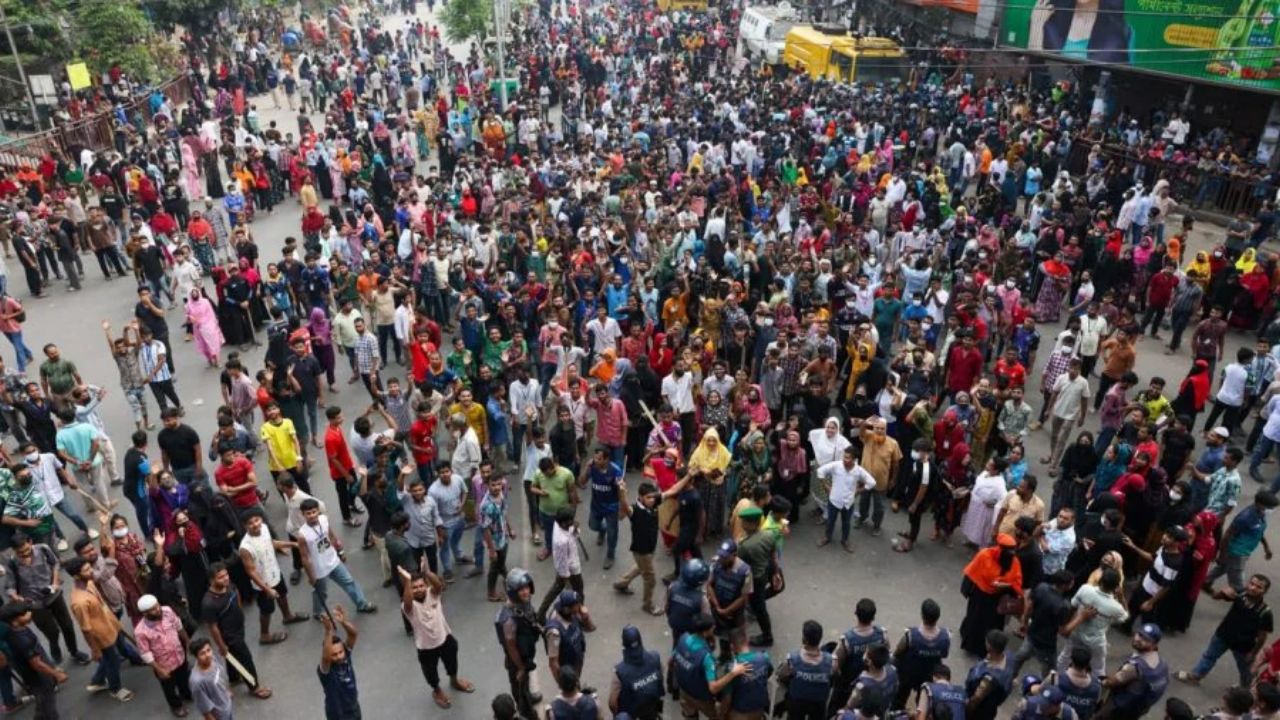
Police fired tear gas and sound grenades to clear the thoroughfare, while additional police and Border Guard Bangladesh (BGB) personnel were deployed. Dhaka Metropolitan Police Mirpur Division Additional Deputy Commissioner Zahidul Islam said officers intervened only after protesters ignored repeated calls to put down their sticks and attempted to breach barricades.
In Gazipur, workers from several factories walked out and staged demonstrations in Bhogra, Chandana Chowrasta, and Tin Sarak. After multiple factories declared holidays, protesters converged on the Dhaka-Mymensingh highway, setting barricades ablaze and attempting to vandalise a police armoured vehicle. A journalist suffered a severe leg injury when police deployed sound grenades to disperse the crowd.
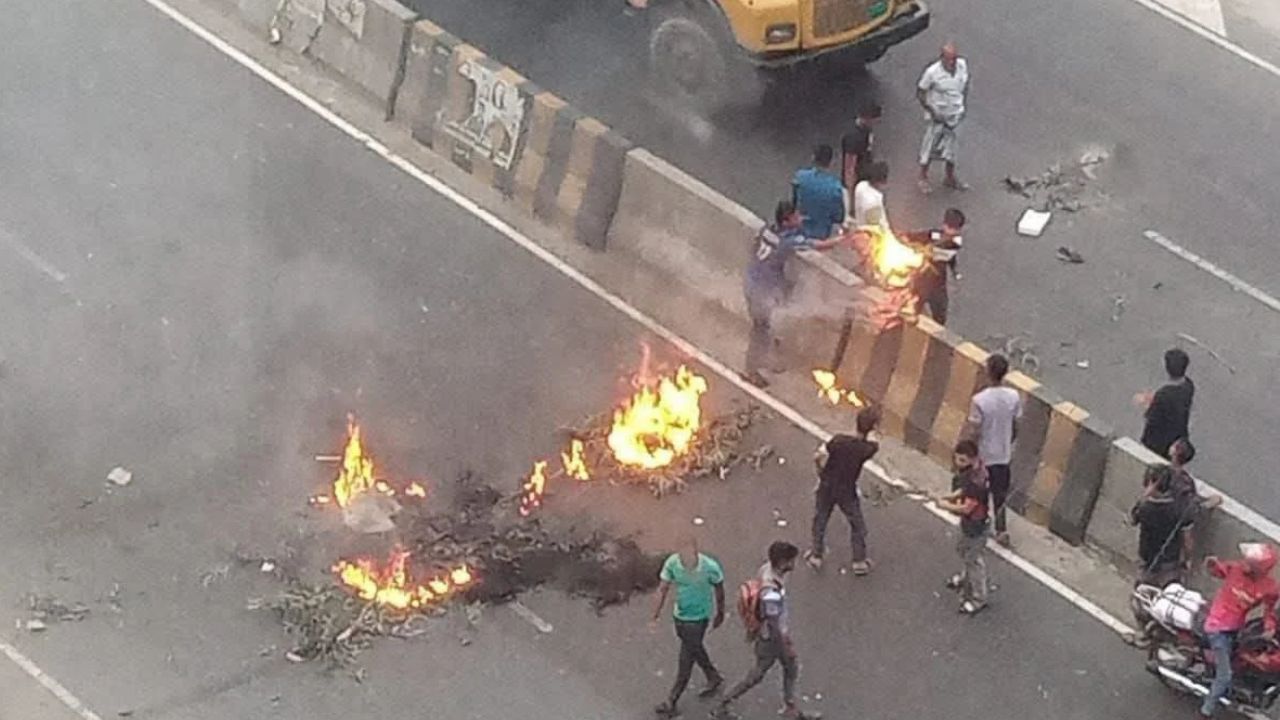
Meanwhile, unrest returned to Savar-Ashulia after two days of relative calm. Workers blocked the Dhaka-Aricha highway at Phulbaria, burning debris and clashing intermittently with security forces as crowds regrouped in adjacent alleys following tear gas and sound grenade volleys.
Wage board appeals for patience
Addressing reporters on Tuesday evening, Chairman Subhani urged workers not to harbour suspicion over the postponement, emphasising that it was caused solely by a board member’s ill health.

“Spreading misinformation or distorted statements should not complicate the situation further. Maintaining a peaceful environment is everyone’s responsibility in the interests of the garment industry and the national economy,” he said, confirming that the board’s third meeting will convene on 23 November.
Subhani noted that under Rule 128 of the Bangladesh Labour Rules 2015, a mandatory 14-day window must be provided for objections and recommendations once draft wage rates are published in the government gazette. Bypassing these statutory steps, he warned, would leave the new wage structure vulnerable to legal challenges.
While the board has a six-month mandate, with scope for extension, to submit its recommendations, Subhani said members are working to finalise the new rates swiftly. Having already inspected small, medium, and large factories in Chattogram, Narayanganj, and Savar to assess living conditions, family sizes, and dependants, he reiterated that workers’ revised pay will apply retroactively from 1 December.