



“Improving the business environment is central to sustaining growth and absorbing a rapidly expanding workforce,” said World Bank senior economist Dhruv Sharma.
He was speaking at a dissemination event titled Bangladesh Development Update: Special Focus – A Business Environment that Delivers Jobs, organised by the Policy Research Institute of Bangladesh (PRI) in collaboration with the World Bank at the PRI Conference Room in Dhaka.
The Policy Research Institute of Bangladesh (PRI) and the World Bank have jointly called for urgent structural reforms to improve Bangladesh’s business environment, restore macroeconomic stability, and accelerate job creation, warning that regulatory uncertainty and weak investment conditions are constraining growth and employment generation.
In his keynote presentation, Sharma said that reducing regulatory uncertainty, strengthening competition, and easing constraints on firm growth are essential to unlocking private investment and expanding job opportunities.
He added that Bangladesh’s ability to sustain growth depends on how effectively it can support firms to expand and absorb its growing labour force.
PRI Chairman Zaidi Sattar said job creation is Bangladesh’s most pressing economic challenge.

He pointed to youth unemployment, estimated at nearly 40 per cent, and stressed the need to align growth, employment, and poverty reduction strategies.
Sattar said that Bangladesh’s sharp decline in poverty from about 60 per cent in 1990 to 18.7 per cent in 2020 was driven largely by export-led growth and trade liberalisation.
He argued that this model must be renewed to meet current economic pressures.


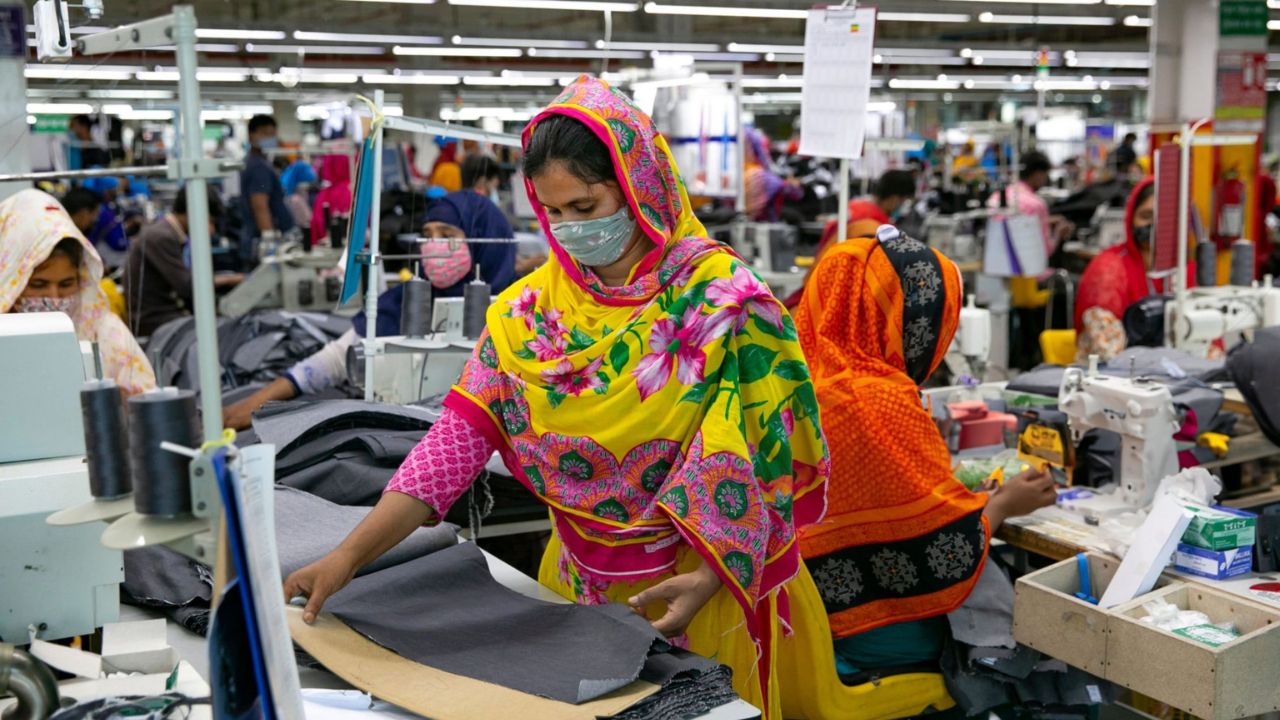

“Growth, jobs, and poverty reduction go hand in hand in the Bangladesh context. Without growth, there will be no job creation, and without jobs, poverty reduction cannot be sustained,” he said.
He also raised concerns about remittance policy, questioning the necessity of the current 2.5 per cent cash incentive as record inflows continue to benefit from a widened official exchange rate gap.
On taxation, he highlighted distortions in corporate tax structures, noting that the ready-made garment sector still enjoys lower rates compared to other industries.
The report further underscored a structural imbalance in the economy, where frontier firms generate around 70 per cent of exports and 75 per cent of revenue but account for only 15 per cent of employment, raising concerns about weak job creation in high-performing sectors.
Centre for Policy Dialogue (CPD) Executive Director Fahmida Khatun called for a shift away from a low-cost labour and protection-driven growth model toward a more diversified and competitive economy focused on quality employment.
“Sunset clauses for policy support are needed, and weaknesses in the banking sector continue to limit private sector financing,” she added.
A weak business environment continues to constrain firms from scaling up and generating new employment opportunities, according to the report.
It noted that regulatory burdens remain high, with senior managers spending around 13 per cent of their time on compliance, while the cost of starting a formal business can reach approximately $10,000.
The report also highlighted weak competition in the market, saying Bangladesh ranks lowest in South Asia on B-READY indicators related to competition, dispute resolution, and insolvency, with state-owned enterprises operating in competitive sectors under preferential conditions that crowd out private firms.
It further pointed to distortive incentive structures, including preferential corporate tax rates of 12–15 per cent for the ready-made garment sector compared to a standard rate of 27.5 per cent, as well as subsidised credit being heavily concentrated among the top 10 per cent most productive firms.
Foreign Investors’ Chamber of Commerce and Industry (FICCI) Executive Director TIM Nurul Kabir said foreign direct investment is declining because of inconsistent fiscal and tax policies.
He said unpredictable regulatory changes, including sudden supplementary duties imposed by the National Board of Revenue (NBR), are undermining investor confidence and discouraging expansion.
PRI Principal Economist Ashikur Rahman emphasised the need for credible fiscal and financial sector reforms.
He said these reforms are essential not only for restoring growth momentum but also for strengthening resilience against external shocks.