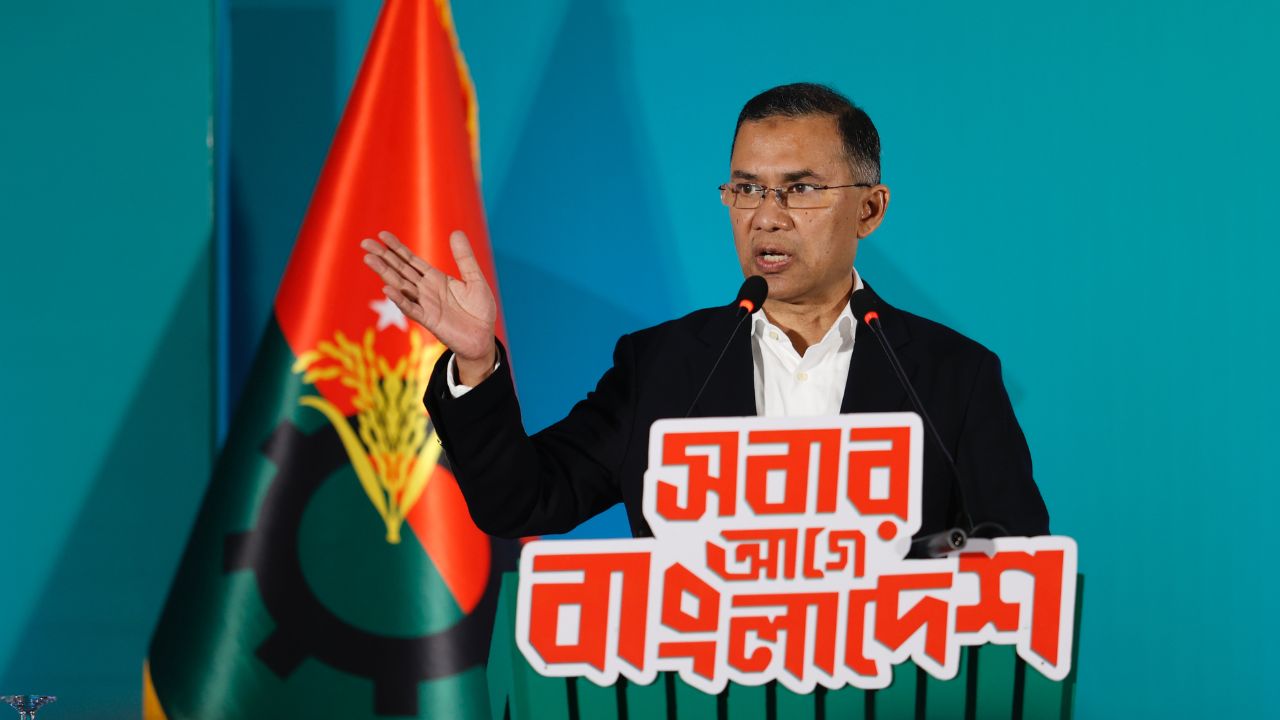

BNP Chairman Tarique Rahman has announced that the party’s foreign policy will be conducted by upholding the interests of Bangladesh and its people, while ensuring national independence and sovereignty remain intact.
Speaking during the announcement of BNP’s election manifesto at a city hotel on Friday afternoon, Tarique explained that the party seeks to foster friendships that facilitate new trade, employment opportunities, and a stronger national economy.
Tarique emphasised that BNP will build relationships with any nation that respects Bangladesh’s sovereignty and assists in solving the country’s internal challenges.

Addressing the Rohingya crisis, he described it as a significant humanitarian issue, noting that while Bangladesh currently provides shelter to approximately 1.2 million Rohingyas, the party intends to ensure their safe and gradual repatriation to their homeland.
He highlighted the difficulty of managing this situation alongside the needs of Bangladesh’s own population of nearly 200 million.




Regarding transboundary water sharing, Tarique stated that the party seeks to resolve disputes involving rivers such as the Padma and Teesta. He expressed a desire to sit with neighbouring countries to reach agreements that ensure the people of Bangladesh receive their fair share of water.
To better support the 15 million Bangladeshi expatriates living abroad, Tarique proposed modernising and activating embassies and making the Ministry of Foreign Affairs more proactive in ensuring citizens are better treated overseas.
The election manifesto also outlines BNP’s commitment to border security, forming strategic partnerships with Gulf countries, and strengthening relations with the Muslim world.
The party also plans to focus on economic diplomacy, exploring new global markets, and enhancing soft power through sports and cultural diplomacy.
The manifesto declaration was attended by BNP Secretary General Mirza Fakhrul Islam Alamgir and Standing Committee members including Mirza Abbas, Gayeshwar Chandra Roy, Abdul Moyeen Khan, Nazrul Islam Khan, and Amir Khosru Mahmud Chowdhury, as well as various foreign ambassadors and diplomats.