
Bangladesh stands at an important stage of its economic development. For decades, businesses have depended predominantly on banks for financing. Banks will continue to play a vital role, but they cannot, and should not, remain the principal source of long-term capital for industries, infrastructure and growing businesses.
A modern economy requires two strong pillars: a sound banking system and a deep, credible capital market. Bangladesh has relied heavily on the first, while the second has remained underdeveloped. Building a strong capital market is therefore not merely about increasing share prices or daily turnover. It is essential for the country’s long-term economic transformation.
Bangladesh requires substantial long-term financing for infrastructure, renewable energy, housing, healthcare, technology, manufacturing and export diversification. Banks mainly mobilise short-term deposits and are not always suited to finance projects extending over 10 or 20 years.
Equity, corporate bonds, sukuk and infrastructure funds can provide more appropriate long-term financing. They can also reduce excessive dependence on bank borrowing and ease pressure on the banking system.
A credible market can channel household savings into productive investment. Instead of remaining concentrated in bank deposits, land, gold or informal channels, savings can finance companies that create employment, exports and economic growth.
A strong capital market also improves corporate discipline. Companies raising money from the public must disclose their financial position, maintain proper governance and remain accountable to their shareholders. The market therefore does more than provide money; it promotes transparency and responsible corporate behaviour.
It can also support entrepreneurs who should not have to depend indefinitely on collateral-based bank loans. Equity allows businesses to raise capital without becoming overburdened with debt.
Finally, a strong market can attract foreign portfolio investment. However, foreign investors will come only when they have confidence in governance, policy consistency, liquidity, repatriation arrangements and the integrity of the regulatory system.
The most serious challenge is a deficit of trust. Investors have suffered from poor-quality listings, unreliable financial reporting, weak corporate governance, manipulation and inconsistent enforcement. Confidence cannot be restored through administrative measures or temporary increases in share prices. It must be rebuilt through credible institutions and sustained action.

The market also suffers from a shortage of high-quality securities. Many successful domestic companies, multinational companies and state-owned enterprises are either not listed or have floated only a small proportion of their shares. At the same time, some companies admitted in the past failed to deliver the performance indicated in their prospectuses.
The market remains overwhelmingly dominated by individual investors, many of whom depend on rumours, social media tips and short-term price movements. Institutional investors, including mutual funds, pension funds and insurance companies, do not yet play the stabilising role they perform in more developed markets.
Financial reporting and auditing also require significant improvement. Inflated revenue, overstated assets, concealed liabilities, undisclosed related-party transactions and questionable valuations can present an artificial picture of profitability. Auditors, valuers, issue managers, directors and credit rating agencies must recognise that they are gatekeepers responsible for protecting the investing public.
Bangladesh has also been unable to develop an active corporate bond market. Businesses remain dependent on bank loans because of taxation issues, lengthy processes, high issuance costs, limited liquidity and the absence of a broad institutional investor base.
Regulatory reporting remains heavily paper-based and fragmented. This limits timely supervision and makes it more difficult to detect unusual transactions, financial inconsistencies and emerging risks.




Another longstanding weakness has been the use of artificial price support measures. A securities market must be allowed to perform its basic function of price discovery. Prolonged intervention may temporarily suppress volatility, but it eventually reduces liquidity, traps investors and damages confidence.
Our first priority is to restore integrity. Enforcement will increasingly be risk-based, evidence-driven and focused on serious misconduct. Manipulation, insider trading, false disclosure, misuse of investor funds and accounting fraud must attract timely and proportionate consequences.
At the same time, regulation should not become unnecessary harassment. Sound institutions and compliant businesses should be able to operate efficiently. Our objective is firm enforcement against wrongdoing, together with predictable and facilitative regulation for legitimate business.
Second, we intend to improve the quality of new listings. Greater attention will be given to financial information, governance, valuation, use of proceeds and the track record of sponsors.
We are also examining alternative listing routes for established and financially sound companies. Direct listing and appropriate offer-for-sale arrangements can make it easier for reputable companies to enter the market, subject to proper disclosure, meaningful public shareholding and transparent price discovery.
Third, corporate governance must be strengthened in substance, not merely on paper. Independent directors must be genuinely independent, audit committees must challenge management, and boards must be accountable for published information. Auditors and other professional gatekeepers will also face greater scrutiny where financial statements are materially misleading.
Fourth, supervision must become technology-enabled. The Bangladesh Securities and Exchange Commission (BSEC) intends to introduce structured digital reporting, including XBRL-based financial statements and standardised electronic submission of other regulatory information. Data analytics will help identify unusual trading patterns, disclosure failures and financial inconsistencies more quickly.
The stock exchanges must also become stronger frontline regulators. They should independently monitor suspicious transactions, inspect intermediaries and take prompt action within a clear accountability framework.
Fifth, the market must be broadened beyond ordinary shares. Corporate bonds, sukuk, government securities, exchange-traded funds, real estate investment trusts and infrastructure funds can provide diversified investment opportunities and meet the financing needs of the economy.
The mutual fund industry must be strengthened, while pension, provident, gratuity and insurance funds should gradually become major professionally managed investors.
Investor education must also become practical and continuous. Individuals providing public investment advice, particularly through social media, should be subject to appropriate qualification, certification and disclosure requirements.
BSEC cannot build the capital market alone. Capital market development must become a national economic priority.
We need stable and consistent taxation. The difference between the tax treatment of listed and unlisted companies should provide a meaningful incentive for good companies to list and maintain transparent accounts. Taxes and costs relating to bonds and other market instruments should not make them commercially unviable.
The government can provide a powerful demonstration effect by listing commercially viable state-owned enterprises and increasing the public shareholding of suitable companies that are already listed.
Bangladesh Bank, the Ministry of Finance, the National Board of Revenue, BSEC and the stock exchanges must work in close coordination. Contradictory or frequently changing policies discourage both issuers and investors.
Rules governing pension, provident, gratuity and insurance funds should facilitate prudent capital market investment. These funds should invest independently, professionally and in accordance with their fiduciary responsibilities, not for the artificial support of share prices.
BSEC and the stock exchanges also need modern technology, skilled personnel and operational capacity. Effective surveillance, forensic accounting, cybersecurity and data analysis require substantial investment and specialised expertise.
We also need cooperation from listed companies, intermediaries, auditors, investors and the media. Companies must treat public shareholders as genuine owners. Intermediaries must protect client assets. Auditors must protect the public interest. Investors must make informed decisions, and the media must report responsibly without amplifying unverified rumours.
Recent improvements in turnover and market activity are encouraging. However, an index movement alone cannot measure the success of reform. A rising market built on weak fundamentals is not development, just as a temporary decline does not necessarily represent regulatory failure.
The regulator’s responsibility is not to determine whether the market should rise or fall. Our responsibility is to ensure that the market is fair, transparent and orderly; that information is reliable; that misconduct is addressed; and that good companies can raise capital efficiently.
A strong capital market is not a privilege for stock market investors. It is part of Bangladesh’s national economic infrastructure. It can finance industries, support entrepreneurs, create employment, broaden ownership of successful companies and reduce excessive dependence on banks.
The central requirement is trust. Trust cannot be created by statements or short-term interventions. It must be earned through transparency, consistent policies, sound governance and fair enforcement. That is the capital market Bangladesh needs, and that is the market we are determined to build.
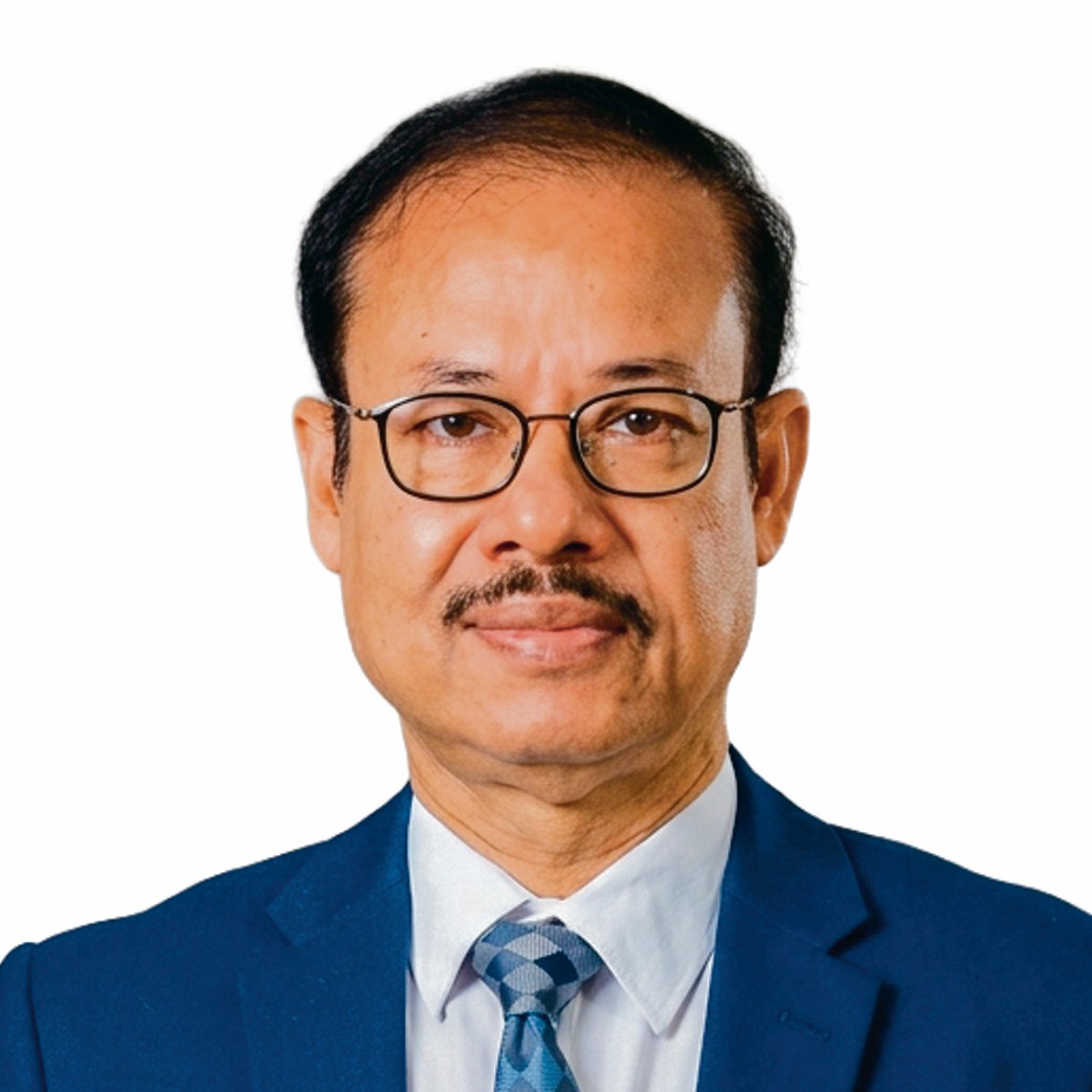
Author is the Chairman, Bangladesh Securities and Exchange Commission. The views expressed in this article are solely those of the author.