


Defaulted loans in Bangladesh’s banking sector have crossed Tk6 lakh crore, with more than 85 per cent concentrated in just 15 banks, according to Bangladesh Bank’s latest quarterly report.
Of Tk18.51 lakh crore disbursed by 61 scheduled banks as of end-June, Tk606,555 crore had turned non-performing, equivalent to 32.78 per cent of total loans. The sector’s capital shortfall against risk-weighted assets widened from 3.17 per cent in March to 3.80 per cent.
The weakness is feeding directly into the capital market. Thirty-one banks listed on the Dhaka Stock Exchange, which published July to September results, reported a combined net loss of Tk1,424 crore. Recent policy concessions by the Bangladesh Securities and Exchange Commission have lifted trading somewhat, but analysts warn the relief is fragile.
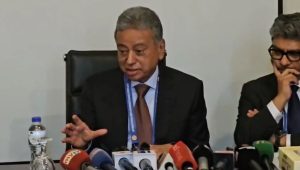
Finance and Planning Minister Amir Khasru Mahmud Chowdhury told an international conference on debt financing in Cox’s Bazar on Sunday, jointly hosted by the Ministry of Finance and the Asian Development Bank, that building a trillion-dollar economy by 2034 would require Bangladesh to reduce its dependence on bank financing and forge an effective link with the capital market. Industry insiders say both sectors must first clear the bad assets, capital shortfalls and trust deficit that have accumulated.
How the mountain grew
The International Monetary Fund’s loan classification standard took effect in late 2025, requiring a loan to be classified as defaulted three months after it becomes overdue.
Previously hidden bad loans surfaced, pushing the default ratio to nearly 36 per cent by September that year, or Tk644,000 crore. Reforms brought it down to Tk588,704 crore (32.26 per cent) in March, before rising defaults at state-owned banks pushed it back to 32.78 per cent in the June quarter. Excluding the five merged Shariah-based banks, just 10 banks account for more than 57 per cent of classified loans.
The Knowledge Hub Institute, at a discussion on Saturday, presented a report finding that 80 to 90 per cent of defaulted loans are classified as doubtful or bad, with almost no prospect of recovery. Research director Dr Shah Md Ahsan Habib said at most 10 per cent arise from normal business risk, with the rest the product of corruption, fraud and wilful default. Tk182,419 crore remains locked in 845 cases because of court stay orders.

Divergence by bank type
Full-fledged Shariah-based banks had a default ratio of 58.9 per cent at end-June; excluding the five merged banks, their capital to risk-weighted assets ratio was 7.30 per cent and loan-to-deposit ratio 127.7 per cent. Counting the merged banks, the group holds more than 47 per cent of all defaulted loans. State-owned commercial banks had a default ratio of 43.2 per cent, with CRAR falling from 1.08 per cent in March to 0.82 per cent against a regulatory minimum of 10 per cent. Private commercial banks stood at 31.6 per cent, with CRAR down from 9.11 to 8.18 per cent. Foreign banks had the lowest ratio at 6.5 per cent.
The provision shortfall reached Tk222,357 crore at end-June, up from Tk205,665 crore in March and Tk198,260 crore in December 2025. Provision shortfalls and losses pushed the aggregate capital shortfall of 21 banks to nearly Tk294,000 crore in March; after offsetting stronger banks’ surplus, the net shortfall was Tk239,000 crore.
At individual level, 97.08 per cent of First Security Islami Bank’s loans, Tk60,645 crore, were in default at end-June. Janata Bank’s ratio was 75.05 per cent (Tk75,728 crore), EXIM Bank’s 70.81 per cent (Tk38,052 crore), Islami Bank Bangladesh’s 52.15 per cent (Tk98,914 crore) and Agrani Bank’s 43.98 per cent (Tk32,133 crore).
The merged bank



Five Shariah-based banks — EXIM, First Security Islami, Global Islami, Social Islami and Union — were merged on 1 January under the Bank Resolution Ordinance 2025 to form Sammilito Islami Bank PLC. The new bank has authorised capital of Tk40,000 crore and paid-up capital of Tk35,000 crore, with Tk20,000 crore in government liquidity and capital support. An asset management company, Banko, is being set up to take Tk147,000 crore of bad loans off the balance sheet.
Nearly eleven months on, the bank’s 761 branches still operate separately. A September report by New Age found the five banks’ combined loan book of Tk197,000 crore backed by only Tk48,894 crore in collateral. Combined capital shortfall stood at Tk167,000 crore in March. The bank owes Tk68,726 crore to individual depositors; repayment began in September, with customers applying to withdraw about Tk5,511 crore but withdrawing Tk1,431 crore in the initial phase.
KHI chairman Dr Khondaker Golam Moazzem and the institute’s report recommended independent asset quality reviews of at-risk banks by December, specific capital restoration plans by March 2027, and liquidation for banks that cannot be turned around.
Islami Bank Bangladesh has sought Tk6,000 crore in capital support under its “Capital Restoration Plan 2027-2033”, issuing 600 crore new ordinary shares at Tk10 each through private placement, which would also dilute the influence of its former ownership group. Bangladesh Bank has approved a fivefold increase in authorised capital to Tk10,000 crore. The bank’s share price rose for five consecutive trading days, gaining 9.86 per cent on Sunday to close at Tk23.40. Bangladesh Bank has proposed a Distressed Asset Management Act 2026 and begun amending the Artha Rin Adalat Ain 2003.
A two-tier sector
Of 31 banks that published third-quarter results, 16 reported higher profits, six lower profits and nine heavy losses. Islami Bank Bangladesh posted the largest net loss at Tk1,970 crore, with core interest-earning operations alone losing Tk1,499 crore. Rupali Bank’s loss more than doubled to Tk355 crore, with NAV per share falling from Tk18.15 at end-2025 to Tk8.49. IFIC Bank’s NAV per share was negative Tk8.05 at end-September. Premier Bank (Tk169 crore), Standard Islami Bank (Tk159 crore), ICB Islamic Bank and NRBC Bank also reported losses.
On a nine-month basis, Pubali Bank leads with earnings per share of Tk10.15, up 74 per cent. In the third quarter, BRAC Bank earned Tk697.50 crore, up 11 per cent; Prime Bank Tk251.66 crore; Eastern Bank Tk235 crore; Dutch-Bangla Bank Tk182.33 crore. NCC Bank and Bank Asia saw profits surge 771 per cent and 420 per cent. City Bank’s profit fell 19 per cent to Tk341 crore.
Analysts note most profits come from government securities rather than lending. Private sector credit growth slowed to 4.09 per cent in September despite a 50 basis point policy rate cut to 9.50 per cent in August. At today’s auction, 91-day treasury bills yielded 8.09 per cent and 364-day bills 8.39 per cent.
A MIKA Securities review found the median price-to-earnings ratio of 21 profitable banks was 4.7 at 29 October prices, with 11 of 13 banks trading below book value.
Capital market relief
The DSEX fell to 5,284 points on 3 November before recovering on policy concessions. Average daily turnover in the week to 12 November rose 26.38 per cent to Tk665.74 crore. The index rose 2.72 points to 5,463.29 on Monday, still nearly 300 points below the 5,762 at the close of the fiscal year in June.
Two BSEC decisions on 10 and 13 November drove the rebound. The first extended to 2030 the deadline for brokerage houses and merchant banks to adjust negative equity; 35,478 of 189,905 margin accounts had negative equity totalling Tk10,978 crore. Firms must set aside at least 25 per cent annually from 2027. The BSEC has also proposed extending the banks’ capital market support fund, due to expire on 31 December, by five years. The second decision conditionally lifted restrictions on 93 BO accounts of seven individuals, including Abul Khayer Hiru.
At end-FY2025-26, the DSE’s market capitalisation-to-GDP ratio fell to 11.42 per cent; counting only listed company shares, about 6 per cent, against a global average of 86.34 per cent. On Sunday, total market capitalisation was Tk670,938 crore, of which equities were Tk336,224 crore and bonds more than Tk334,000 crore, mostly government treasury bonds. Yet over FY2025-26, government treasury securities worth only Tk160 were traded on the DSE.
Macro pressure
In the first eight months of 2026, foreign investors’ turnover rose 37.6 per cent to Tk3,701.29 crore, but in the second half of October they made net sales of Tk175–181 crore and exited. Market participants cite past floor-price experience and exchange rate volatility.
The dollar touched Tk124.30 interbank and above Tk125 at remittance houses. Bangladesh Bank sold $205 million at Tk124.74 per dollar on 12 November after $120 million earlier in the month. Governor Md Mostakur Rahman said on Sunday that taka depreciation over the past decade has been a main driver of inflation. Headline inflation eased to 8.27 per cent in October, with food at 6.4 per cent and non-food above 10–11 per cent.
Remittances rose 12.1 per cent to $2.87 billion in October, totalling $11.47 billion in July–October, up 13 per cent, though monthly inflows have stayed below $3 billion for five consecutive months. Reserves stood at $31.46 billion under BPM6 and $36.33 billion gross, covering about five and a half months of imports at August’s bill. Exports rose 4.4 per cent to nearly $4 billion in October, but garment exports to the EU fell 11.9 per cent between January and September. GDP growth rose from 2.2 to 4.6 per cent in the final quarter of FY2025-26, while the NBR’s revenue shortfall passed Tk50,000 crore in the first four months of the current fiscal year.
External financing
Repayments are expected to peak at $5.5 billion in FY2029-30. The finance minister said the government has no plans to leave the IMF programme; of the $5.5 billion package, $3.8 billion has been disbursed. Two working groups are trying to narrow differences between the elected government’s priorities and IMF conditions, aiming to finalise a new lending framework between January and February. The government is preparing to issue its first dollar-denominated sovereign bond in New York or London within two to three months, with later plans for a Hong Kong equity fund and Samurai, Panda and domestic sukuk issuance. On Sunday it announced a Tk3,000 crore short-term sukuk at a 7.50 per cent profit rate for rural infrastructure.
KHI says firm decisions on liquidating or restructuring the weakest banks must come by next March. Industry insiders say the capital market cannot become central to financing unless banking recovers and banks become less dependent on government securities. Bangladesh needs that financing to graduate from LDC status in 2029 and reach a trillion-dollar economy by 2034.