




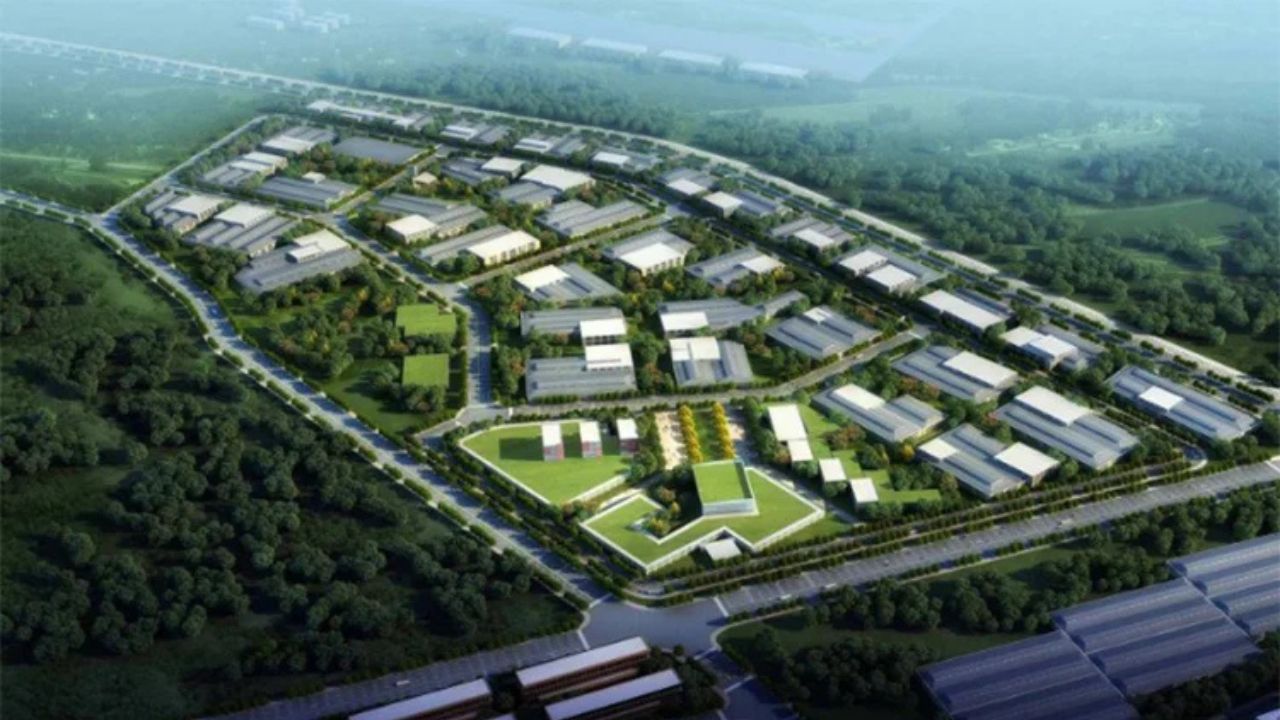
Architecture Research and Development (ARD) has announced a massive masterplan to build 6,000 “Micro-Economic Zones” across the country.
The initiative aims to integrate agriculture, small and medium enterprises (SMEs), the rural economy, employment, and climate-resilient development under a unified framework.
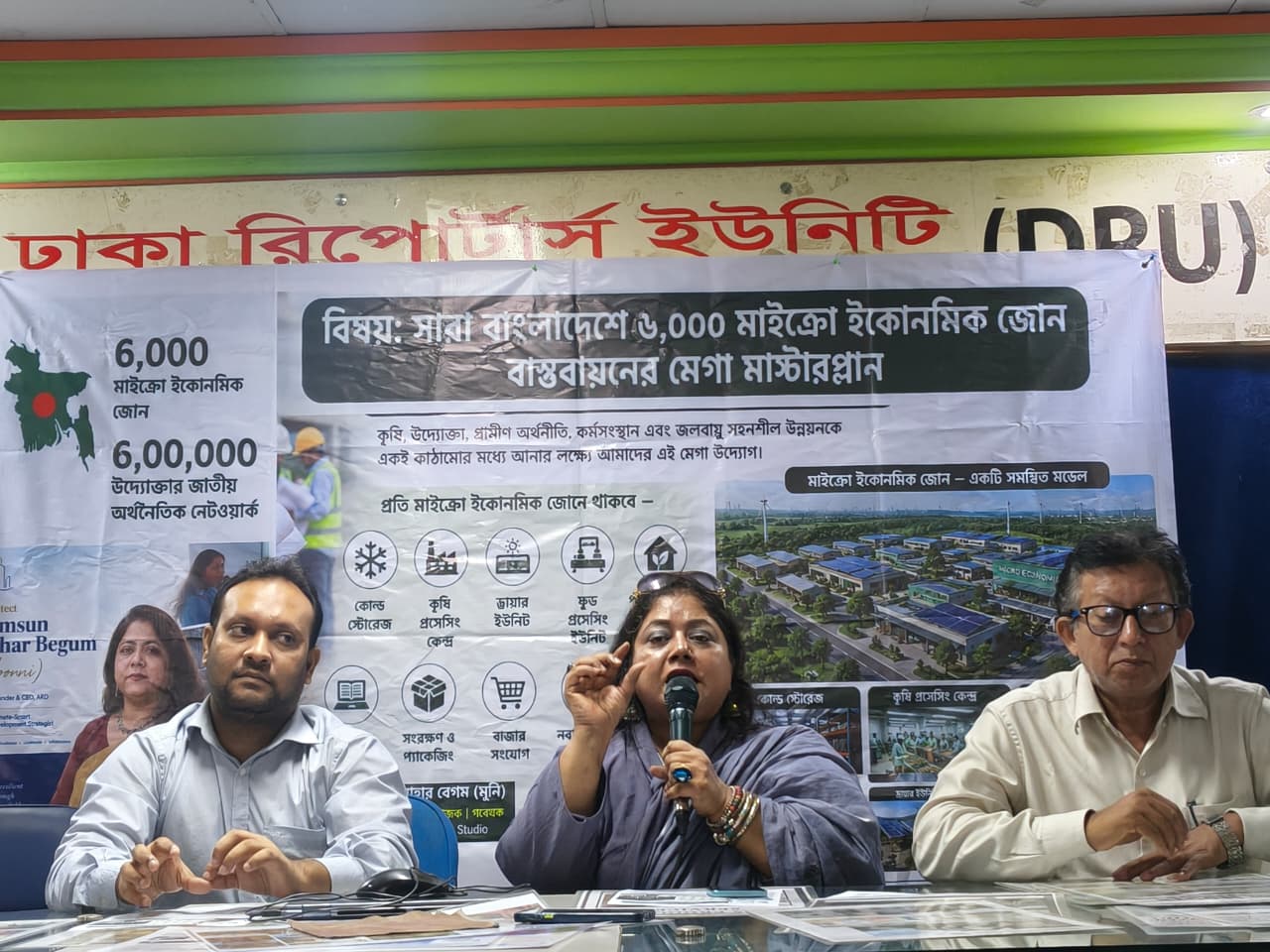
At a press conference held on Sunday at Sagar-Runi Auditorium of Dhaka Reporters Unity (DRU), ARD Chief Executive Officer (CEO) Architect Sumsun Nahar Begum detailed the proposed masterplan.
According to the plan, these zones will facilitate the production, preservation, processing, packaging, training, marketing, and development of entrepreneurs based on local agricultural products and resources.
The zones will also feature eco-friendly and income-generating housing, agritourism, and renewable energy systems.
“This is not just a project concept; it is a complete ecosystem,” Sumsun said, explaining that it would build a self-reliant local economic system where citizens are both producers and consumers.
She noted that rising uncertainties in global supply chains, imports, exports, transportation, fuel, and international markets make local production, local consumption, and local problem-solving highly critical.
“We will work locally and remain connected globally,” she added, asserting that addressing people’s needs at the local level could resolve many of the country’s major challenges.
Potential to create 600,000 entrepreneurs
Under the ARD masterplan, each zone will initially launch with 20 to 25 entrepreneurs, eventually expanding to 30, 50, or up to 100 based on local capacity.
ARD estimates that with an average of 100 entrepreneurs per zone, a national economic network of approximately 600,000 entrepreneurs could be established across the 6,000 zones.
The plans incorporate 333 potential businesses and income-generating activities tailored to local resources, agricultural products, skills, and market demand.
These low-carbon initiatives include food processing, packaging, handicrafts, agro-based industries, eco-friendly products, recycled materials, eco-shoes, eco-leather, and eco-print.
Highlighting the importance of linkage, Sumsun observed that one person has agricultural products, another is a skilled artisan, and another has packaging facilities. But there is no effective linkage between these capabilities. It is impossible to progress individually. Therefore, building linkages is our primary goal.
Reducing agricultural waste
To minimise the wastage of agricultural produce, the masterplan proposes installing 6,000 cold storages, 6,000 agricultural processing centres, 6,000 dryer units, and 6,000 food processing units across the proposed zones.
“This is not just about preservation; production and economic activities will also take place here,” Sumsun explained, adding that economic activities would be integrated with basic human needs – food, clothing, and shelter.
The characteristics of each zone will be determined by local resources and potential, focusing on milk and dairy products in some areas, fruits and vegetables in others, or handicrafts, tourism, and other local commodities elsewhere.
The proposed micro-economic zones re-evaluate housing, treating it as an active centre for production and income rather than just a place of residence.
“Many live with their families in very limited spaces where living and livelihood must happen simultaneously,” Sumsun remarked.
“If we can make this housing system more supportive for those running small businesses or home-based work, it will create additional income opportunities. This is essentially economic housing.”
ARD plans to modernise and adapt rural haat-bazaars (weekly markets) for multi-purpose use, connecting them with the micro-economic zones.
This integration would allow for the establishment of business, preservation, processing, training, and entrepreneur services without requiring large-scale land acquisition.
“There is a 2008 policy and Land Ministry directive on the multi-storey use of rural haat-bazaars. We can leverage that opportunity to connect the micro-economic zones with existing market structures,” Sumsun said.
Government, institutional support
To implement this massive plan, ARD has proposed a collaborative framework involving relevant government ministries, local government institutions, banks, financial institutions, investors, development partners, research and training bodies, and agricultural and SME entrepreneurs.
Shansun Nahar requested technical guidance, policy support, funding, and inter-ministerial coordination from the government.
“Our primary challenge is not a lack of finance, but the lack of an organised masterplan,” she asserted. “We have abundant resources, skills, products, and entrepreneurs. We just need to bring them under an integrated framework.”
She suggested that securing assistance from the government’s Green Fund or Climate Fund for solar power and eco-friendly infrastructure would ease the initial investment burden on entrepreneurs.
She added that a single entrepreneur cannot build such large-scale infrastructure alone, making the coordinated participation of master entrepreneurs, landowners, investors, and small-scale entrepreneurs essential.
‘A country project’
The micro-economic zones are planned as low-carbon, climate-resilient infrastructure designed to strengthen the rural economy by boosting local resource utilisation, reducing agricultural waste, adding value, creating entrepreneurs, and generating employment.
“This is not just a project, but a complete ecosystem. It is a national initiative, a country project, and everyone must work together to implement it,” Sumsun emphasised.
She proposed utilising Corporate Social Responsibility (CSR) funds, private investments, partnerships, and Public-Private Partnership (PPP) models.
According to Sumsun, investing in local economic infrastructure can create viable domestic entrepreneurship opportunities, serving as a better alternative for citizens who otherwise spend vast sums of money trying to migrate abroad.
The press conference was also attended by Nasirul Islam, coordinator of Bangladesh Organic Products Association; Md Mahamudur Rahman Papon, general secretary of Bangladesh Poribeshbid Society; and Al-Emran Hossain, president of Green Building Academy.


