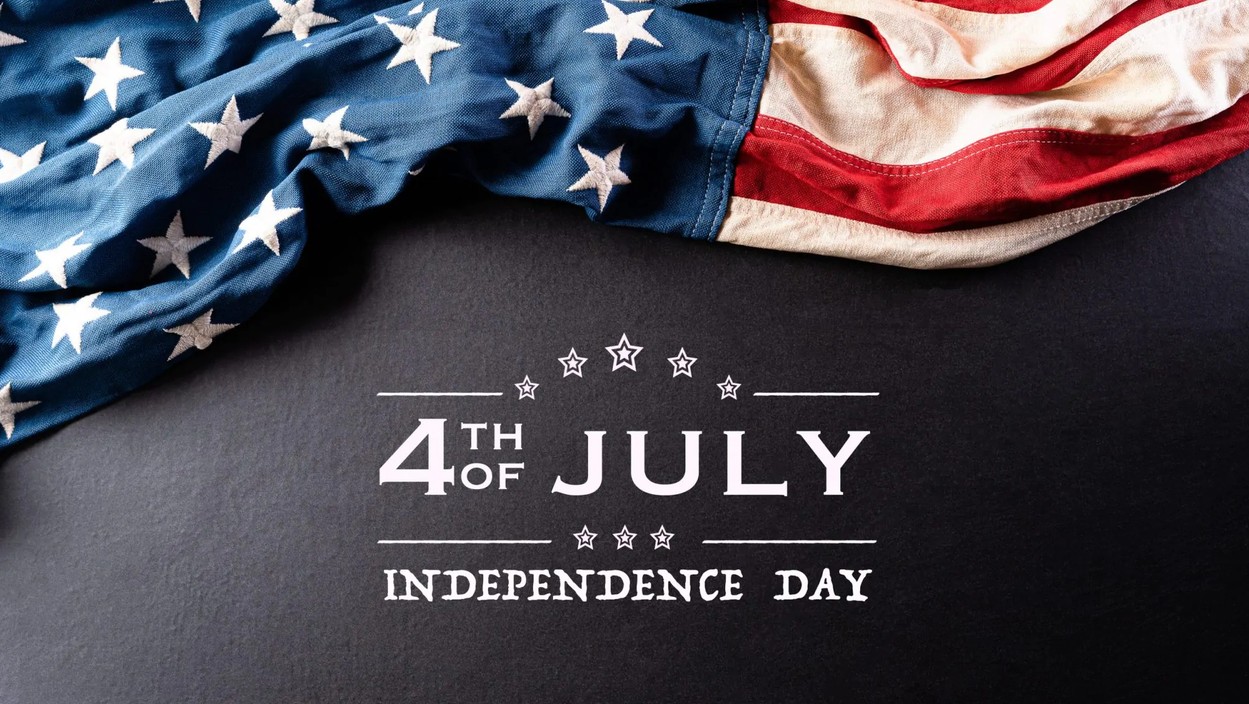



On July 4, 2026, the United States is celebrating its 250th anniversary of independence, a time for joy and reflection. The United States has been transformed from a group of thirteen colonies that revolted against British rule to one of the world’s great powers, politically, economically, militarily, and technologically. It has had a profound impact on global politics, the global economy, science, and efforts to establish democratic systems globally. America’s birthday comes at a time of uncertainty. The international system is becoming multipolar, geopolitical competition is intensifying, societies are undergoing technological disruption, and the threat to democratic systems is unprecedented. This is not just an occasion for Americans to celebrate their country’s past, but also a time to remember America’s ongoing role as a nation of liberty, a world leader, and a champion of democratic values.
On July 4, 1776, the Declaration of Independence was adopted, proclaiming revolutionary principles that have since resonated around the world. The words “all men are created equal and are endowed by their creator with inalienable rights to life, liberty, and the pursuit of happiness,” fueled democratic movements which spread beyond North America. In the early days of the nation, these ideals were flawlessly put into practice, but since then, they have become a philosophy adopted by every nation, every independence movement on every continent, and every human rights movement worldwide.
The United States’s ability to be reborn politically again and again is incredible. Slavery, civil rights, women’s suffrage, and the changing nature of the Constitution itself are all examples of the dynamic process of democratic reform. Americans have always believed that power resides in democracy’s failings, not its successes. Their leadership rose to prominence on the international stage after the Second World War. The United States was the principal architect of a rules-based international order grounded in multilateral institutions, free trade, collective security, and the rule of law.
The institutions created by the world, such as the United Nations, the International Monetary Fund, the World Bank, and the North Atlantic Treaty Organisation, envisioned global stability based on cooperation rather than great-power rivalry. The world of this imperfect international architecture has played a major role in maintaining relative stability worldwide for decades and in unprecedented economic growth. Open markets, new technologies, and democratic government expanded across many areas as a result of international trade. Credit can be given to many countries for these successes, but the United States’ leadership in political, economic, and military affairs was the key to maintaining the international peace system after the war.

America’s cultural impact has proven to be just as extraordinary. The United States has invested heavily in literature, film, music, higher education, and, through digital media and web platforms, in entrepreneurship. It has served as an inspiration to generations beyond its boundaries. American universities, research institutions, and technological ecosystems are still interested in educating, innovating, and developing the skill sets of Bangladesh and other developing countries.
But today, America’s leadership is under increasing pressure. At home, democratic norms have been put to the test by political polarisation, social inequality, a decline in citizen confidence in institutions, and debates over immigration, race, and economic opportunity. But from the outside, China’s strategic rivalry, renewed tensions with Russia, conflict in the Middle East, and the uncertainty of international institutions have complicated Washington’s leadership role in the world. China is not a strategic competitor on the scale it was in the past, but rather has significant economic, technological, manufacturing, and growing diplomatic power. The world system is thus becoming multipolar. Therefore, the international system is moving towards greater strategic competition among great powers, rather than remaining unipolar. The question America faces is how to remain the leader and adapt to a more multipolar world.




In the meantime, democracy is transforming. Political communication and electoral processes have been revolutionised by artificial intelligence, cyber warfare, digital surveillance, disinformation campaigns, and social media. To ensure the resilience of the democratic system, digital governance, cybersecurity, and media literacy, along with the regulation of technology, are now required. America’s prominence in these new areas will have a great impact on global democratic governance.
However, the credibility of America’s democratic model will be more crucial to America’s ability to influence the future than will America’s military power. The rule of law, a respect for civil liberties, a spirit of innovation, and a commitment to equal opportunity continue to be admired in societies around the world. Americans have always been known for their attractiveness and democratic institutions, not for their military force.
It has survived the experiment of Americanism, for it has always taken up new challenges in history, without losing its basic tenets. Young people have strong ideas about liberty, constitutional government, representative democracy, and individual rights – and they are still evolving to face new social challenges. They have a history of making democracy work through free discussion, institutional change, and citizen involvement. It’s not only a celebration of America’s past success, but also of its present and future. Preparing for the future is the way to do it. Over the next 25 years, the ability of democratic societies to face the competitive geopolitical, technological, economic, and environmental challenges and continue to enjoy freedom and human dignity will be tested.
The United States will be the mightiest nation on earth for the next three centuries, with innovative institutions, world-class universities, dynamic entrepreneurship, military power and force, cultural influence, and resilient democratic traditions. Such advantages must, however, be tempered with modesty, international collaboration, and a new resolve toward universal values, as stated in the Declaration of Independence in 1776.
With all its faults, America remains a country more than that, an idea, at 250. Liberty, democracy, opportunity, and human dignity are worth fighting for; that belief has inspired millions worldwide. For centuries, the USA has been a leader in the world, and its future leadership will rely on economic or military strength as well as on its ability to show that democracy is the best way to achieve peace, prosperity, and human progress.
The views expressed in this article are solely those of the author
The writer is a Professor, Department of International Relations, University of Chittagong, Bangladesh. Director, Hong Kong Research Centre for Asian Studies-Bangladesh Centre (RCASBC). Email: [email protected]