The government has directed that solar power systems be installed at all district-level government offices within the next three months as part of a broader push for renewable energy and reduced electricity consumption, officials said on Tuesday.
Deputy Commissioners (DCs) have also been tasked with raising public awareness to prevent human trafficking and ensuring that elections for all tiers of local government are held within a year, returning governance to elected representatives.
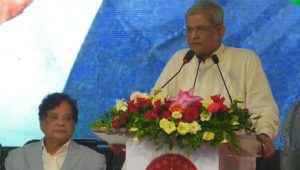
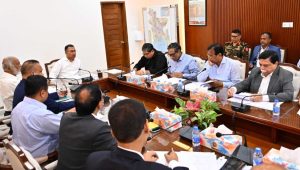
The announcements came on the third day of the first DC conference convened under the BNP government, where DCs and divisional commissioners participated in sessions with several ministries, including Power, Energy and Mineral Resources; Local Government, Rural Development and Cooperatives; Foreign Affairs; and others.
Solar push to boost power supply
Power, Energy and Mineral Resources Minister Iqbal Hasan Mahmud Tuku told reporters that DCs were instructed to implement the government’s solar plan swiftly. The initiative aims to generate 5,000 megawatts of electricity over the next five years.

“They have been instructed to install solar panels on rooftops of their offices and all government offices across districts. The Cabinet Division has already allocated the necessary funds,” Tuku said, urging completion within two to three months. He added that the move will significantly reduce electricity consumption.
The minister also described the recent fuel crisis as “artificial” and reassured that load shedding is no longer an issue. Any outages are reportedly due to line faults, particularly in long rural distribution lines.




Local government elections within a year
Local Government, Rural Development and Cooperatives Minister Mirza Fakhrul Islam Alamgir said elections for all tiers of local government—city corporations, municipalities, upazila parishads, district councils, and union parishads—would be held within a year.
“Local government is the strongest foundation of democracy. We aim to restore elected representation and strengthen these institutions to improve governance and public services,” he said. The minister also emphasized addressing corruption and improving institutional accountability.
Following the fall of the Awami League government on 5 August, 2024, nearly all city corporations, municipalities, upazila parishads and district councils were dissolved. Many union parishads are also without elected representatives, leaving citizens struggling to access services.
Crackdown on human trafficking
State Minister for Foreign Affairs Shama Obaed said officials were directed to raise awareness to curb human trafficking. “Bangladeshi citizens fall prey to trafficking syndicates, often risking their lives abroad. District administrators play a crucial role in tackling this issue,” she said.
The move comes after reports of more than 250 people going missing when a trawler capsized near the Andaman Sea while attempting illegal travel to Malaysia. Efforts are also underway to expand vocational training centres and improve the effectiveness of existing programmes.
The state minister also said discussions were held on expanding vocational training centres to areas where such facilities are lacking, and on improving the effectiveness of existing institutions.
On foreign policy, Obaed emphasized continuity, saying Bangladesh would maintain a “Bangladesh first” approach in dealings with India, irrespective of election outcomes in West Bengal.