



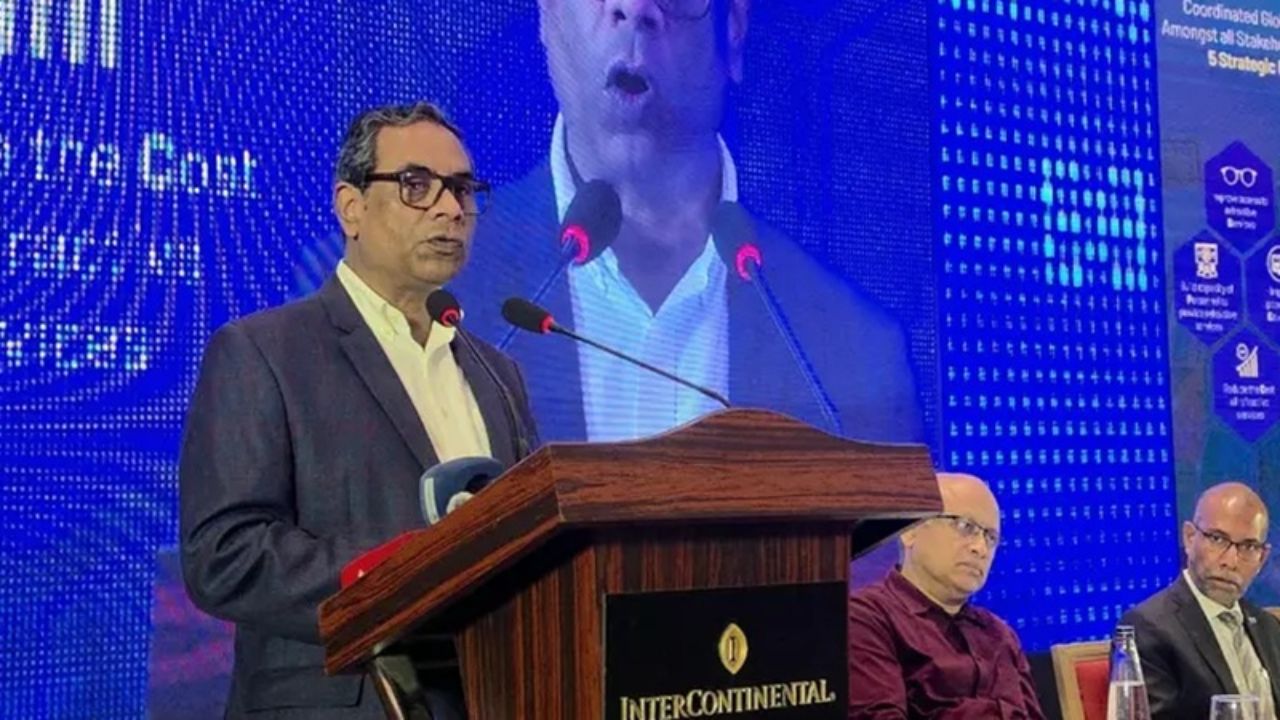



State Minister for Health and Family Welfare MA Muhit has said advanced eye treatment facilities will be introduced at upazila level.
Dedicated outpatient, inpatient and operation theatre facilities for eye care will be set up in the under-construction 151-bed hospitals across the country.
The government is also finalising a comprehensive “National Eye Care Plan” with targets to conduct around 10 lakh cataract surgeries, distribute several crore spectacles and expand treatment for diabetic retinopathy.
He made the remarks as the chief guest at the official launch of the World Health Organisation’s (WHO) “WHO SPECS 2030 Initiative” at Hotel InterContinental in Dhaka on Tuesday morning.

Through the event, Bangladesh officially joined the global initiative.
Muhit said the government was giving the highest priority to the health sector and was committed to taking modern eye care services to the grassroots level.


He said work was underway to transform upazila health complexes into full-fledged 151-bed hospitals. Around 500 upazilas will have advanced eye care facilities so that people in remote areas no longer need to travel to district towns or Dhaka for treatment.
Highlighting plans to strengthen primary healthcare, the health adviser said “primary eye care” would be included as a mandatory component in the training of one lakh healthcare workers being recruited by the government.
He added that by coordinating infrastructure at district hospitals, regular cataract surgery and refraction services would soon be strengthened in at least half of the districts.
Muhit also highlighted plans to expand the capacity of the National Institute of Ophthalmology and Hospital (NIOH). He said a major project had been taken up for its modernisation and expansion, which would be implemented soon.
He said the government also plans to showcase Bangladesh’s achievements in eye care globally by utilising the experience of government, private sector and non-government organisations.
The health adviser said the Health Ministry had been coordinating regularly with international and local organisations over the past six months to improve and expand eye care services.
“With efforts from the highest level of the government, Bangladesh has secured a major commitment to host a global summit,” he said, adding that the government aims to bring a significant positive transformation to the country’s eye care sector within the next three to four years.
National Institute of Ophthalmology and Hospital Acting Director Professor ASM M Kadir, WHO Regional Adviser Tashi Tobgay, WHO Representative to Bangladesh Ahmed Jamshed Mohammad and other local and international representatives also spoke at the event.


