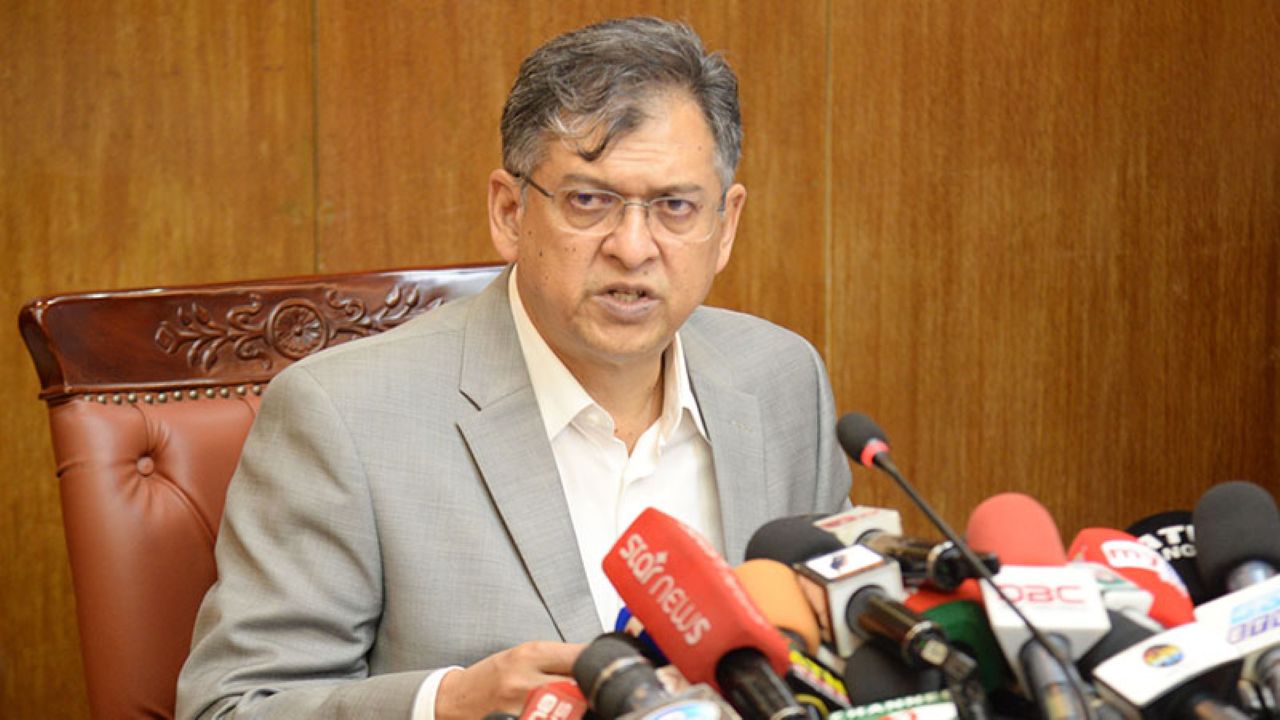
The government is considering a revision of the 2017 power purchase agreement with India’s Adani Power (Jharkhand) Ltd, Power, Energy, and Mineral Resources Minister Iqbal Hasan Mahmud Tuku informed the Jatiya Sangsad.
He added that a national committee, headed by a retired Supreme Court judge, has already reviewed the contract during the tenure of the interim government.
The committee, which included energy and legal experts, economists, and chartered accountants, concluded that the previous Awami League government signed the agreement at “abnormal prices” compared to both domestic and international market rates.

Responding to a query from lawmaker Shahjahan Chowdhury during a session chaired by Speaker Major (Retd) Hafiz Uddin Ahmad, the minister noted that the government is weighing two primary options – resolving the issue through international arbitration or seeking an amendment to the contract through direct negotiations with Adani Power.
Power supply and 180-day plan
In response to a written query from MP SM Jahangir Hossain, the minister maintained that there is currently no electricity shortage in the country. However, he acknowledged that fuel shortages and transmission constraints during the summer months occasionally lead to power disruptions.


To address growing demand and eliminate load-shedding, the government has formulated a 180-day action plan. This strategy includes short, medium, and long-term production plans, alongside the development of transmission and distribution infrastructure.
Tuku also highlighted a focus on fuel diversification and renewable energy. Currently, energy audit activities are underway at 74 designated consumer sites in Mymensingh, Ghorashal, and Narayanganj, supported by a pool of 42 certified energy auditors and 178 certified energy managers.
Fuel crisis and ‘panic buying’
The parliamentary session also saw heated exchanges regarding a burgeoning fuel crisis. MP Hasnat Abdullah (Cumilla-4) questioned whether the Minister was aware of the long queues at petrol pumps and their gradual closure, specifically citing shutdowns in Sylhet.
He alleged that the government was ignoring a situation where the public was not receiving expected services, leading to school closures and disrupted transport.
Minister Iqbal Hasan Mahmud Tuku refuted claims of a supply shortage, asserting that the standard amount of oil is being supplied to pumps daily. He attributed the long queues and stockouts to “panic buying” following “the Iran incident.”
“The amount of petrol that used to take a day or a day and a half to sell is now being exhausted in two hours due to increased sales,” the Minister explained, insisting that regular supply remains consistent despite the visible lines.