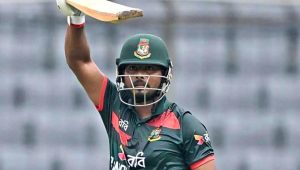




Dean Foxcroft, the Pretoria-born cricketer, remains a quiet presence in New Zealand’s white-ball setup, often outside the first-choice XI. Yet his journey stands out—leaving South Africa to rebuild his career in New Zealand in pursuit of his cricketing dream.
The COVID-19 pandemic cost him nearly two years of domestic cricket, while visa restrictions kept him waiting 28 months back home. Despite the setbacks, he fought his way through and eventually broke into the Black Caps, fulfilling a long-held ambition.
He is now touring Bangladesh with New Zealand for a white-ball series, another chapter in a journey carved by distance, patience, and quiet persistence. In an exclusive interview with Times of Bangladesh’s Jubayer Tanin, Dean reflected on his adaptability, the setbacks that shaped him, and the ambitions that never let go. He also spoke about Bangladesh pacer Nahid Rana, a rising force symbolising the country’s evolving pace attack.
It must be pleasing coming back here as you played in the 2016 for the Under-19 World Cup and back in 2023 where you made your debut. How does it feel to come back and perform on this ODI series under this scorching heat?
Every time I come to Bangladesh it’s quite unique and different, but from the 2016 Under-19 World Cup to now, 10 years later, it’s pretty surreal. I made my debut in 2023 and obviously got a first ball duck in that game, so it’s a rollercoaster and that’s just how cricket is. There’s a lot of ups and a lot of downs and for me it’s just very important to learn from every experience, learn from the good things but also learn from the bad things.
Every game and every training session you take away from something and you try and learn and try and adapt to different conditions. Dhaka and Chattogram are different wickets as well, so you’ve just got to learn wherever you go. Like I said, the past experiences helped me a little bit and obviously that tour with the Black Caps in 2023 and then the A tour last year, there was good learning in that and I just sort of went back and played what worked for me on those tours. Happy to play it off.
As you love to hit, you almost snatched the game away from Bangladesh. Did you at any point feel that you could win the match during the third ODIs run chase?
The beauty is you’ve got to think like that, you’ve got to be positive and you’ve got to believe that you can win this game and like I’ve said plenty of times cricket is a funny game. It’s never done until the last wicket you know. I thought there was an option to win the game and unfortunately we didn’t have enough wickets in hand but just another partnership of 30 or 40 and then it’s a different game. Still happy and still believed that we could have won the game but it wasn’t meant to be, was it?
In the first ODI where you scored a 50 in Dhaka, you got bowled by a wide yorker from Rana and you were nodding your head, was the yorker that good?

I had to appreciate it then. He’s obviously still young, 25 and someone who just keeps running in and bowls quick and he doesn’t back down. For someone like him to bowl a yorker at that speed, it’s quite magnificent. I was just happy with that delivery and again he was just on point every time in the series and he bowled pretty well, so you’ve just got to acknowledge that.
Were you surprised to see pacers like Nahid Rana, Taskin Ahmed and so many fast bowlers coming from Bangladesh? As Bangladesh was known for spinners. A bit of a surprise for you?
We expected Bangladesh’s seamers to challenge us, not just the spinners. Taskin, Rana, Mustafizur, and Shoriful are quality bowlers and have been especially effective in the powerplay. Rana, in particular, has been outstanding. They had good days, so it wasn’t a surprise.
Let me take you back to 2020, during the COVID period. You returned home to Pretoria for exams and to be with your family, and your cricket came to a standstill. How did you navigate that phase, and how did you keep yourself motivated?
It was obviously a tricky situation back in COVID to go and see family and friends and do a bit of studies and stuff and then obviously lockdown and stuff happened, so it was quite a tough period to be stranded in South Africa with family for 28 months I think, so it was over two years. But eventually you knew COVID was going to stop at one stage so it was just for me to just make sure I’m staying in good shape as possible and then making sure I still train, still doing my gym work but also train with people I know and trust the coaches who I’m training with.
As soon as I knew I could go back to New Zealand I knew I’m back into business again. I was quite happy that the COVID period was gone but thinking back on it now I can just laugh about it and it was just a funny time of the life but it’s just how it is.




You spent two years in exile and had three visa applications to New Zealand denied. I know you’ve probably been asked this a lot, but did you ever reach a point where you felt like giving up on cricket?
There was definitely at one stage after maybe the first year I was stranded. I thought my dream of playing for the BlackCaps is probably going to move on and I’m not going to get back into the country. But at the same time I was still 25 or 26, it was not like that I was like 30+. There were eventually a few days and I was thinking the dream had moved on, but luckily it stopped and I could get back into New Zealand again.
How did the idea of moving from South Africa to New Zealand first come to you?
At the time, there was a lot going on, and I was eager to step out of South Africa and experience something new. An opportunity came up to play club cricket in New Zealand, and I took it mainly to explore the country and see what it was like. From the moment I arrived, I felt at home. It’s a beautiful place with great people and a strong culture.
There wasn’t anything negative driving me away from South Africa; I simply wanted to explore new opportunities and broaden my horizons. Looking back, the move has worked out really well, and I feel lucky enough to now call New Zealand home.
Following the pandemic, you were the leading run-scorer that summer and also picked up a few awards, if I’m not wrong, Cricketer of the Year and Super Smash Player of the Year in. What I mean to ask is, was there something going on in your mind like, “I’m going to smash anything that comes my way, I’m going to make up for the lost days”?
Definitely. Like I said, yesterday was one of those days where things just worked out my way, and I was in that space of trying to win the game. We only had one wicket in hand, so it was about using the time and overs smartly. It’s also about matchups, who you take on and who you don’t.
Rana still had a couple of overs left, so for me it was about getting through him and making sure the tailenders didn’t have to face him. Also, Fizz was bowling quite well and ended up taking five wickets yesterday. He’s obviously very experienced around the world, so it was all about matchups.
I felt spin was probably the easier way to attack yesterday, and luckily I got away against Fizz as well, on another day he could have had me early doors. It was also about working well with the guys I was batting with, especially the tailenders. My main focus was to keep the strike and make sure they didn’t have to face too many balls.
Let’s talk about your playing role. How does it feel to be an all-rounder in modern white-ball cricket, where the game is constantly evolving, someone like you who can bat down the order, strike the ball cleanly, and also bowl useful off-spin at a decent pace?
I think obviously in today’s game you’ve got to be adaptable and I think if you’re an all-rounder it’s probably a plus point as well. For me it’s just that my spin game is probably not at the best yet but I know I can get a lot better so for me it’s just I think as an all-rounder in today’s cricket you can go a long way.
For me it’s just trying to make sure my spin game can get better and then with the batting it’s just making sure wherever I bat I’m just doing the best I can but as an all-rounder point of view it’s a great thing. If the bat’s not working out then you know you’ve still got bowling to do, so just love being an all-rounder.
What do you think you still need to add to your game to stay competitive at the top level, given how quickly modern cricket keeps evolving day by day?
The domestic cricket in New Zealand is so competitive anyway so it’s not like there’s a lot different to any international cricket. I think like I said for me it’s just making sure wherever I go it’s just adapting the best I can and it’s just learning off the people that’s in your group like especially in this group we’ve got Tom Latham, Will Young, Henry Nicholls.
So it’s just making sure you go to training or in the game you ask a lot of questions and try and learn and you know just make the best of the people around you and I think as a cricketer that’s probably the best thing for you is just try and learn and then I think in the game it’s just going to happen. You can take those feedbacks from the learnings and you just use it in the game.
What is the domestic cricket setup like in New Zealand, particularly in terms of structure and player payments?
In New Zealand it’s very good, the structure’s outstanding, the competitiveness in domestic cricket is very good and it’s also good to see that a lot of guys who’s not playing for the BlackCaps at the time they go and play domestic cricket so that makes just the competition so much tougher to play in New Zealand. So you know every game you’re going to rock up it’s going to be competitive cricket so in terms of the level at domestic cricket in New Zealand is very good.
With many of New Zealand’s white-ball stars not part of this tour, how do you guys adapt to being called up suddenly? As you were playing a first-class game earlier in April. How do you switch between formats and manage those transitions?
It’s just part of the game and part of the cricket world, you’ve got to adapt quickly. I think for us it’s just making sure like when those things are happening you just got to adapt and you got to talk to the people around you and not get too stressed about it. Like we knew we were going to come into a white-ball series here so we had a nice couple of like two or three weeks of prep.
I think it’s just a mental switch, you’ve got to be more positive in your actions and in your body language and stuff. I think the boys did pretty well, we were not far off of winning this series. Just a couple more partnerships in the second and the last game we would have won it. Again that’s cricket and that’s just learning going forward.
How do you think the New Zealand cricket system and its wider ecosystem cope with situations like this, having to arrange tours and field sides without many of their white-ball regulars?
I think the New Zealand cricket structure is very good. Like I said, we start the season with the Ford Trophy and then Plunket Shield, and then Red Ball cricket in the middle, so it’s all part of adapting.
Normally we would have started with red-ball cricket, but beginning the season with white-ball and then moving into red-ball just shows how well we can adjust between formats. I think all players in New Zealand cricket are capable of doing that, so the structure overall is very good.
How do you look back on your journey from South Africa to New Zealand, especially considering that you once dreamed of representing the Black Caps at international level?
I’m extremely proud of it. It’s obviously a weird one to go from South Africa to New Zealand but again I’m just proud of it. A lot of sacrifices with it and leaving family behind in South Africa but again New Zealand’s new home and I love it. I’m very proud of how things are working out and hopefully there’s more to come.