
Tensions are rising in Bangladesh’s election landscape as major political parties accuse the Election Commission (EC) and field-level administration of bias, fuelling fears of possible violence once formal campaigning begins on 22 January.
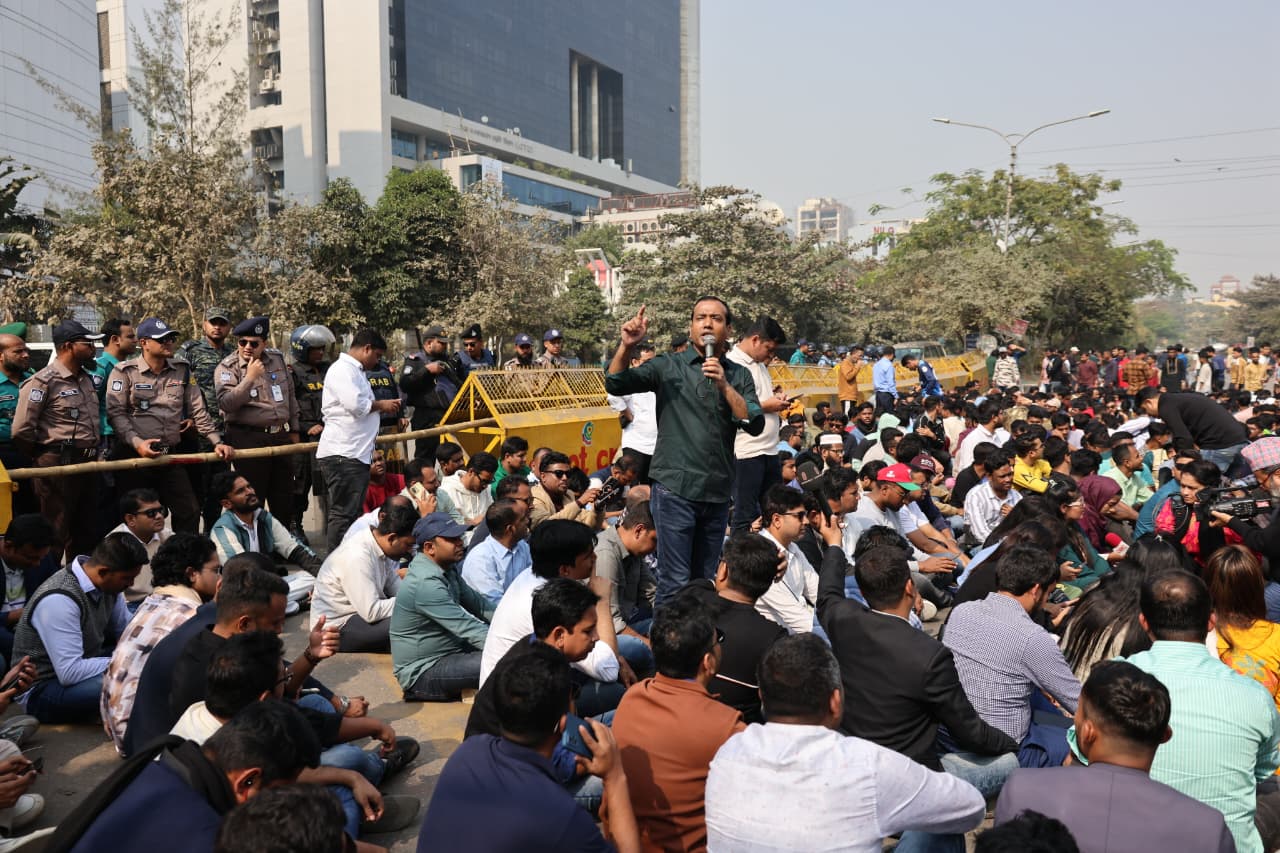
Political and election analysts warn that unless parties exercise restraint and EC responds firmly, confrontations on the streets could intensify. Recent developments suggest a growing standoff, with BNP’s student wing staging sit-ins outside EC, while Jamaat-e-Islami and National Citizen Party (NCP) have announced counter-protests, raising the risk of escalation.
All major parties now accuse EC of failing to prove its neutrality. BNP claims that the field administration and some senior EC officials are working in favour of Jamaat. Jamaat and NCP, on the other hand, allege that the administration is leaning towards BNP.
Even on Monday night, leaders from both BNP and Jamaat have warned that failure to ensure a level playing field could trigger unrest on the ground.
BNP chairperson’s adviser Habibur Rahman Habib, the party’s candidate for Pabna-4 constituency told TIMES that his constituency had previously witnessed a major outbreak of violence. If local EC officials do not act firmly this time, he cautioned, similar incidents could recur.

Jamaat assistant secretary general AHM Hamidur Rahman Azad told TIMES that his party wanted to conduct its campaign peacefully. However, he stressed that it must be ensured that no rival candidate creates obstacles to normal campaigning. If EC fails to guarantee equal opportunities for all, he warned, various forms of disruption could emerge.
The government and EC have repeatedly said they will not bow to pressure and that the election will be fair. Despite these assurances, complaints about the pre-election environment continue to mount.




Abdul Alim, an election expert and member of now defunct interim government’s election reform committee, told TIMES of Bangladesh that political parties approaching EC before elections is nothing new, but this time the situation is different. He pointed to unusual developments such as sit-ins during appeal hearings and party leaders directly approaching the chief adviser with complaints. He warned that unless EC takes a firm stance and political parties act responsibly, the situation could deteriorate once official campaigning begins.
Tensions have already been visible over the past few days. On Sunday morning, BNP student wing Jatiyatabadi Chhatra Dal staged a sit-in in front of the EC office, protesting what it described as biased decisions on postal voting and the suspension of the Shahjalal University of Science and Technology student union election. The group repeated the protest on Monday.
Jamaat and NCP allege that the sit-ins were aimed at pressuring EC on the final day of appeals to reinstate the candidacies of BNP nominees who are loan defaulters or hold dual citizenship.
On Monday evening, a four-member NCP delegation led by its convener Nahid Islam met Chief Adviser Muhammad Yunus at the state guest house Jamuna. After the meeting, Nahid claimed that EC had legalised the nominations of loan defaulters and dual citizens under BNP pressure. He warned that unless EC returned to a neutral position, NCP and its 10-party alliance would take to the streets.
Criticising BNP chairperson Tarique Rahman, Nahid asked whether he was attempting to return to power through what he described as a “managed election”. He alleged that BNP had mobilised its student wing to pressure EC into validating the nominations of ineligible candidates.
NCP spokesperson Asif Mahmud Sajib Bhuiyan said that 31 loan defaulters and an equal number of dual citizens had been cleared, most of them BNP nominees. He said the party would pursue legal action and, if necessary, launch street protests.
Several BNP leaders, speaking on condition of anonymity, told TIMES that although there was supposed to be a reshuffle in the administration after the election schedule was announced, EC had refrained from doing so for “special reasons”. They claimed they had information that attempts were being made to deliberately heat up the situation but said the party would not fall into any trap.
Dhaka University political science professor and analyst Sabbir Ahmed said that mutual accusations against the EC ahead of elections were nothing new. However, he noted that since the mass uprising, all parties have been trying to influence EC, and this trend has continued. He added that if the commission handled the situation firmly, it could still prevent instability.
On Sunday, BNP Secretary General Mirza Fakhrul Islam Alamgir met Chief Election Commissioner AMM Nasir Uddin to formally lodge the party’s objections over what it described as growing administrative bias.
While the BNP has questioned the neutrality of the field administration, Jamaat-e-Islami has also sought to keep pressure on both the government and the Election Commission, alleging that a major party is being given undue advantages. On Sunday afternoon, a four-member Jamaat delegation led by its ameer, Shafiqur Rahman, met the chief adviser.