


Farmers in Lalmonirhat are increasingly adopting modern mulching technology, with the method now covering 1,200 hectares of the district’s 1,650 hectares of early vegetable cultivation this season, according to the Department of Agricultural Extension (DAE).
The technology, which involves covering soil with special polymer or plastic sheets, is gaining popularity as it reduces production costs, saves labour, improves yields and protects crops against excessive rainfall and extreme heat.
The DAE has set a target of cultivating vegetables on 8,090 hectares across the district this season. Of this, 1,650 hectares have been brought under early vegetable cultivation, with mulching used on nearly 73 per cent of the area.
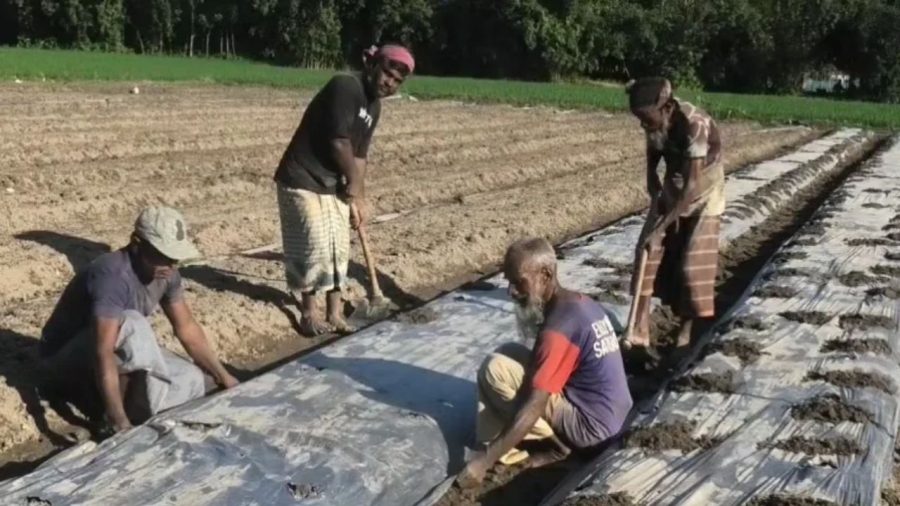
During visits to vegetable fields, rows of crops were seen growing through coloured and black mulching sheets spread over the soil.
Agricultural officials and farmers said the method suppresses unwanted plant growth and reduces pest infestations, minimising the need for additional fertilisers and pesticides while lowering production costs.

The technology has gained popularity among marginal farmers across the district’s five upazilas, particularly in Kamalabari and Bhelabari unions of Aditmari and Chalbala union of Kaliganj.
Farmers are using the method to cultivate aubergines, bottle gourds, bitter gourds, cucumbers, green chillies and other seasonal and year-round vegetables.
Thousands of growers are reportedly benefiting from reduced irrigation requirements, lower labour costs and improved yields, encouraging neighbouring farmers to follow suit.



Delwar Hossain, a farmer from Kamalabari, said he adopted mulching on two bighas after seeing a neighbouring farmer successfully grow cucumbers using the technology.
“Previously, removing unwanted plants and protecting crops from pests required considerable time and money. After adopting mulching, I found that production costs had fallen significantly, while the plants were growing much better,” he said.
Kaiser Muhammad Rana of Bhelabari said the initial cost of purchasing mulching sheets was outweighed by long-term savings.
“Once installed, the sheets require little additional expenditure. They are durable and can be reused for multiple crops if properly stored,” he said.
Farmers Babu Ahmed of Mogalhat and Ripon Rana of Harati in Lalmonirhat Sadar said excessive rainfall and intense sunlight had previously damaged their vegetable fields.

They said mulching helped protect the soil and roots from extreme weather, reducing the risk of root rot and doubling yields compared with conventional cultivation.
DAE Lalmonirhat Deputy Director Md Saykhul Arifin described mulching as a major advancement in vegetable farming.
“Mulching helps retain soil moisture, reduces irrigation costs and improves crop quality by limiting weed growth and pest infestations,” he said.
He said the department was providing farmers with technical assistance and advice to maximise the technology’s benefits.
Arifin added that climate-resilient technologies such as mulching could help farmers cope with adverse weather conditions while protecting soil health and ensuring more efficient groundwater use.