


President Donald Trump came under mounting pressure from within his own Republican Party on Wednesday to change course after a crushing midterm election defeat handed Democrats control of both chambers of Congress, exposing growing divisions over his leadership, economic policies and the war with Iran.
Republican allies, strategists and political figures called on Trump to overhaul his White House team, restore discipline and reconsider policies they believe contributed to the electoral debacle, particularly the unpopular war with Iran and sweeping tariffs.
But the president showed little indication that he intended to change direction.
“I don’t view it as a hit on me,” Trump told Fox News late on Tuesday, playing down the political significance of the defeat.
The Democratic takeover will give the opposition substantial powers to block legislation, investigate the administration and reject presidential nominees. It could also push Trump towards greater reliance on executive orders and unilateral action to advance his agenda during the final two years of his presidency.
The election has also raised questions about the future of the Republican Party and the political prospects of potential successors ahead of the 2028 presidential race.
Vice President JD Vance, widely viewed as Trump’s likely political heir, appeared to distance himself from the president on Wednesday by blaming the Iran war for Republican losses. Political strategists believe similar differences could emerge among Republicans if they conclude that Trump’s influence over the party’s electoral fortunes is weakening.
Inside the White House, senior aides are preparing for possible staff departures, Cabinet changes and a wave of investigations by incoming Democratic committee leaders, a senior administration official said.
Trump acknowledged that the eight-month-old Iran war hurt Republican candidates but continued to defend his decision to launch the military campaign.
Despite the electoral setback, the president retains considerable executive authority. The White House has reportedly spent months preparing measures on immigration, tariffs, housing and federal spending that could allow him to pursue key priorities despite Democratic opposition in Congress.

In a show of defiance, Trump on Wednesday took reporters on an impromptu visit to the construction site of the White House ballroom, defending the time he has devoted to the project.
“For me it’s relaxing,” he said.
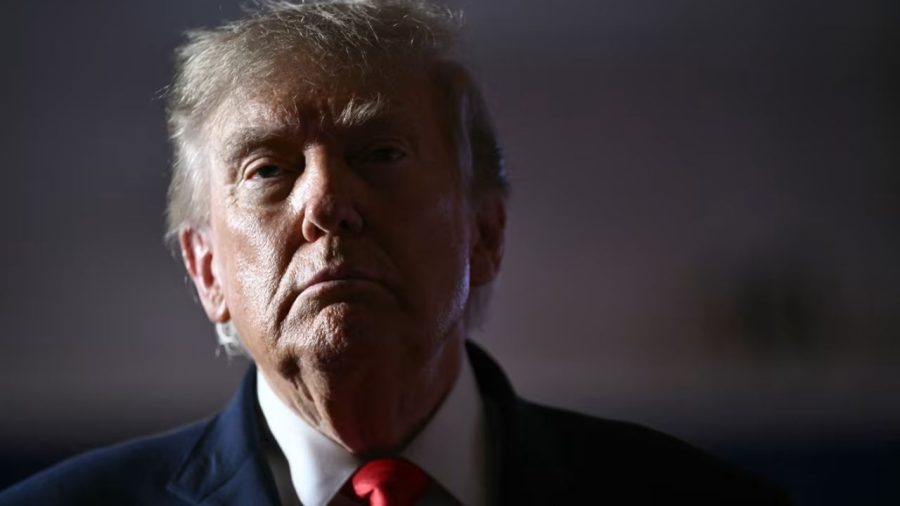
The White House also posted a photograph of the president on social media with the message: “PSA: TRUMP IS STILL YOUR PRESIDENT.”
Democrats, meanwhile, have vowed to use their new congressional majority to rein in Trump and hold his administration accountable, setting the stage for potentially two years of political confrontation in Washington.
House Democratic Leader Hakeem Jeffries said the incoming majority would prioritise affordability and accountability.
Democrats are also preparing investigations into the Trump family’s business dealings, making allegations of corruption a central element of their political strategy ahead of the 2028 presidential election.




Their incoming committee leaders wasted little time signalling their intentions.
“LAWYER UP,” Representative Robert Garcia, who is expected to chair the House Oversight Committee, posted on X.
Senator Ron Wyden, expected to lead the Senate Finance Committee, wrote: “Subpoenas.”
Representative Delia Ramirez warned several Trump administration officials to “Clear your schedule.”
Democrat committee leaders also outlined plans to scrutinise major corporations and their relationships with the administration. Wyden said he intended to examine agreements between the Trump administration and pharmaceutical companies on drug pricing.
The election results also dealt a major setback to billionaire Elon Musk, who spent nearly half a billion dollars supporting Republican candidates.
Of the 43 Republican House candidates backed by Musk, only three had won by late Wednesday, while 33 lost. Seven races remained undecided.
In the Senate, six of the seven Republican candidates he supported lost, with Alaska remaining too close to call.
Democrat Mary Peltola was narrowly ahead with 77% of the votes counted.
Musk’s biggest investment was in Texas, where SpaceX and Tesla are headquartered. He spent nearly $230 million on the Senate contest, $5 million on the governor’s race and $500,000 on the lieutenant governor’s election but failed to secure the desired outcomes.
The Democrat victory has also prompted far-right political leaders in Europe to reconsider their close association with Trump, whose policies had previously been an ideological inspiration for several of them.
Jordan Bardella, leader of France’s National Rally, said Trump’s second term had been less isolationist than his first, adding that US intervention in Iran had serious consequences for economies worldwide.
In Germany, Alternative for Germany co-leader Alice Weidel blamed the Iran war for the Republican defeat, saying Trump had broken his promise to avoid an interventionist foreign policy.

Italy’s League leader Matteo Salvini also attributed the Republican losses to wars, international tensions and rising living costs.
Analysts say Trump’s declining popularity, particularly over economic issues, risks turning what was once a political asset for Europe’s far right into an electoral liability.
For China, Trump’s midterm setback presents both opportunities and risks.
The Democrat takeover could strengthen Beijing’s negotiating position in trade discussions with Washington by making Trump more cautious about disrupting the fragile trade truce between the two countries.
However, Chinese analysts warn that a future Democrat president could adopt a tougher approach towards Beijing.
Shen Weizhong, a former Chinese Foreign Ministry official, said Beijing recognised that a new US president could have a very different approach to China.
Meanwhile, a Democrat-controlled Congress could increase pressure on Trump to resume arms sales to Taiwan, a sensitive issue for Beijing.
China analysts also caution that a politically constrained Trump could pursue unconventional foreign policy initiatives to secure victories abroad.
Global energy markets are also assessing the implications of the election, particularly for the US-Israeli war with Iran.
Brent crude rose $1.75, or 1.85%, to $96.37 a barrel on Thursday, while US West Texas Intermediate gained 89 cents, or 1%, to $89.01.
The recovery followed a fall of more than 8% in both benchmarks in the previous session, when prices settled at their lowest since August 31.
“The situation in the Middle East is still unresolved and that’s why there is some modest recovery in prices at the moment,” said Giovanni Staunovo, a commodity analyst at UBS.
With the Iran conflict and its economic consequences contributing significantly to the Republican defeat, investors and international governments are now watching whether the election will push Trump towards a diplomatic settlement or a more unpredictable foreign policy course.