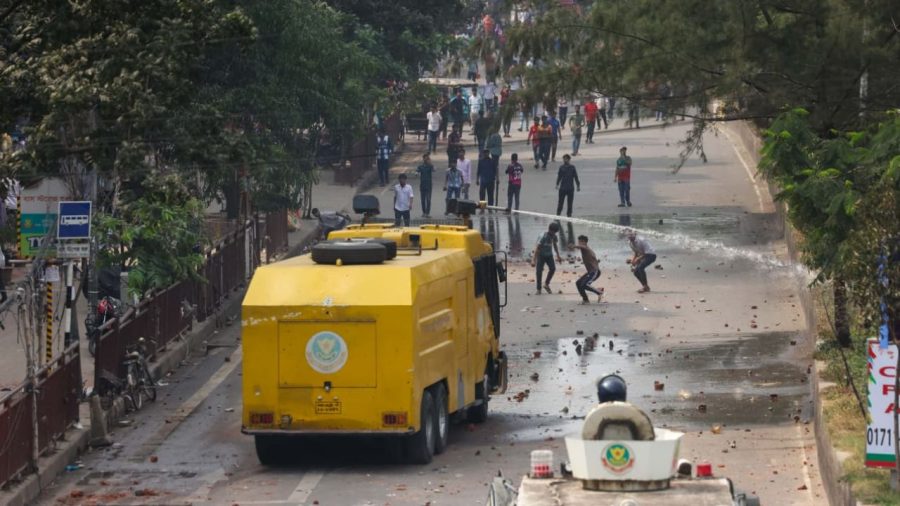



An alarming wave of violence has swept across Mirpur, Gazipur, and Savar, where several journalists covering ongoing garment worker demonstrations for higher wages and improved benefits have been systematically chased, beaten, and harassed.
The sequence of incidents, spanning Sunday to Wednesday, has seen cameras vandalised, broadcasting equipment confiscated, and media personnel targeted, sparking grave concerns regarding physical safety and press freedom on the front lines of industrial reporting.
The hostility facing reporters stems from a volatile atmosphere of mutual suspicion.
Striking workers increasingly view journalists with deep mistrust, often mistaking them for representatives of factory management or undercover law enforcement agents.
Following the political upheavals of the 2024 uprising, police officers have become equally apprehensive about being filmed, harbouring acute fears over potential career repercussions or formal investigations.
Escalation in Gazipur and Mirpur
The violence began on Sunday when Deepto TV’s Gazipur correspondent, Jahangir Alam, was assaulted while filming a demonstration on the Dhaka-Tangail Highway at Palli Bidyut in Kaliakair.
At approximately 1:30pm, a group of workers aggressively challenged his identity and demanded to know why he was recording.
As Alam attempted to flee into a nearby alley, the crowd pursued and beat him, seizing his camera, shoulder bag, and broadcasting equipment.

NTV correspondent Abu Sayeed and local photojournalist Riazul Islam were similarly targeted nearby.
Kaliakair Police Station Officer-in-Charge Shahidul Islam subsequently informed reporters that malicious elements were carrying out acts of sabotage under the cover of the labour movement, promising swift action.
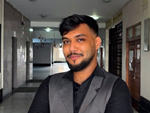
Concurrently, in the Mirpur-10 area of Dhaka, Daily Kaler Kantho multimedia reporter Mahbub Islam alleged that Additional Deputy Commissioner (ADC) Zahidul Islam forcibly confiscated his mobile phone whilst he was documenting police baton charges against workers.
Despite Mahbub repeatedly presenting his press credentials, the officer refused to return the device, an exchange captured on social media videos.
Mahbub stated that the phone contained critical interviews, research, and documentation, disrupting his professional output.

While ADC Zahidul Islam denied taking the phone, he failed to provide a coherent explanation when confronted with video evidence on site.
Maruf Hossain, a reporter for Dhaka Post who was recording the confrontation, reported that the ADC ordered him to cease filming and later excused his aggressive conduct by claiming he was simply “in a bad mood”.
Dhaka Metropolitan Police (DMP) Joint Commissioner Mahidul Islam assured that the allegations would be thoroughly investigated.
Widespread intimidation across industrial hubs
By Monday, 2 November, civil unrest had spread rapidly across Chandra, Safipur, Mouchak, Konabari, Bhogra, and Naojor.
Ekhon Television reporter Iftekhar Raihan was violently assaulted by stick-wielding workers despite his motorcycle and clothing clearly displaying “PRESS” identification.
Somoy Television reporter Mehedi Hasan and several cameramen were injured in separate scuffles, with equipment systematically smashed.
In Hemayetpur, Savar, Prime TV correspondent Gopal Malakar was assaulted while documenting vandalism at an AKS Group facility; police eventually intervened to extract him to safety.
The climate of intimidation intensified on Tuesday in Naojor, Gazipur, where reporters arriving to cover highway fires were met by hostile youths shouting that photography was strictly prohibited.
Bystanders attempting to record events on mobile devices had their phones seized and smashed.

Officer-in-Charge of Basan Police Station Md Harun Or Rashid acknowledged awareness of the attacks, though he noted that no formal written complaints had yet been lodged.
The violence culminated on Wednesday morning at Padmar Mor in Hemayetpur, where a four-man media crew, comprising Ahmad Sohan Siraji of Star News, Rayhan Bin Amin of Ekattor Television, Mohammad Ujjal Hossain of Kalbela, and Niloy Ahmed of Baishakhi Television, was surrounded.
Demonstrators accused the press of arriving late to cover police baton charges and tear gas deployment before launching a physical assault. The journalists were eventually rescued by local residents.
Institutional failures and professional vulnerability
While labour union leaders from the Garment Workers’ Rights Movement issued joint statements condemning the violence, insisting that workers consider journalists vital allies, industry observers point to systemic fractures in media relations.
Jibon Ahmed, director of photography at Netra News, highlighted that lingering trauma from past casualties, widespread media bias, and inconsistent professional standards have eroded public trust, leaving field reporters exposed to hostility from all sides.
Addressing the crisis, Dhaka Reporters Unity (DRU) President Abu Saleh Akon emphasised the complete absence of legal safeguards for reporters in Bangladesh.
He observed that media personnel have historically lacked institutional protection regardless of which administration is in power, leaving them vulnerable to physical harm without effective avenues for judicial redress.
Echoing these concerns, Bangladesh Journalists in International Media (BJIM) condemned the systemic obstruction.
BJIM founding convener Sam Jahan stressed that news collection is a fundamental public service that must not be disrupted by law enforcement or civilian groups.
Calling for an end to the partisan perception of media coverage, he urged authorities to conduct comprehensive investigations to determine whether external agent provocateurs are deliberately orchestrating attacks on the press.