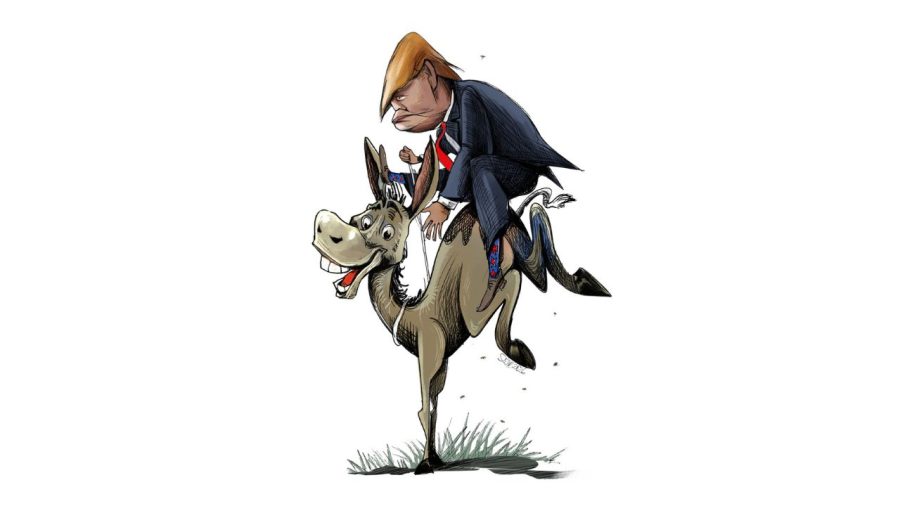



Democrats seized control of both the US Senate and the House of Representatives in Tuesday’s midterm elections, scoring sweeping victories in traditionally Republican strongholds as millions of voters delivered a stinging rebuke to President Donald Trump.
The results marked a dramatic political reversal for Republicans, who had secured control of the White House and Congress just two years ago. Voter frustration over the unpopular war with Iran, rising living costs and Trump’s handling of the country drove a Democrat wave that extended well beyond the party’s traditional strongholds.
The scale of the defeat suggests that the election was not merely a verdict on congressional Republicans but also a personal setback for Trump, who had repeatedly urged supporters to treat the midterms as a vote on his presidency.
Once the newly elected lawmakers take office in January, Democrats are expected to intensify congressional scrutiny of Trump’s administration, family and political allies. Control of the Senate will also give them the power to block presidential nominees, including potential Supreme Court appointments if a vacancy arises.
Democrat Abdul El-Sayed also won Michigan’s closely contested Senate seat, according to media projections, becoming the first Muslim elected to the chamber. His victory preserved a crucial Democrat seat and marked a breakthrough for the party’s progressive wing.
El-Sayed defeated Republican former congressman and FBI agent Mike Rogers, who had Trump’s backing. During the campaign, Rogers sought to portray the Egyptian-American candidate, who was born in Michigan, as a religious extremist.
“You chose hate, and Michigan chose hope,” El-Sayed told cheering supporters on Tuesday night.
Economic frustration drives Democrat wave
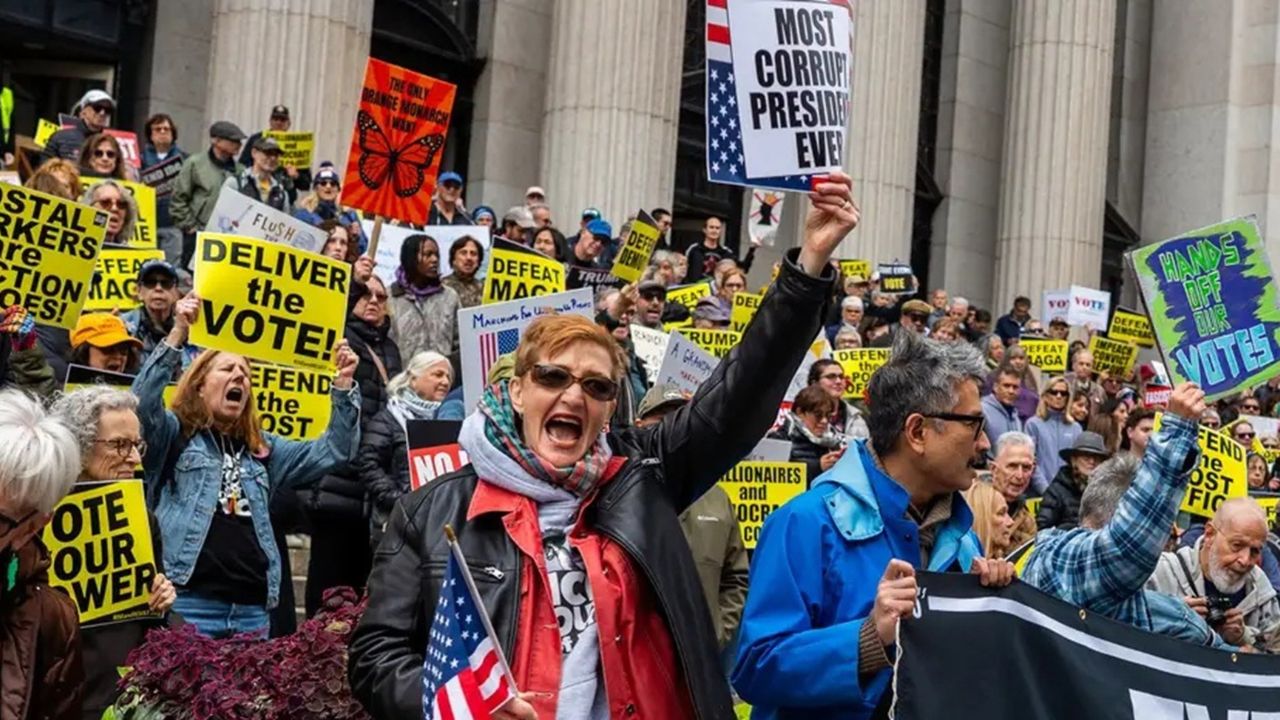
Democrats built their campaign around corruption and affordability, accusing the Trump administration of worsening economic conditions through its tariff policies and military intervention in Iran.

They also highlighted the billions of dollars the Trump family has made since the president returned to the White House.
Republicans, meanwhile, focused on cultural issues, including transgender rights, portraying Democrats as radical and extreme. But voters appeared more concerned about their household finances than the cultural battles dominating Republican campaign messaging.
Democrats flipped more than two dozen Republican-held House seats, securing a majority. They also won all the closely contested House races decided so far, including around a dozen districts that Trump had carried by double-digit margins in the previous presidential election.
Exit polls conducted by SSRS showed that nearly nine in 10 voters considered the cost of living a crucial or major factor in their decisions. Many said they were financially worse off than two years ago and wanted to hear more from Trump about reducing the prices of groceries and fuel.
The results also raised questions about the durability of Republican gains among Latino voters, a group that had helped Trump secure victories in several key states.




Several candidates personally promoted by Trump against the preferences of local Republican leaders also struggled, adding to the scale of the party’s setbacks.
Iran war takes political toll
Trump acknowledged that the war with Iran contributed to the Republican defeat, although he stood by his decision to launch military action.
“I think a part of it was Iran,” he told Fox News on Wednesday. In a separate interview with The Wall Street Journal, he also admitted that the conflict was a factor.
However, the president defended the military campaign despite its unpopularity.
“I did the right thing,” he said, adding that he would have made the same decision again.
Now in its ninth month, the conflict has become a major source of public dissatisfaction, with Democrat candidates blaming the war for driving up fuel prices and the cost of other essential goods.
Global repercussions
The Democrat victory is already raising questions about the future direction of US foreign and economic policy, with trade partners, strategic allies and geopolitical rivals assessing the implications of Trump’s weakened congressional position.
The most immediate uncertainty concerns the war with Iran. Although Democrats’ congressional victory does not automatically give them control over military decisions, the results could increase pressure on Trump to seek a diplomatic settlement.
Some Gulf governments believe the electoral setback has strengthened the incentive for the president to pursue a peace deal and reduced the likelihood of another large-scale assault on Iran.
The outcome could also influence Washington’s approach to the Ukraine war. Trump has largely halted direct US financial and military assistance to Kyiv, despite broad bipartisan support in Congress for helping Ukraine resist Russia’s invasion.


His decision to lift sanctions on Russian diesel and waive restrictions on Russian energy has also angered lawmakers, including Republicans.
With control of both chambers, Democrats could propose fresh assistance for Ukraine. If they secure sufficient Republican support to achieve a two-thirds majority in both chambers, they could override a presidential veto.
However, additional assistance is unlikely to materialise immediately and may not address Ukraine’s urgent shortage of US-made Patriot air defence interceptors needed to protect its cities and energy infrastructure during winter.
Trade partners reassess US policies
The election results could also reshape international trade negotiations.
Some Asian countries may become less inclined to rush investment commitments made to avoid Trump’s tariffs, while China could perceive an advantage in ongoing trade negotiations with Washington.
However, analysts expect broader US-China economic relations to remain in a state of “fragile stability”, according to Chim Lee, an industrial policy analyst at the Economist Intelligence Unit in Beijing.
India could also benefit from the changing political environment. Trump’s weakened position may provide New Delhi with greater room to negotiate a trade agreement with Washington, particularly as it seeks to protect its agricultural sector.
European countries, meanwhile, will be watching whether Trump follows through on threats to impose 100% tariffs on countries introducing digital services taxes targeting American technology companies.
The possibility of a €3 billion loan to Airbus from the European Investment Bank could also test the largely stable transatlantic trade relationship established since 2025.
Although the Democrat takeover will not automatically reverse Trump’s policies, it marks a significant shift in Washington’s political balance. For the president, the remaining two years of his term are likely to bring tougher congressional scrutiny, legislative resistance and greater pressure to reconsider policies that have generated widespread public dissatisfaction.