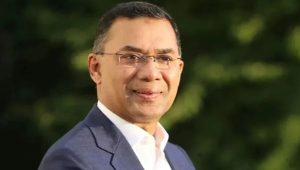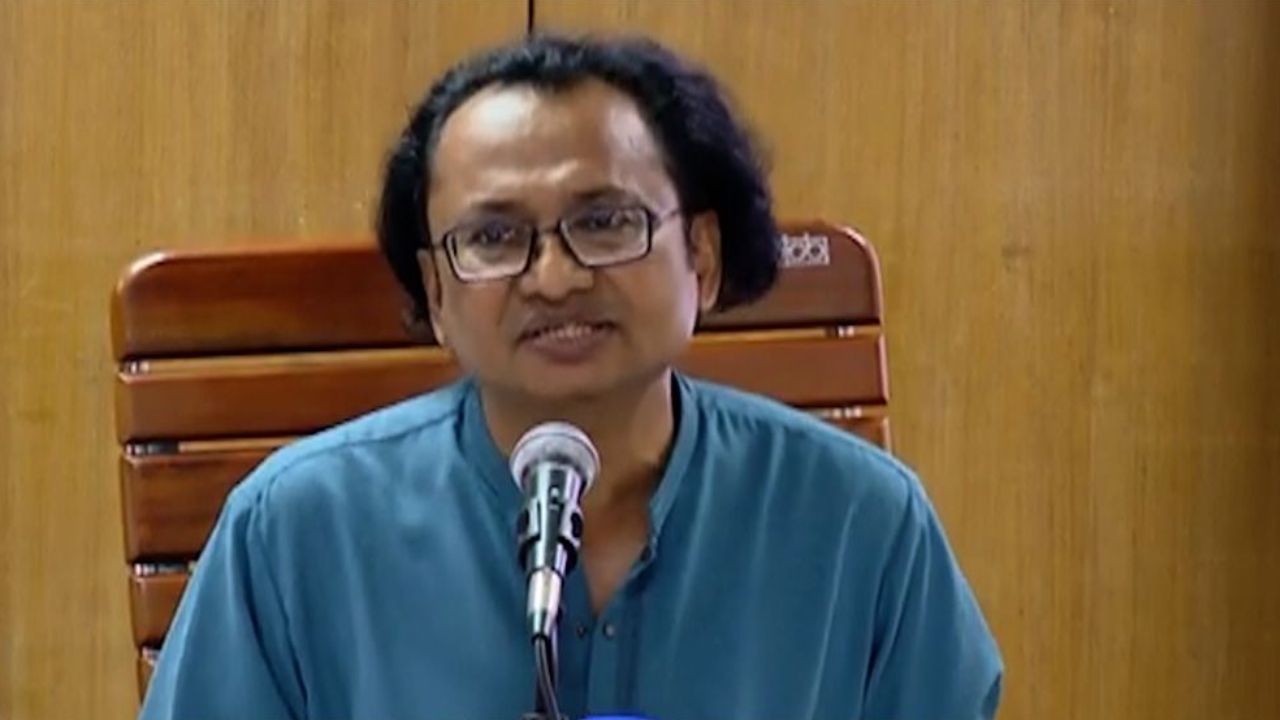



Zahed Ur Rahman, information adviser to the prime minister, said police have the legal right to kill if a relevant context arises within legal rights and the right to self-defence, but the government does not want excessive force used to suppress protests as in the past.
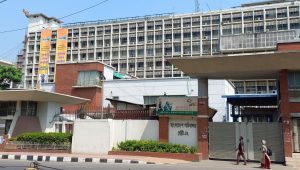
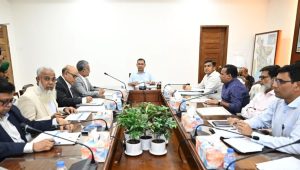
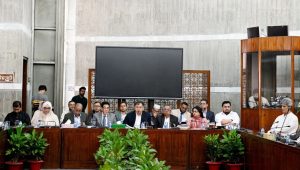
He made the comments on Tuesday at a regular press conference held at the Secretariat Press Information Department in response to a question regarding the ongoing garment workers’ movement.
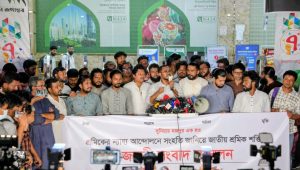
During the press conference, a journalist noted that while the government points to Awami League involvement behind the ongoing workers’ movement demanding an increase in minimum wage, most of those demonstrating are “like teenage gangs,” inquiring why the government is unable to control them.
In response, the adviser explained that a “new culture” has been established regarding how the government controls unrest.
Proportionate force and legal rights
He recalled expressing previously that Bangladesh Police would never again be like Sheikh Hasina’s police, clarifying that he expressed this expectation as a citizen rather than a member of the government.
However, he acknowledged that incidents of disproportionate force have occurred in some places even as he speaks from within the government.

Zahed Ur Rahman noted that police have the legal right to apply force and, under the right to self-defence, to kill someone if such a context is created within legal rights.
However, he emphasised that force must be applied strictly within the legal process and proportionately, adding that the government does not wish to suppress demonstrations using past methods.
Handling protests with minimal harm
Explaining the reasoning behind this approach, the information adviser pointed out that whether categorised as teenage gangs or otherwise, those demonstrating remain citizens of the state.




He added that intelligence information exists regarding the situation and the home minister has addressed how it is occurring, with law enforcement agencies holding full details.
Zahed said the government aims to handle the matter in a manner that results in minimal damage and difficulty for the public.
Expressing hope that the worker protests will come to an end “within a very short time”, the information adviser observed that genuine workers initially took to the streets due to legitimate demands.
He said that with a commission now established, if real workers refrain from taking to the streets, it will become difficult for outsiders to carry out such activities.
He explained that a context is required for such incidents, noting that third parties operate from within the demonstrations initiated by garment workers, and the problem will no longer occur once workers cease assembling on the streets.
‘Instability may continue as long as Hasina lives’
Turning to political developments, Zahed said attempts to create instability in the country may continue for as long as Sheikh Hasina is alive, but the government will resist all such efforts.
He recalled that after losing the 1991 election, Hasina declared she would not let the government remain in peace for even a day, believing she will still attempt to do so.

Zahed pointed out that while the government does not believe Awami League as a political party can achieve much, sabotage attempts could be made using the vast amount of looted money in the party’s possession.
Based on intelligence, Home Minister Salahuddin Ahmed informed that sabotage attempts could originate from across the border, though the government sees no connection between these events and December, nor does it believe they are meant to pave the way for her return next month.
Regarding bringing Sheikh Hasina back from India, the adviser clarified that there is no question of passports, adding that efforts have been initiated to bring her back through diplomatic discussions with India by following standard legal procedures.
Economic pressure and fuel subsidies
Addressing economic concerns, the information adviser acknowledged public pressure due to rising LPG prices, explaining that the decision was made for long-term welfare.
He disclosed that the government planned a Tk48,000 crore taka subsidy for the power and energy sector this fiscal year but spent Tk24,000 crore in just two and a half months due to buying LNG at more than double the price.
Zahed added that continued subsidies would require borrowing and fuel inflation, forcing decisions based on global economic realities.