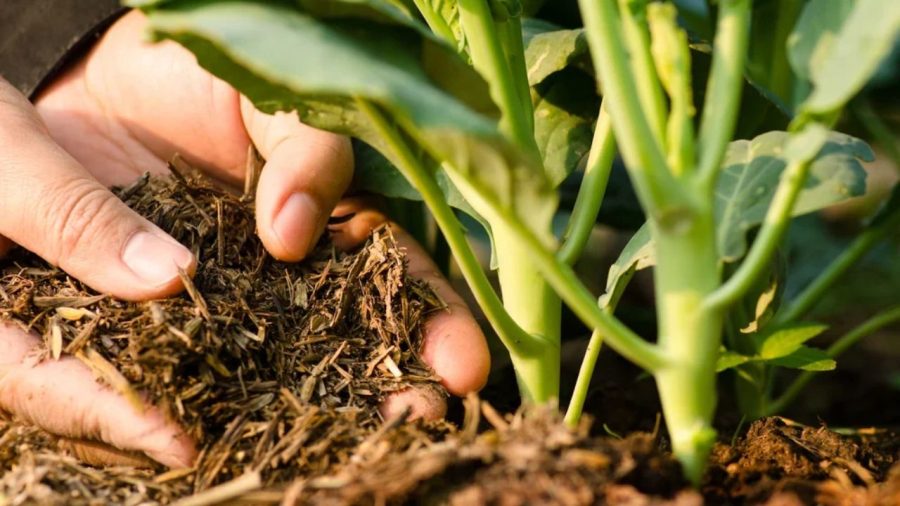



Experts and policymakers have demanded subsidies on the production and use of organic fertilisers to protect soil fertility, produce nutritious food, and build a sustainable agricultural system.
They said long-term reliance on chemical fertilisers is damaging soil health. To address this situation, alongside expanding the production and use of organic fertilisers, the registration process must be simplified and effective measures implemented for quality control.
Speakers made these observations on Monday at a roundtable discussion titled “Promoting Organic Fertiliser Production and Subsidising for Healthy Soil, Crops and Environment” held at the CIRDAP Auditorium in Dhaka.
The event was jointly organised by ActionAid Bangladesh and Bangladesh Agricultural Research Institute (BARI), together with 20 national and international development organisations and five universities.
Sharing their practical experiences, grassroots farmers and entrepreneurs highlighted that they face various administrative complexities during the registration process for producing and marketing organic fertilisers.

Additionally, due to the absence of effective quality verification and monitoring mechanisms, ensuring the supply of quality organic fertilisers in the market remains difficult.
Participants noted that in certain instances, immediate crop yields from organic fertilisers might be lower than those from chemical fertilisers. However, organic fertilisers play a vital role in preserving soil health and crop quality.
Rather than completely eliminating chemical fertilisers, an integrated application of organic and chemical fertilisers should be ensured based on soil type and crop requirements.

Speaking as chief guest during the first technical session, Executive Chairman of Bangladesh Agricultural Research Council (BARC) M Abdus Salam discussed the registration process for organic fertiliser entrepreneurs and sought recommendations from relevant stakeholders on simplifying the procedure.
The discussion also addressed key issues including the availability and diversity of raw materials for organic fertiliser production, determining application doses based on soil testing, and securing fair prices for farmers.
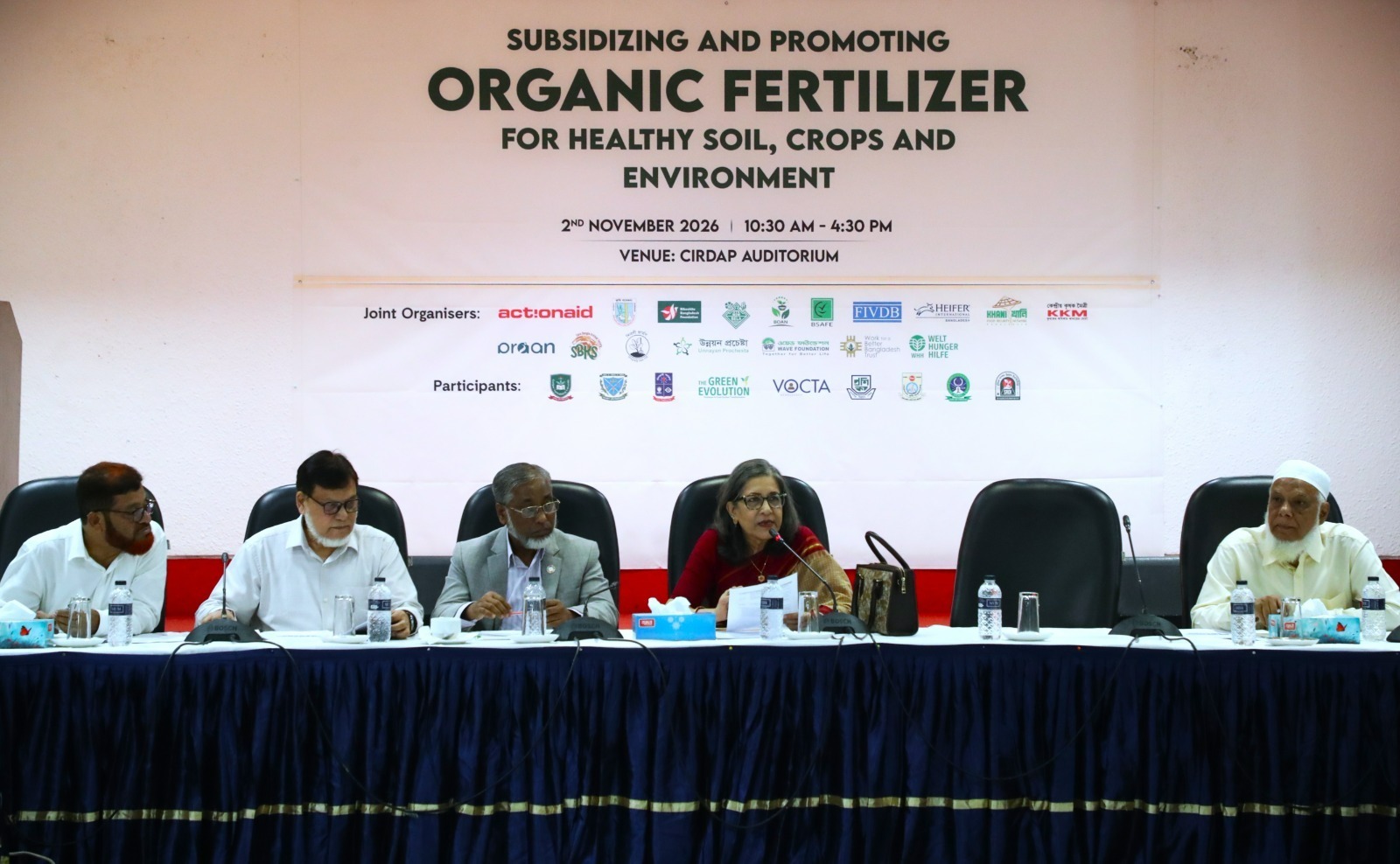
Moreover, speakers underscored the need to reduce the influence of middlemen in the agricultural commodities market and establish effective systems for quality control of organic fertilisers.
Lawmaker and member of the Parliamentary Standing Committee on the Ministry of Agriculture Sabira Sultana said, “Just as keeping a mother healthy ensures the birth of a healthy child, keeping the soil healthy will enable the production of nutritious crops.”
Emphasising the marketing of organic fertilisers through quality assurance, she added that the “Krishi Card” (Agriculture Card) initiative has been undertaken to deliver government services to farmers.
In this regard, selecting genuine farmers and ensuring service delivery according to their needs is essential. She urged participants to formulate specific proposals and action plans to ensure the integrated use of organic and chemical fertilisers.
Addressing the second technical session as the chief guest, Director of Bangladesh Krishi Bank, Md Anwar Faruq, proposed introducing a district-level registration system to streamline the registration process for organic fertiliser entrepreneurs.

He said, “There is no alternative to natural methods for making agriculture sustainable. Balanced use of biopesticides and organic fertilisers is essential to maintain soil health and the desired pH level.”
“However, delivering accurate and scientific information to farmers in a timely manner remains a major challenge,” he added.
Country Director of ActionAid Bangladesh, Farah Kabir, emphasised that protecting soil health and expanding organic fertiliser usage are imperative to guarantee nutritious food.
To achieve this, a coordinated effort is required to enforce quality control, eliminate marketing irregularities, and alleviate administrative complexities for entrepreneurs.
She also expressed keenness to work with the government to bring about necessary policy changes to expand organic fertiliser production and usage.