


With just two days remaining before the US midterm elections, Democrats and Republicans are making their final appeals to voters, as economic pressures and the rising cost of living dominate the campaign.
Democrats continue to lead national polls, but several closely contested Senate races could determine which party controls Congress, reports Al Jazeera.
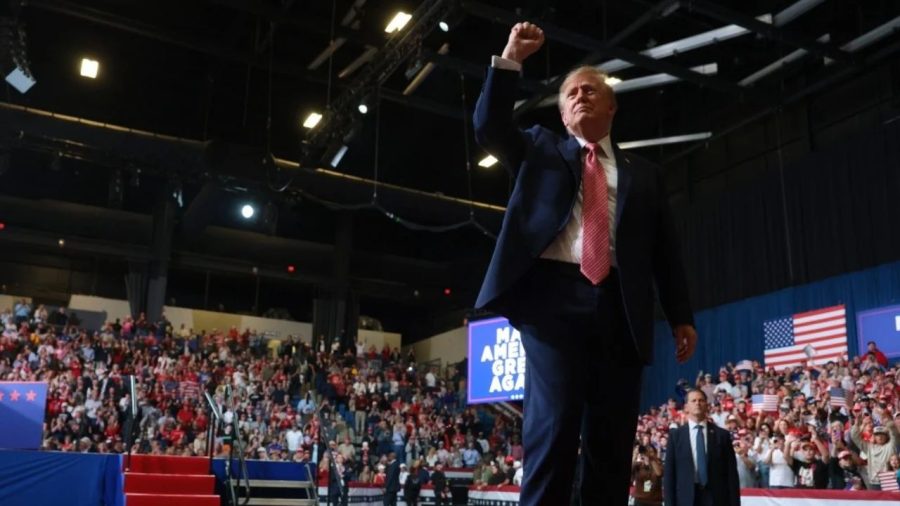
President Donald Trump is scheduled to campaign in Iowa and Kansas on Sunday, while Democratic Senate candidate Abdul El-Sayed is holding events in Michigan amid an increasingly heated campaign.
According to the latest RealClearPolling average, Democrats lead Republicans by 51.5 per cent to 43.1 per cent, an 8.4-point advantage.
A THP/MM national survey conducted on October 28 and 29 put Democrats ahead by 54 per cent to 41 per cent. An Emerson College poll conducted from October 24 to 26 also showed a 10-point Democratic lead.
Political analyst and pollster Natalie Jackson told Al Jazeera that the figures reflected growing dissatisfaction with Trump and his administration’s economic record.
‘Polling shows an environment that is pretty favourable to the Democrats. The president is very unpopular, Americans feel the pinch of high costs, which are partly due to tariffs and the war in Iran, and the general sentiment is that Republicans did not deliver in the last two years,’ she said.
However, the national polling advantage does not necessarily translate into victories in individual Senate contests.
In Kansas, a Washington Post-Schar School poll released on Friday showed Democratic candidate Adam Hamilton leading Republican Senator Roger Marshall by 52 per cent to 43 per cent.
An Emerson College survey, however, suggested a closer contest, putting Hamilton ahead by 50 per cent to 47 per cent.

Republican strategist and former Republican National Committee communications director Doug Heye questioned the reliability of the nine-point lead reported by the Washington Post-Schar School poll.
He recalled a Des Moines Register poll ahead of the 2024 presidential election that showed Kamala Harris leading Trump by three points in Iowa. Trump subsequently won the state by approximately 13 points.
‘A lot of Republicans just don’t want to answer calls from pollsters,’ Heye said.
Jackson also cautioned that polling errors could affect the outcome of closely contested Senate races, particularly if Republican voters were underrepresented in surveys.
‘In some individual races – particularly the close Senate races – we could see polling error that shifts the race in one direction or another,’ she said.
As Election Day approaches, both parties are focusing their closing campaign messages on economic concerns, particularly energy, healthcare, groceries and other everyday expenses.
Democrats have centred their campaigns on affordability, while Trump has been holding telephone rallies for Republican candidates in competitive constituencies.




Heye said Republicans had struggled to convince voters that their economic policies would improve living conditions.
Asked whether the party had found a convincing closing message, he said: ‘No, they haven’t. That’s a big part of their challenge.’
He added that candidates needed to address the everyday financial pressures facing American families.
Democratic strategist and pollster Celinda Lake, who is working with El-Sayed’s campaign in Michigan, said her party was also facing questions about what it would deliver if it gained control of Congress.
‘The feelings about the Democrats are negative, too, which is very different from, say, 2018, when Democrats were positively perceived,’ she said.
Lake said many voters wanted political change but remained uncertain about what either party would offer.
Trump is scheduled to hold rallies in Iowa and Kansas on Sunday after reversing an earlier decision to cancel both appearances.
In Iowa, he will campaign alongside Republican US Representative Ashley Hinson, who is challenging Democratic candidate Josh Turek in a closely contested Senate race.
In Kansas, Republican Senator Marshall is seeking re-election against Hamilton. The state has not elected a Democrat to the Senate since 1932, but rising agricultural costs and opposition to Trump’s immigration crackdown have made the contest unexpectedly competitive.
Heye said Trump should not have cancelled the appearances initially, arguing that his presence could help mobilise Republican voters.
Meanwhile, El-Sayed is scheduled to campaign in Detroit and Southfield, Michigan, where he is challenging Republican Mike Rogers for a Senate seat.
Lake said affordability was central to El-Sayed’s campaign message.
‘He’s very clear. He says, “Money out of politics, money in your pockets, and healthcare for all”,’ she said.
She added that the outcome in Michigan would depend heavily on voter turnout.

More than 51 million Americans have already voted, according to reports cited by Al Jazeera. Both parties have encouraged supporters to use mail-in ballots or make plans to vote on Tuesday.
However, early-voting figures alone do not indicate which party is ahead, as they do not reveal how people have voted.
Lake identified turnout, particularly among young voters, as a crucial factor, alongside differences in voting patterns between men and women.
Jackson said the final two days were unlikely to significantly alter the national political landscape, although developments in individual states could still influence closely contested races.
A total of 435 seats in the House of Representatives and 35 Senate seats are being contested.
Democrats need a net gain of three seats in the House and four in the Senate to secure majorities in both chambers.
Although national polling suggests Democrats are well positioned to regain the House, the Senate remains considerably less predictable. Key contests include Michigan, Texas, Kansas, Iowa, North Carolina and Alaska.
Jackson said the national polling provided a clearer indication of the likely House outcome than the Senate races.
‘We can be fairly confident that Democrats will win the House majority, but the Senate picture is unclear,’ she told Al Jazeera.
Heye also highlighted the state-specific nature of Senate contests, saying they were much harder to predict than national voting trends.
Candidates have Sunday and Monday to make their final appeals before voters head to polling stations on Tuesday.
Polling stations will begin closing on Tuesday evening, with the first results expected shortly afterwards. However, some closely contested races could take longer to produce definitive outcomes.
Heye said he would be watching early results from Indiana and Kentucky for indications of the broader electoral trend.
Jackson, however, cautioned that individual Senate results could still differ from polling projections, with the scale and direction of any polling errors becoming clear only after the votes are counted.