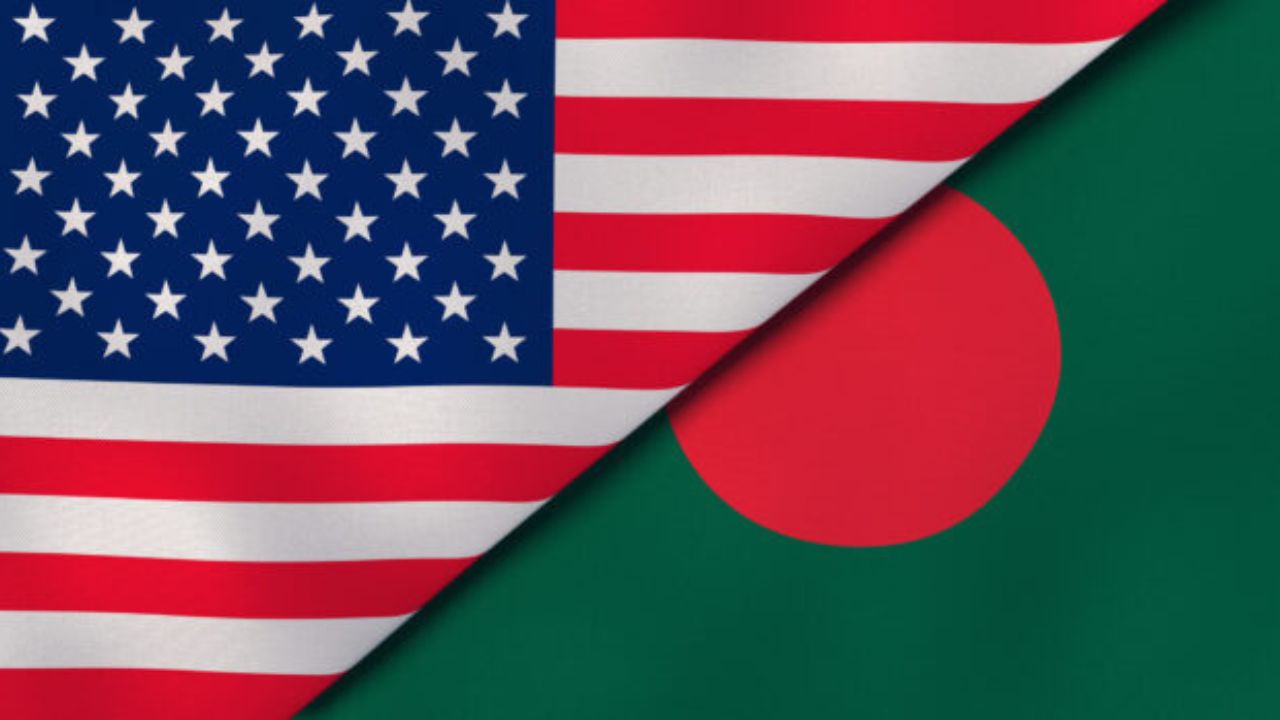



The United States midterm elections 2026 mark a crucial turning point for American foreign policy in South Asia. Whilst executive authority grants White House operational control over diplomacy, legislative powers under Article I of the US Constitution give Congress control over committee majorities, trade agreement oversight, and foreign aid allocations.
Bilateral ties between Washington and Dhaka entered a new phase following the 13th National Parliamentary Election. Guided by a “Bangladesh First” foreign policy approach, Prime Minister Tarique Rahman-led government prioritises core national interests and balanced power relations.
Midterm election outcomes alter Washington’s engagement with Dhaka by determining political party control across key congressional bodies, including House Foreign Affairs Committee, Senate Foreign Relations Committee, House Ways and Means Committee, and Senate Finance Committee.
Leadership shifts in these committees fundamentally alter oversight priorities regarding South Asia. Republican-led committees traditionally emphasise trade enforcement, supply chain decoupling from strategic competitors, and rigorous oversight of multilateral assistance.
Conversely, Democratic-led panels frequently prioritise labour rights, democratic institution building, human rights accountability, and climate resilience.

Through annual State, Foreign Operations, and Related Programs (SFOPS) appropriations bills, Congress holds statutory power under Article I to earmark, restrict, or expand funding for governance and development programmes in Bangladesh.
Reciprocal trade framework and apparel export conditions
Commercial engagement between the two nations expanded following Joint Statement on United States–Bangladesh Agreement on Reciprocal Trade on 9 February this year, building upon the baseline 2013 Trade and Investment Cooperation Forum Agreement (TICFA).
Under this framework, a 19 per cent baseline US reciprocal tariff rate was set for Bangladeshi goods, alongside a conditional zero-tariff pathway for ready-made garment and textile exports.
Eligibility for duty-free garment entry is strictly linked to Bangladesh importing equivalent volumes of US-origin raw materials, specifically US cotton and man-made fibres.




Apparel manufacturers must adopt advanced forensic verification technologies, such as isotopic testing, to satisfy origin-verification requirements and prevent the blending or transshipment of non-compliant yarn and inputs.
Bilateral commitments in agriculture, energy and aviation
In return for conditional tariff concessions, Bangladesh granted preferential market access for US goods.
Specifically, Dhaka committed to purchasing 3.5 billion dollars worth US agricultural commodities, signing long-term energy procurement contracts for US liquefied natural gas (LNG) valued at 15 billion dollars over 15 years, and executing Biman Bangladesh Airlines’ 3.7 billion dollar contract for 14 Boeing commercial aircraft, comprising eight 787-10 Dreamliners, two 787-9 Dreamliners, and four 737-8 MAX jets.
Post-midterm leadership in US House Ways and Means Committee and Senate Finance Committee will dictate oversight of this trade architecture.
Congressional panels will audit compliance with raw material origin-matching rules, where any perceived breach risks the revocation of aligned-partner status and a return to higher reciprocal tariff rates.
Foreign assistance, democracy promotion and climate finance
Congressional control over appropriations exposes US foreign assistance in Bangladesh to midterm political shifts.

Discretionary US Agency for International Development (USAID) funding for election integrity, judicial capacity building, anti-corruption frameworks, media literacy, and civil society relies on congressional willingness to support democracy promotion.
Midterm outcomes resulting in conservative spending caps could restrict international climate adaptation finance.
Because Bangladesh requires 12 billion dollars annually for climate adaptation, any US funding cuts would force Dhaka to recalibrate its strategy towards European partners, such as German-Bangladesh Climate Partnership, and multilateral development banks.
Human rights scrutiny and Indo-Pacific alignment
Simultaneously, congressional bodies like Tom Lantos Human Rights Commission maintain active scrutiny over statutory human rights levers.
These include targeted sanctions under Global Magnitsky Human Rights Accountability Act on agencies like Rapid Action Battalion (RAB), alongside Section 7031(c) visa restrictions against actors who undermine democratic processes.
As Washington evaluates South Asia through the lens of Indo-Pacific counter-hegemonic strategic competition, institutions such as US International Development Finance Corporation (DFC) and Export-Import Bank of the United States (EXIM Bank) will link project financing to labour and environmental compliance, ensuring the midterms permanently shape trade, aid, and security dynamics between Washington and Dhaka.