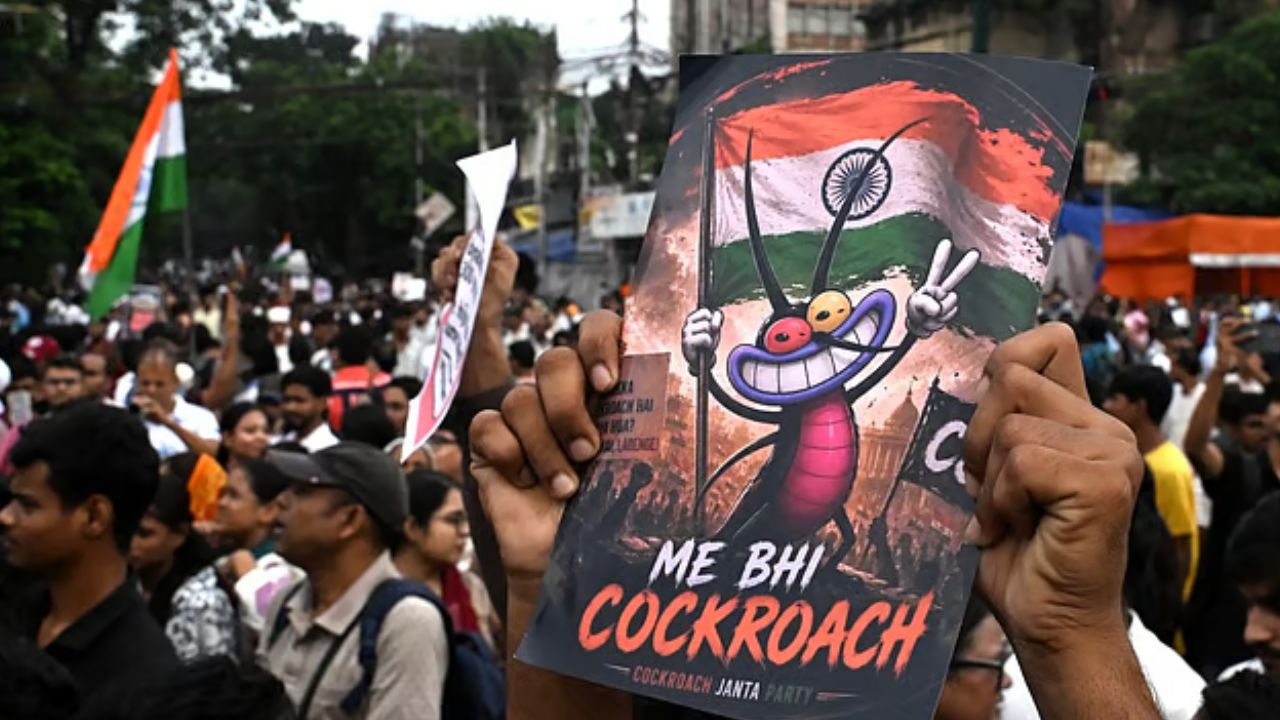



Individuals who call for a “violent regime change” will no longer be eligible for government jobs in the neighbouring Indian state of Uttar Pradesh.
Under updated character verification rules issued pursuant to Allahabad High Court directives, Chief Minister Yogi Adityanath’s administration has tightened background vetting for public service applicants, drawing sharp condemnation from Opposition ranks.
The updated regulations were issued by M Devaraj, principal secretary of the Appointment and Personnel Department, reports The Hindu.
Under the revised framework, individuals affiliated with organisations whose stated objective is the violent overthrow of the established order will be rendered ineligible for public employment.
Participation in such activities within three years prior to the verification date, provided the applicant had reached 21 years of age, may be treated as evidence of active involvement.

However, this presumption can be reconsidered if concrete evidence demonstrates a positive change in the individual’s conduct during the intervening period.
The policy explicitly establishes that political beliefs alone cannot serve as grounds to declare a candidate ineligible.




Moreover, the mere registration of a First Information Report (FIR) or an ongoing police investigation will not automatically disqualify an applicant.
Candidates who have been acquitted, those whose cases were resolved through compromise, and individuals covered under juvenile justice legislation are also protected from automatic rejection.
The guidelines govern direct recruitments across all state government departments, corporations, councils, and municipal bodies.
To prevent recruitment drives from stalling, appointing authorities may issue provisional appointment letters upon receiving a self-declaration and essential documentation from the candidate.
However, if a candidate is later found ineligible or discovered to have furnished false information, the appointment will be cancelled immediately and legal action may follow.
Serving government employees are exempt from undergoing fresh character verification, though appointing authorities retain the right to request past departmental records.

Under operational rules, district police and the Local Intelligence Unit (LIU) must submit character verification reports within 30 days of receiving a request, with the Home Department monitoring delays.
Vetting officers are not required to conduct home visits or demand the physical presence of applicants. In instances where an adverse report is filed, the district magistrate must afford the candidate an opportunity to present their case, either online or in person, before forwarding a final recommendation.
The directive has drawn strong condemnation from Indian Opposition ranks. Samajwadi Party (SP) spokesperson Udayveer denounced the order as reminiscent of British colonial rule, stating that the right to protest is a constitutional guarantee in independent India, where political leadership changes lawfully through democratic elections.
He charged the administration with operating under an “intimidatory mindset”. Echoing these concerns, Congress leader Rashid Alvi criticised the government for “behaving like a judge” and alleged that the decree reflects fear over GenZ protests.